

Bespoke tennis necklaces - Made to order - UK
Bespoke Tennis Necklaces and Rivière Necklaces
A continuous line of matched diamonds or gemstones, made to order around neckline, stone size, setting style and budget.
Also known as a rivière necklace, this is one of the most considered fine jewellery commissions: every stone, link, setting and clasp has to work as a single flexible line around the neck.
What affects the finished necklace
The options behind a bespoke tennis necklace
A tennis necklace can be a clean diamond line, a softly graduated rivière, a coloured gemstone sequence or a more architectural fancy-shape piece. The important decisions are setting, shape, layout, colour, length and clasp.
Setting architecture
Open claw, U-prong, bezel, collet or channel
The setting changes how much light, metal, protection and side profile the necklace has. Across a full line, small differences become very visible.
Stone shapes
Round, oval, emerald, pear or mixed-shape
Round stones articulate most easily, but fancy shapes can create a more distinctive rivière when the settings and matching are engineered properly.
Line layout
Uniform, graduated or centre-led
A uniform line feels clean and modern. A graduated rivière builds presence at the front and can make the necklace sit beautifully at the collarbone.
Stone palette
Classic diamond, colour or rainbow
Choose colourless diamonds, coloured diamonds, sapphires, rubies, emeralds, pastel sapphire gradients, alternating stones or a full rainbow sequence.
Length and movement
The line has to sit flat
Length, articulation, setting depth and clasp placement decide whether the necklace sits cleanly, turns, gaps or drapes naturally.
Choose the rivière route before the specification
A tennis necklace can be classic, graduated, colour-led or architectural. Once the route is clear, we refine length, setting, stones, articulation and clasp.
 Rivière classic
Classic diamond tennis necklace
A continuous line of matched diamonds around the neck, designed for brightness, flexibility and a clean drape.
The classic tennis necklace, traditionally called a rivière, should read as one clean line of light. Stone matching, link articulation and clasp position matter as much as headline total carat weight because the necklace has to sit cleanly against the neck.
Start a classic necklace brief Centre-led presence
Graduated rivière necklace
A line that builds subtly towards the centre, giving more presence at the collarbone without making every stone larger.
Graduation can make a tennis necklace feel more refined and intentional. The stones increase towards the front of the neck, creating presence where it is most visible while keeping the back of the necklace lighter and more comfortable.
Discuss graduation Colour-led
Coloured gemstone or rainbow necklace
A tennis necklace using sapphires, rubies, emeralds, coloured diamonds or a controlled pastel and rainbow sequence.
Colour can be used as a full line, a centre section, alternating stones or a gradual rainbow. The result depends on disciplined matching: stones need to shift colour deliberately while staying consistent in size, cut and face-up presence.
Discuss coloured stones Architectural
Fancy-shape or geometric tennis necklace
A more distinctive rivière using oval, emerald, baguette, princess, pear, marquise or mixed-shape stones.
Fancy-shape tennis necklaces are more technical than a classic round line. The settings must allow the necklace to curve without twisting, and the stones need to be matched carefully so the rhythm feels intentional rather than uneven.
Ask about fancy shapesStone choices
Stone and colour options
A tennis necklace can be classic colourless diamond, blue sapphire, ruby, emerald, coloured diamond, pastel sapphire or rainbow. The limiting factor is matching enough stones cleanly across the full length.
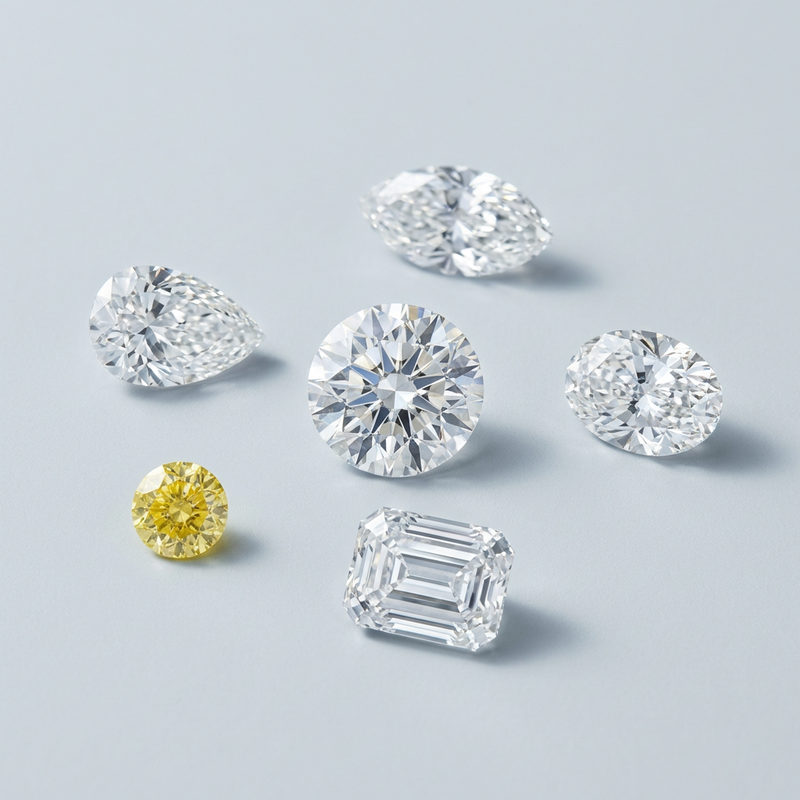
Colourless diamonds
Natural or lab-grown / Classic / High brillianceThe classic tennis necklace: a continuous line of white diamonds around the neckline. Natural and lab-grown routes can both be quoted, with total carat weight scaled to the brief.
Diamonds are the most practical starting point for a tennis necklace because they combine brilliance, hardness and availability across matched parcels. Matching is still critical: the necklace should read as one continuous line, not individual stones fighting each other.
Excellent for daily wear in any setting style. The hardness means a diamond necklace withstands constant contact with skin and clothing without dulling or chipping. A secure clasp is as important as the setting itself.
Clean with warm soapy water and a soft brush. Diamonds attract grease from skin and body products — a periodic professional clean keeps the necklace performing at its best.
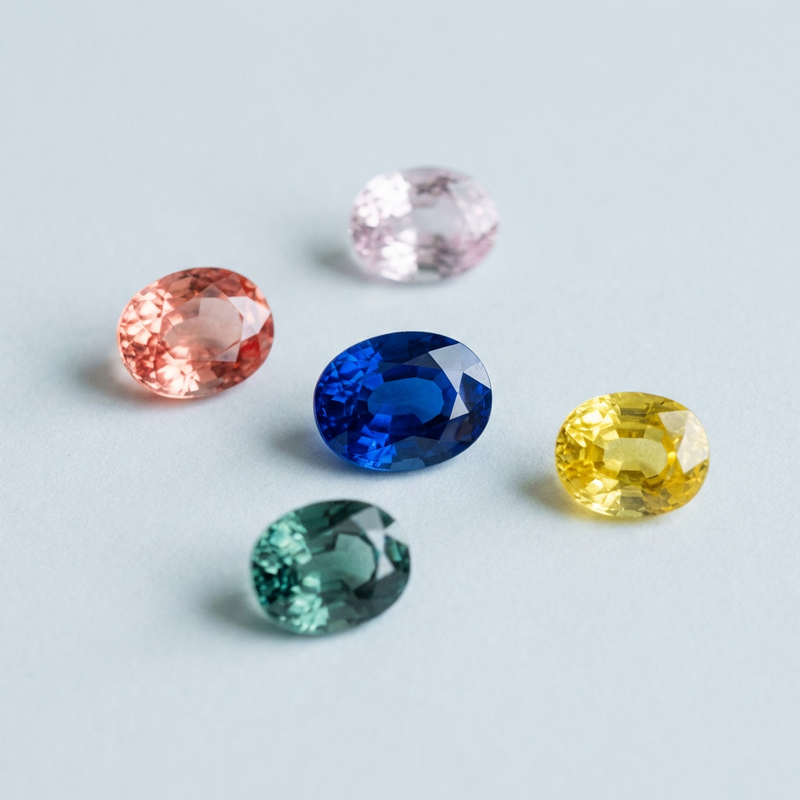
Blue and fancy sapphires
Blue / Pink / Teal / Yellow / PadparadschaSapphire opens up the strongest colour range for a wearable tennis necklace: royal blue, pink, teal, yellow, green, white and rare padparadscha tones.
Sapphire is the most practical coloured-stone family for a continuous necklace because it is durable, beautiful and available in a broad colour range. Rainbow or pastel sapphire layouts need careful sourcing so the colour movement feels deliberate.
Excellent for daily wear. Sapphires maintain their lustre and colour intensity over decades without treatment or ongoing maintenance, making them one of the most rewarding stones for a necklace worn constantly.
Clean with warm soapy water and a soft brush. Avoid ultrasonic cleaners for heavily included stones. A professional check every year or two is recommended.
Coloured diamonds
Yellow / Champagne / Pink / BlackYellow, champagne, pink or black diamonds create a less expected tennis necklace. They are best treated as a deliberate design direction rather than a variation on a classic white diamond line.
Coloured diamonds keep diamond durability while changing the entire mood of the necklace. Champagne and black diamonds can feel especially contemporary, while yellow and pink diamonds move into rarer, more collectible territory.
Excellent for regular wear when the settings and clasp are built properly. Matching tone and saturation across a full necklace is the main sourcing challenge.
Clean with warm soapy water and a soft brush. Have settings and clasp checked periodically if the necklace is worn often.
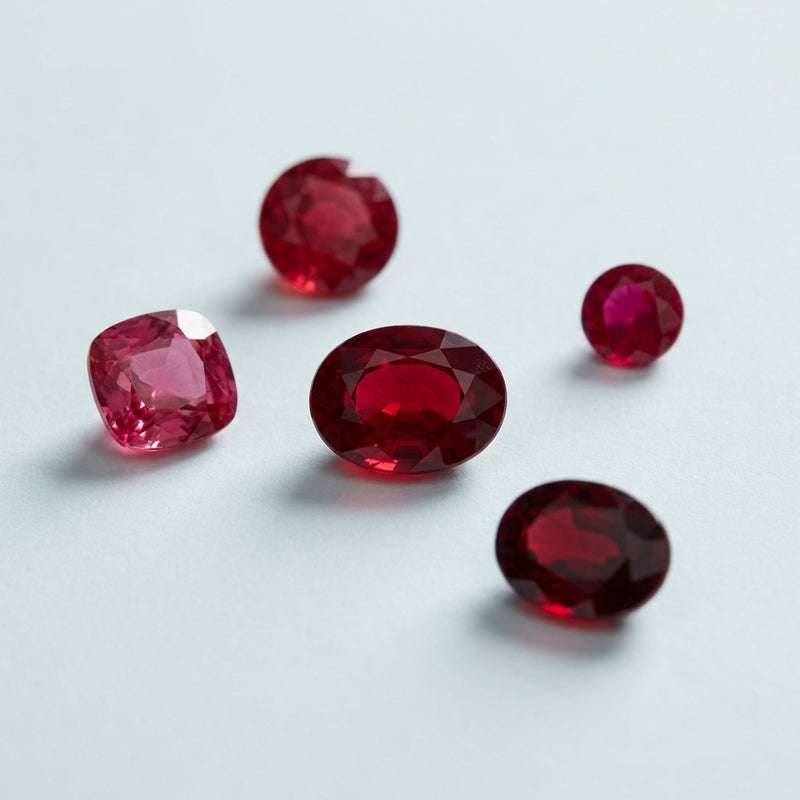
Ruby
Bold / Symbolic / VividRuby creates a strong, formal red line at the neckline. It can be used as a full ruby necklace or alternated with diamonds for a sharper, more wearable contrast.
Rubies are the red variety of corundum, scoring 9 on the Mohs scale. Their colour comes from chromium — ranging from pinkish-red to the deep pigeon blood red of Burmese origin, the most prized tone in the trade.
Excellent for daily wear. The high hardness makes rubies a very practical necklace stone. They resist surface dulling from skin contact better than softer stones and maintain their colour intensity over decades.
Clean with warm soapy water and a soft brush. Generally durable enough for ultrasonic cleaning unless heavily fractured — a jeweller's assessment is recommended first.
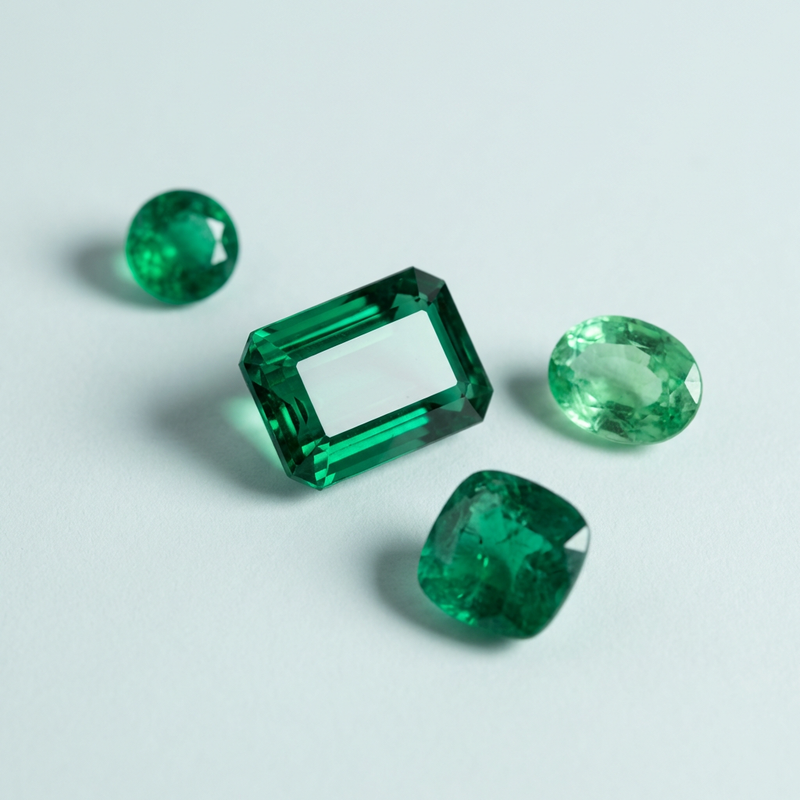
Emerald
Rich / Distinctive / LuxuriantEmerald brings vivid green colour and a more expressive character. For a tennis necklace, matching tone and managing inclusions are the main practical considerations.
Emeralds score 7.5–8 on the Mohs scale. Their colour comes from chromium and vanadium. Most contain a natural jardin of inclusions — part of their character rather than a flaw. In a necklace they are less exposed to impact than in a ring or bracelet, but matching and protection still matter.
Good for regular wear with appropriate setting. necklaces are less prone to sharp impacts than rings, making emeralds a more practical choice at the neckline than on the finger. A bezel or collet is still recommended for the most active wearers.
Clean gently with a damp cloth only. Avoid ultrasonic cleaners and steam entirely. Emeralds are often treated with oil to improve clarity — heat and chemicals can affect this.
Before you commission
Tennis necklace design decisions
The questions we settle before stone sourcing and production begin.
The same necklace looks completely different at 14, 16, 18 or 20 inches. We choose length around the wearer, clothing, stone size and whether the piece should sit at the collarbone or lower.
The stones need to match across the full line for size, colour, saturation and brightness. Inconsistent matching is especially visible at the neckline.
Rainbow and pastel layouts need a controlled colour transition. Alternating stones can be more elegant when the brief wants colour without losing the structure of a classic tennis necklace.
Round stones are the most practical for flexibility. Oval, emerald, radiant, pear or other shaped stones can be explored, but the setting and articulation become more technical.
A uniform line feels modern and clean. A softly graduated line can sit beautifully at the front of the neck and make better use of budget.
The necklace has to curve naturally without kinking. Link construction and setting depth decide whether the line sits flat or fights the body.
The clasp must be secure enough for the value and weight of the piece while remaining discreet. For higher-value necklaces, security is designed in from the beginning.
A daily necklace needs lower profile, smoother settings and robust clasping. An occasion necklace can prioritise larger stones and a more formal silhouette.
Our commitment to you
A significant necklace, specified clearly
Length, stone matching, setting style, clasp and final price are confirmed before production starts.
Direct communication at every stage
You work directly with our team throughout. No account managers, no handoffs. Clear updates at every step of the process.
No intermediariesNothing is made until you approve the design
We present the full design, stone layout, length, clasp specification and pricing before a single link is made. Your sign-off comes first.
Full approval controlStone shown and approved before setting
For significant commissions, we present the stone for your approval before it goes to the bench. You see what you are getting — not a grade on a certificate.
Stone approved firstPricing agreed before production begins
The full cost — stones, setting, metal, clasp and any bespoke detail — is confirmed before any work starts. There are no surprises at the end.
Transparent pricingEvery piece inspected before dispatch
Each piece is checked for setting security, clasp function, chain integrity, and finish quality before it leaves us. We do not dispatch work we would not wear ourselves.
Quality assuredThe process
How the commission works
Most bespoke tennis necklace commissions take six to eight weeks from approved specification. Matched stone sourcing can affect timing, especially for natural diamonds or coloured gemstones.
Brief and stone selection
We discuss the style, stone, chain, occasion, and any reference material you have. We begin sourcing stones or confirming chain specifications at this stage.
Design and approval
We prepare the design for your review — stone layout, setting architecture, length, articulation and clasp. You approve every element before anything is made.
Your confirmation
You confirm the final design, stone specification, length, clasp and agreed price. Nothing moves to production without this step.
Made and delivered
Your necklace is made, set and finished. Clasp function, link articulation and stone security are checked before dispatch.
Practical answers before you begin.
Tennis necklace FAQs
In modern search language, yes. A tennis necklace usually refers to a continuous line of diamonds or gemstones around the neck. Rivière is the traditional fine jewellery term for the same idea.
Cost is driven by total carat weight, stone origin, stone quality, length, setting style and clasp construction. Because the piece uses many matched stones, small changes in individual stone size can have a large effect on the final price.
Yes. Lab-grown diamonds can be an excellent choice because they allow a larger, more impressive line for the same budget. Natural diamonds are also available where the client prefers origin and long-term rarity over size for spend.
Yes, where the stone type and matching requirements make it possible. We can compare ethically sourced natural stones with lab-grown diamonds or gemstones, then explain the trade-off between origin, size, colour, availability and budget.
Yes. We can explore blue sapphire, ruby, emerald, pastel sapphire, coloured diamond, alternating and rainbow tennis necklace layouts. Matching enough stones across the full length is the practical constraint, so we confirm availability before the design is finalised.
Yes. Round stones are the most common because they articulate cleanly around the neck. Oval, emerald, cushion, princess, pear, marquise, radiant, Asscher, heart and less common shapes can be considered, but they require more careful engineering and matching.
Common lengths are 14, 16, 18 and 20 inches. A shorter necklace sits closer to the collarbone and feels more formal; a longer one gives a softer drape. We advise based on neckline, body proportions and stone size.
Uniform stones create a clean modern line. Graduated stones increase toward the centre and can create more presence at the front while using budget intelligently. Both can be beautiful when intentionally specified.
Most bespoke tennis necklaces take six to eight weeks from approved design and stone specification. Matched natural diamond or coloured gemstone sourcing can add time, which we confirm before you commit.
Still have a question? Our team typically responds within one business day.
Standards & Provenance
Certified and responsibly sourced
Every diamond we supply is independently graded and responsibly sourced.

IGI Certified Diamonds
Diamonds independently graded by IGI for cut, colour, clarity, and carat.

GIA Certified Diamonds
Diamonds graded by GIA, widely recognised as the global standard for diamond certification.

Kimberley Process Compliant
Diamonds sourced in compliance with the Kimberley Process to prevent conflict diamonds.
Start here
Tell us the tennis necklace you have in mind
Send a reference, target length, budget or preferred stone size. We will help translate it into a clear specification before anything is made.