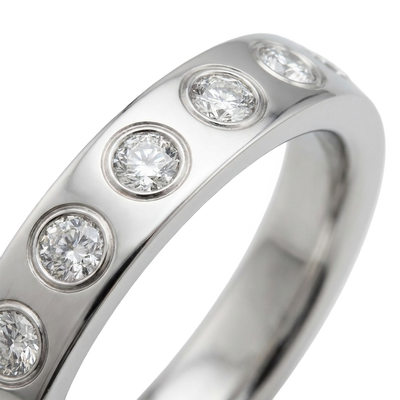
ring setting

Pavé engagement rings: continuous sparkle, refined by hand

A bespoke pavé engagement ring sets small diamonds into the band, shoulders or gallery, adding light and detail while keeping the centre stone in focus.

RING SETTINGS EXPLAINED

The pavé setting

Everything you need to know about pavé before deciding how much sparkle belongs in the design.

THE BASICS

What is a pavé engagement ring?

A pavé engagement ring uses rows of small diamonds set closely into the metal, creating a continuous surface of sparkle across the band or setting.

Pavé comes from the French word for paved. In jewellery, it describes a surface of small diamonds set closely together with tiny beads, claws or micro-prongs of metal holding each stone in place. The aim is a fine, bright line of diamonds with very little visible metal between them.

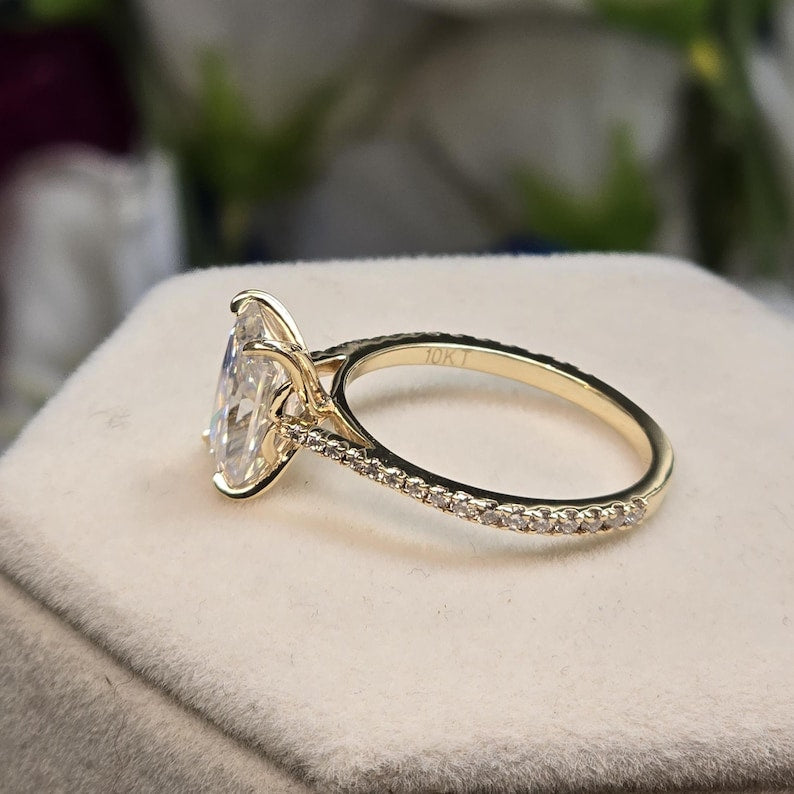
On an engagement ring, pavé is most often used on the shoulders of the band, but it can also appear around a halo, beneath the centre stone as a hidden halo, across the gallery, or around a fuller diamond-set shank. It is not always the centre setting itself; it is a way of adding detail and light to the architecture of the ring.

The best pavé feels precise rather than crowded. The stone size, band width, spacing and metal finish all need to be balanced so the centre stone remains the focus and the ring still works for daily wear.
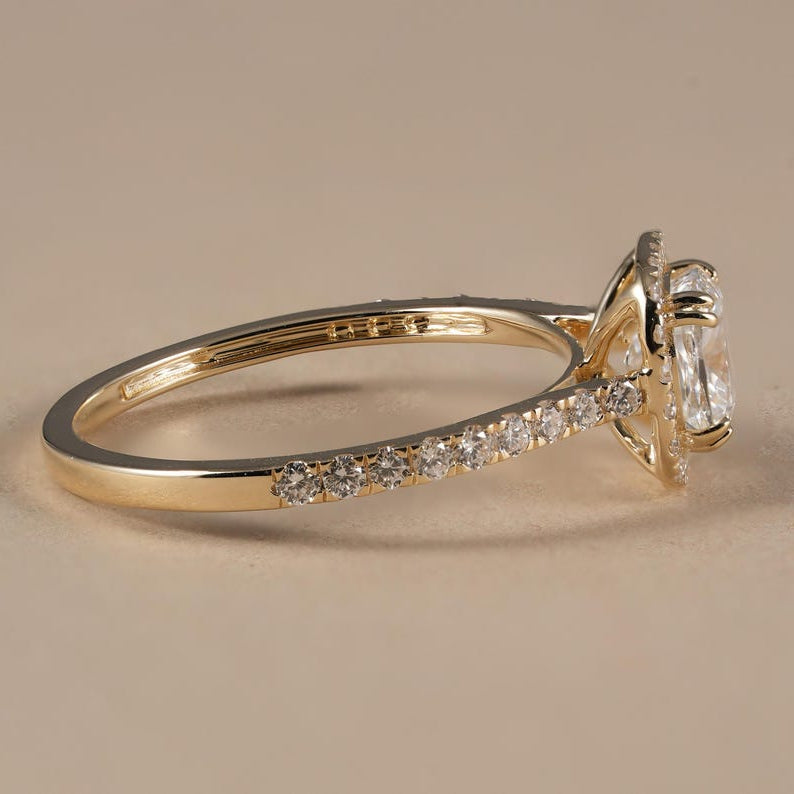
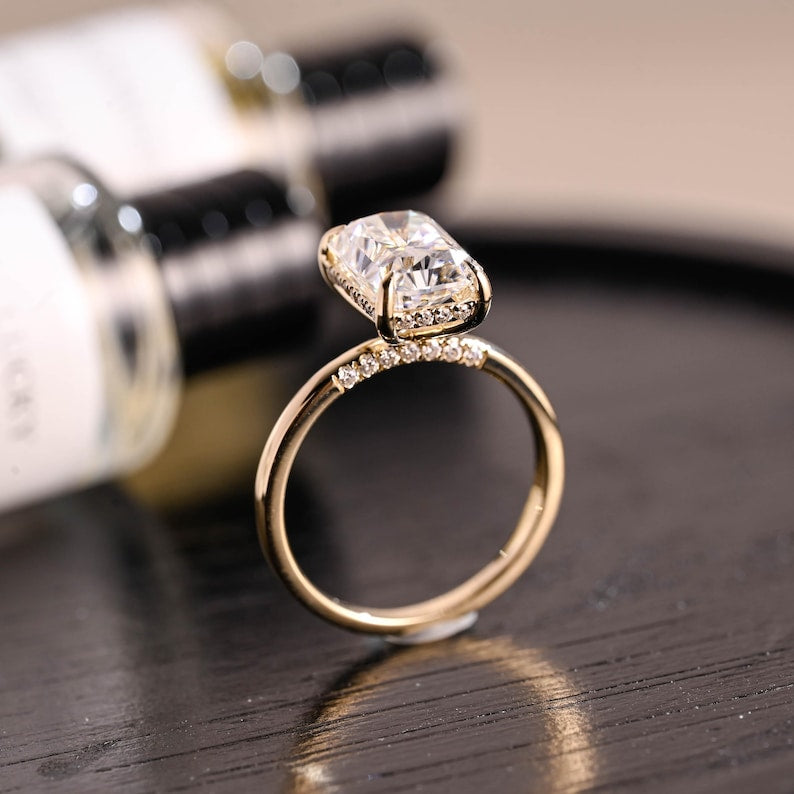
Close detail of pavé diamonds set into an engagement ring band

IS IT RIGHT FOR YOU?

Who chooses a pavé setting?

Pavé suits clients who want more brilliance than a plain solitaire but do not necessarily want the stronger outline of a halo. It lets the band feel designed and considered while allowing the centre stone to remain the visual priority.

It works across classic and contemporary ring styles. Pavé shoulders are a natural partner for solitaire, halo, cathedral, side-stone and three-stone designs, while a fine hidden halo can add a private flash of detail from the side view.

Pavé is also useful when the brief is to make a ring feel more finished without relying only on a larger centre stone. A careful line of small diamonds can add light across the hand and make the ring feel more complete at a wide range of budgets.

Pavé engagement ring showing diamond-set shoulders

WORTH KNOWING

What to consider before choosing pavé

Pavé adds beauty, but it also adds more setting points. Each small stone has to be held securely, and those beads or claws should be checked periodically. This is normal for fine jewellery with small diamonds, but it is worth understanding before choosing a very delicate pavé band.

Band width matters. Very fine pavé can look elegant, but a band that is too narrow can become more vulnerable to wear, flex and resizing issues. As a general guide, pavé is usually more practical when the structure of the band remains substantial enough to protect the stones.

Resizing and wedding-band fit should also be discussed early. A full pavé band or eternity-style shank can be harder to resize than a half pavé band with a plain lower shank. If a straight wedding band will sit next to the engagement ring, the pavé placement and profile should be designed to reduce rubbing over time.

Diamond-set pavé engagement ring band detail

Band decoration

Stone-Set Bands

The way diamonds are set into the band changes everything — from sparkle and texture to wearability and maintenance. Explore each technique below.

8 styles

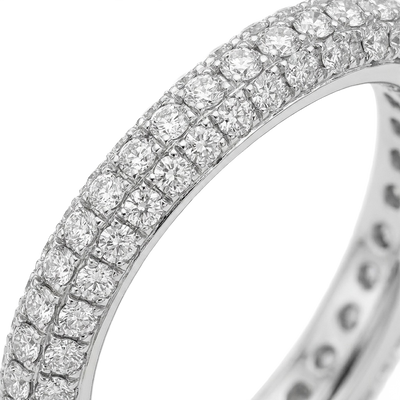
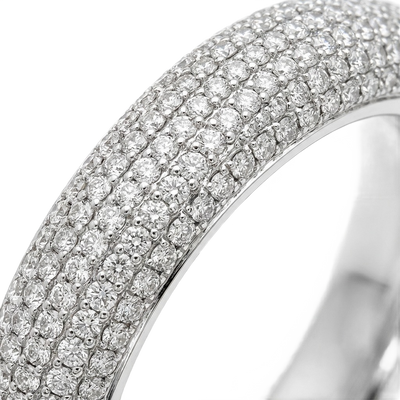
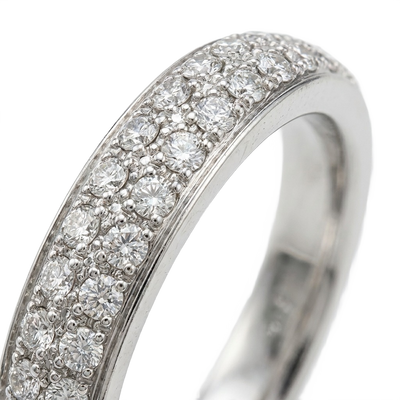
Pavé

Pavé

A continuous surface of micro-set diamonds

Micro-Pavé

Micro-Pavé

Finer, more delicate pavé with smaller stones

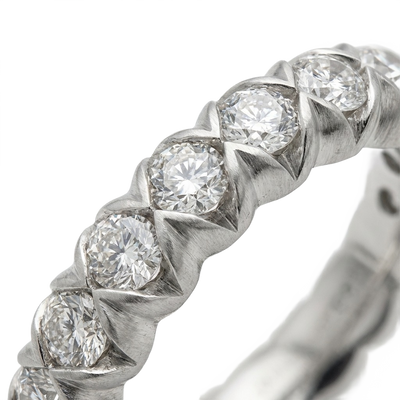
Fishtail/French Pavé

Fishtail/French Pavé

Shaped metal between stones creates a distinctive scalloped pattern

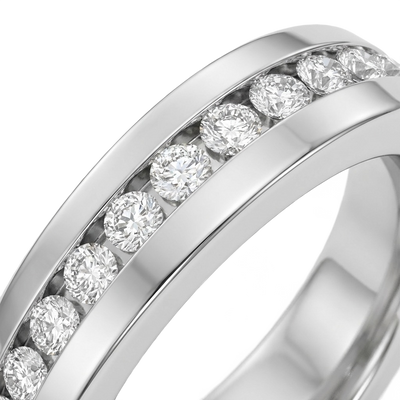
Channel Set

Channel Set

Diamonds sit flush inside a continuous groove in the band

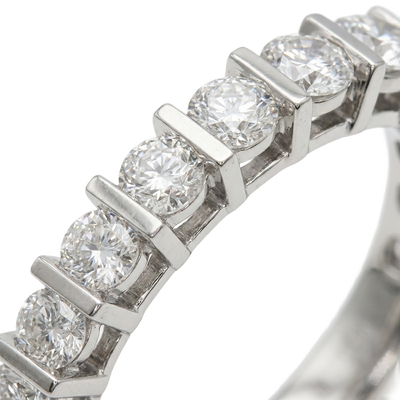
Bar Set

Bar Set

Stones held between vertical metal bars along the band

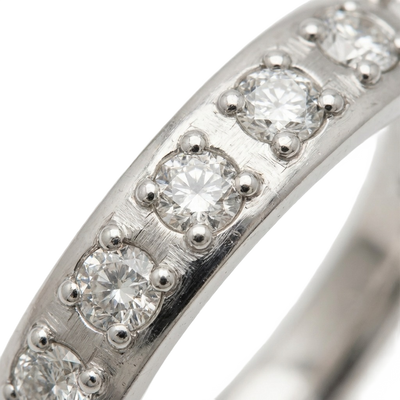
Bead Set

Bead Set

Small metal beads raised around each individual stone

Grain Set

Grain Set

A finer variation of bead setting with a more continuous surface

Flush Set

Flush Set

Stones set level with the band surface for a minimal, protected look

Why pavé can be smart value

Pavé adds visible sparkle without relying only on centre-stone size

The value of pavé is controlled sparkle. A line of small diamonds across the shoulders can make the ring feel brighter and more finished without forcing the budget into a much larger centre stone.

The important part is restraint. Pavé should support the centre stone, not distract from it. In a bespoke commission, the diamond size, band width and coverage can be tuned to the brief so the final ring feels balanced rather than busy.

More light across the hand Small diamonds on the shoulders draw the eye toward the centre stone and make the ring feel more complete.
Flexible intensity Pavé can be delicate and restrained, or carried further across the band for a more diamond-led look.
Requires skilled setting Tiny stones, beads and spacing need to be executed cleanly so the ring stays refined and wearable.
Why bespoke can cost less

How do they compare?

Pavé styles compared

Compare the common pavé approaches by sparkle, durability, resizing and daily wear.

Fine beads · Most delicate

Micro pavé

Very small diamonds set closely with minimal visible metal. Highly refined and bright, but best kept to sensible band widths and protected areas.

Wearability Medium

Delicate beads should be checked periodically.

V-cut · More light

French pavé

Small V-shaped cuts expose more of each stone and create a bright, airy line of diamonds along the band.

Wearability Medium

Needs clean bench work to avoid sharp edges.

Open sparkle · Fine claws

Shared-prong pavé

Adjacent stones share tiny prongs, giving more visible diamond and less metal. A popular choice for shoulder detail.

Wearability Medium

Prongs need occasional checking.

Protected · Clean line

Channel-set pavé

Small stones sit within a continuous channel of metal. Less glittering than bead-set pavé but more protected for everyday wear.

Wearability High

Best when a clean, practical diamond-set band is the priority.

Fine beads · Most delicate

Micro pavé

Very small diamonds set closely with minimal visible metal. Highly refined and bright, but best kept to sensible band widths and protected areas.

Wearability Medium

Delicate beads should be checked periodically.

V-cut · More light

French pavé

Small V-shaped cuts expose more of each stone and create a bright, airy line of diamonds along the band.

Wearability Medium

Needs clean bench work to avoid sharp edges.

Open sparkle · Fine claws

Shared-prong pavé

Adjacent stones share tiny prongs, giving more visible diamond and less metal. A popular choice for shoulder detail.

Wearability Medium

Prongs need occasional checking.

Protected · Clean line

Channel-set pavé

Small stones sit within a continuous channel of metal. Less glittering than bead-set pavé but more protected for everyday wear.

Wearability High

Best when a clean, practical diamond-set band is the priority.

Sparkle

Exceptional

Very good

Exceptional

Good

Metal visibility

Minimal

Low

Very low

More visible edge

Durability

Delicate

Medium

Medium

Strongest

Resizing

More delicate

More delicate

More delicate

Easier if limited to shoulders

Best placement

Shoulders or halo/gallery

Shoulders

Shoulders

Straight bands and lower-wear areas

Style character

Fine, jewellery-led

Bright, crisp

Classic diamond-set

Clean, practical

Best suited to

Maximum refinement

Refined detail

Traditional pavé shoulders

Active lifestyles

Sparkle

Exceptional

Very good

Exceptional

Good

Metal visibility

Minimal

Low

Very low

More visible edge

Durability

Delicate

Medium

Medium

Strongest

Resizing

More delicate

More delicate

More delicate

Easier if limited to shoulders

Best placement

Shoulders or halo/gallery

Shoulders

Shoulders

Straight bands and lower-wear areas

Style character

Fine, jewellery-led

Bright, crisp

Classic diamond-set

Clean, practical

Best suited to

Maximum refinement

Refined detail

Traditional pavé shoulders

Active lifestyles

The bottom line

Choose micro pavé if you want the most delicate, refined sparkle and are comfortable with periodic checks.

Choose French or shared-prong pavé when you want a brighter band with very little visible metal.

Choose channel-set pavé if protection and everyday practicality matter more than maximum glitter.

Not sure how much pavé suits your lifestyle? We can help you balance sparkle, durability and budget before anything is made.

Talk to us

DESIGN OPTIONS

Additional pavé features

Every feature below can be added or discussed at the design stage. Availability depends on band width, stone size and how the ring will be worn.

Hidden halo

Available

A small row of diamonds beneath the centre stone, visible from the side. Pairs well with pavé shoulders when the profile and wedding-band fit are planned together.

Pavé shoulders

Available

The classic pavé placement: small diamonds running from the centre setting down the shoulders of the band.

Half pavé band

Available

Diamonds across the visible upper half of the band, with a plain lower shank left for comfort, wear and future resizing.

Full pavé band

Partial

Diamonds around the full band create maximum sparkle, but resizing and maintenance become more delicate. Best discussed before production.

Milgrain edge

Available

A fine beaded edge can add vintage character beside pavé, especially on yellow gold or antique-inspired designs.

Plain lower shank

Available

Leaving the underside plain improves comfort, makes resizing easier and protects the part of the ring most exposed to wear.

Hidden halo Available

A small row of diamonds beneath the centre stone, visible from the side. Pairs well with pavé shoulders when the profile and wedding-band fit are planned together.

Pavé shoulders Available

The classic pavé placement: small diamonds running from the centre setting down the shoulders of the band.

Half pavé band Available

Diamonds across the visible upper half of the band, with a plain lower shank left for comfort, wear and future resizing.

Full pavé band Partial

Diamonds around the full band create maximum sparkle, but resizing and maintenance become more delicate. Best discussed before production.

Milgrain edge Available

A fine beaded edge can add vintage character beside pavé, especially on yellow gold or antique-inspired designs.

Plain lower shank Available

Leaving the underside plain improves comfort, makes resizing easier and protects the part of the ring most exposed to wear.

What to budget

A pavé engagement ring from £1,200 — designed around your brief

The cost of a pavé ring is driven by the centre stone, the metal, diamond coverage and setting labour. Here is what to expect at each level.

Essential

From £1,200

A refined centre stone with fine pavé shoulders only. A strong entry point when you want added sparkle without full band coverage.

Pavé shouldersPlain lower shank

Statement

£5,000 and above

A pavé commission where the centre stone, diamond coverage or hand-setting labour becomes a major part of the design. Larger centre stones, full pavé, double-row detail and rarer stones sit comfortably here.

Larger centre stoneFull pavé optionFull bespoke

Pavé engagement ring FAQs

Common questions about pavé rings

Practical answers on durability, resizing, care and how much pavé to use.

A pavé engagement ring uses small diamonds set closely into the metal, usually along the shoulders or band. The stones are held by tiny beads, claws or micro-prongs, creating a fine continuous line of sparkle.

Yes, if it is designed and made properly. Pavé is widely used in engagement rings, but the small stones and beads should be checked periodically. A sensible band width, good stone setting and a plain lower shank can make pavé more practical for daily wear.

Micro pavé uses very small diamonds and very fine setting work, with minimal visible metal. It can look extremely refined, but it is generally more delicate than larger pavé and needs careful design around band width and wear.

Often, yes, but it depends on the pavé coverage. A half pavé band with a plain lower shank is usually easier to resize than a full pavé or eternity-style band. If future resizing is likely, we recommend discussing coverage before production.

Pavé can make the ring feel brighter and more substantial, but it does not enlarge the centre stone in the same way a halo can. Pavé shoulders draw the eye toward the centre stone and add light across the hand.

Full pavé gives maximum sparkle, but it also makes resizing and maintenance more delicate. Many clients choose half pavé, keeping the visible upper band diamond-set while leaving the underside plain for comfort and practicality.

Platinum and 18ct gold are both suitable. Platinum is a strong practical choice for white-metal pavé, while yellow gold and rose gold create a warmer contrast against the diamonds. The best metal depends on the design, centre stone and how the ring will be worn.

Yes. A hidden halo pairs naturally with pavé shoulders, provided the setting height, centre stone and wedding-band fit are planned together. It adds detail from the side without changing the face-up outline too much.

Avoid knocks, check the small stones periodically, and have the setting inspected by a jeweller at least annually. Remove the ring for heavy lifting, gym work, gardening or anything that could flex the band or catch the small stones.

Still deciding how much pavé is right for the ring?

More engagement ring settings

Explore other setting styles

Compare pavé with the other engagement ring styles available through À Vie.

Add ring setting blocks using the customiser to populate this section.

bespoke pavé engagement rings

Commission your pavé engagement ring

We will help you decide how much diamond detail belongs in the band, shoulders or gallery, then balance it with your centre stone and budget.