Every pair is designed to order. Choose the style that suits your face, your occasion, and your budget.
Most popular
01
Stud
The most requested earring style. A single stone or cluster sitting flat against the lobe — the most wearable format and the most frequently gifted.
Solitaire or clusterAll metalsDaily wear or occasionMost gifted style
A stud earring places a single stone or cluster directly against the lobe with no drop element. The stone, setting style, post gauge, and backing are all specified together. Four-claw and six-claw settings maximise light entry for diamonds. Bezel and collet settings give softer stones more protection. The most practical format for daily wear and the most commonly gifted bespoke earring we make.
Most versatile
02
Drop / Dangle
A stone or setting that hangs below the lobe on a fixed connection. Can be as simple as a solitaire on a short bar or as elaborate as a multi-stone cascade.
Solitaire or cascadeFixed dropOccasion or everydayAll metals
A drop earring suspends a stone or setting below the lobe by a fixed connection — a bar, a fine chain link, or a structured stem. The drop length, stone size, and setting style are all considered in proportion to the face. A short-bar solitaire drop is a refined daily piece; a longer cascade of stones is a statement occasion earring. The connection point must be strong enough to carry the pendant weight without deforming over time.
Most requested right now
03
Huggie Hoop
A small, close-fitting hoop that hugs the lobe tightly. Currently one of the most commissioned bespoke earring styles — worn alone or stacked with studs.
Close-fittingPlain or pavé-setAll metalsStackable
A huggie hoop is a hinged or continuous small hoop designed to sit flush against the lobe, typically between 8mm and 14mm in diameter. The close fit requires precise sizing — too tight is uncomfortable; too loose defeats the point. Can be left plain, set with a row of pavé diamonds across the face, or set with individual stones at intervals. Often worn in pairs with a stud in the second piercing above. The most-requested bespoke hoop style we currently make.
Most popular
04
Hoop
A continuous or hinged circular band worn through the lobe. Can be plain polished metal, pavé-set, or stone-set. Diameter and gauge are the primary design decisions.
Plain, pavé or stone-setAny diameterAll metalsHinged or continuous
A hoop earring passes through the piercing in a complete or near-complete circle. Diameter ranges from 15mm for a modest everyday piece to 60mm or more for a statement hoop. The gauge — thickness of the metal tube — affects both appearance and weight. Plain polished hoops in yellow gold are the most classic request. Pavé-set diamond hoops are the most frequently commissioned stone-set version. Hinged and continuous closure styles available depending on diameter.
Occasion piece
05
Chandelier
A structured, multi-tiered drop with significant length and presence. The occasion earring — designed to be seen from across a room.
Multi-tier dropDiamond or coloured stoneHigher price pointOccasion wear
A chandelier earring builds downward in tiers from the lobe — each level wider and more elaborate than the one above. The structure must be designed as a complete composition, balancing visual weight against actual weight so the piece is wearable for extended periods. Stone matching across multiple tiers requires careful sourcing. The backing and post must be specified for a heavier piece. The highest-complexity and highest-value earring commission we take on.
Also available to commission
Contemporary
Ear climber
A single elongated piece that follows the curve of the ear upward from the lobe. Requires careful sizing to the individual ear.
An ear climber attaches at the lobe and extends upward along the ear, following its natural curve. The piece must be sized to the individual ear — length, curve, and attachment point are all fit-specific. Typically set with a graduated line of stones that increases in size from lobe to tip. Requires more design input than a stud but produces a genuinely distinctive result that no standard piece can replicate.
Cluster
Multiple individually set stones forming a single composition. Floral, starburst, or geometric. Strong vintage heritage and significant presence.
A cluster groups several individually set stones into a single earring composition. The result can be symmetrical — a seven-stone floral, a starburst, a navette shape — or more organic and artisan in character. This is not pavé: each stone is a distinct element with visible metal between them. A cluster drop or occasion cluster is a distinct commission from a cluster stud and should be specified separately. Strong roots in Victorian and Edwardian fine jewellery.
Modern
Jacket earring
A stud combined with a separate decorative back element that wraps around the lobe and is visible from behind. Modern and genuinely distinctive.
A jacket earring consists of two separate elements: a standard stud at the front, and a decorative jacket that attaches to the post behind the lobe and is visible from the rear. The two elements are designed together as a pair so the front and back read as intentional. The jacket can carry stones, follow an architectural form, or frame the lobe in a way that is visible in profile. Requires fitting at the design stage to ensure the jacket sits correctly against the ear.
Rare
Threader
A fine chain or bar that passes through the piercing and hangs on both sides. Minimal and contemporary — one of the least commonly commissioned bespoke earring styles.
A threader passes a fine chain or wire directly through the piercing, with both ends hanging freely at different lengths. The design is defined almost entirely by the chain form, weight, and any terminal elements at each end. The simplest version has no additional elements — just a length of chain. More elaborate versions include a stone at one or both ends, or a bar element mid-chain. One of the more unusual bespoke commissions we take on.
Ear cuff
A clip or wrap that sits on the upper ear cartilage without a piercing. Growing in popularity — requires precise sizing to the individual ear.
An ear cuff grips the upper cartilage of the ear without requiring a piercing in that position. The fit is critical — too tight is painful over time; too loose shifts and falls. We take a cartilage measurement or work from a wax fitting impression to ensure the cuff holds its position correctly. Can be plain, stone-set, or architectural in form. Worn alone or paired with a stud in the lobe below. Requires more fitting precision than any other earring style.
Choose your stone
Every stone, considered
The stone determines the character of the earring — its colour, its light, and how it reads on the face and against the skin.
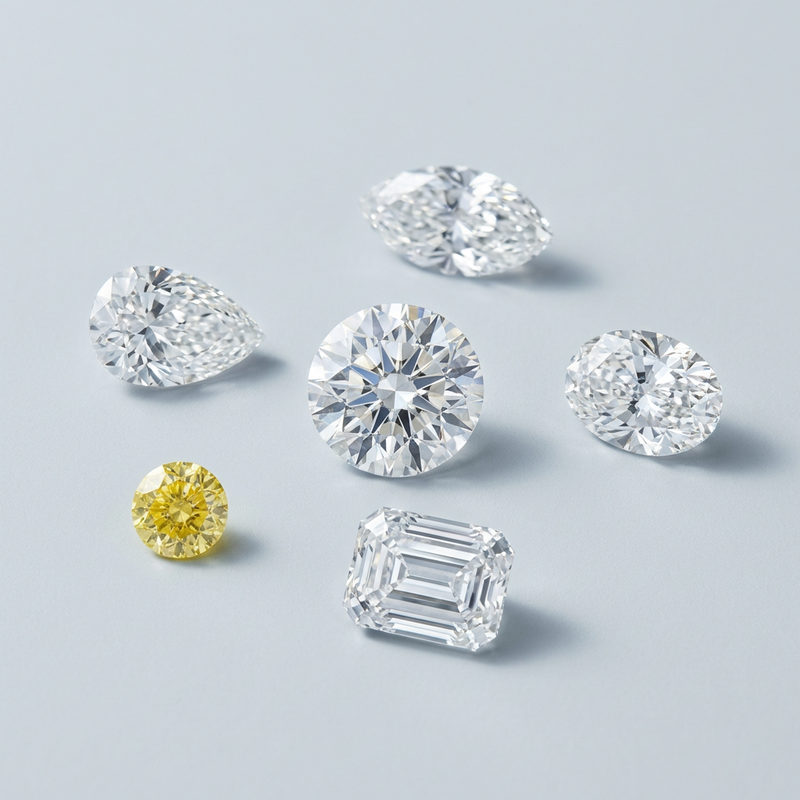
Diamond
Timeless / Brilliant / Durable
The most versatile earring stone. Works at any scale — from a single 0.30ct stud to a pair of 2ct drops. Diamonds in earrings benefit enormously from excellent cut grades, as light return is visible from across a room with every turn of the head.
Hardness10 / Mohs
DurabilityExceptional
Colour rangeD–Z scale
Diamonds are the hardest natural material on earth, scoring 10 on the Mohs scale. For earrings, cut quality matters above almost everything else — a well-cut diamond in a stud or drop returns light in a way that is immediately visible from a distance.
Excellent for all earring formats. The hardness and durability make diamonds as practical for a daily stud as for a chandelier occasion piece. For studs, we recommend four-claw or six-claw settings to maximise light entry. The cut grade should be prioritised over carat weight for earring commissions.
Clean with warm soapy water and a soft brush. Diamonds attract grease and skin oils — earrings accumulate this from hair and skincare products. Regular cleaning maintains the brilliance that makes them worth wearing.
Best paired withPlatinum or 18ct white gold for D–H colour grades — 18ct yellow gold suits warmer I–M stones and gives a more classic result
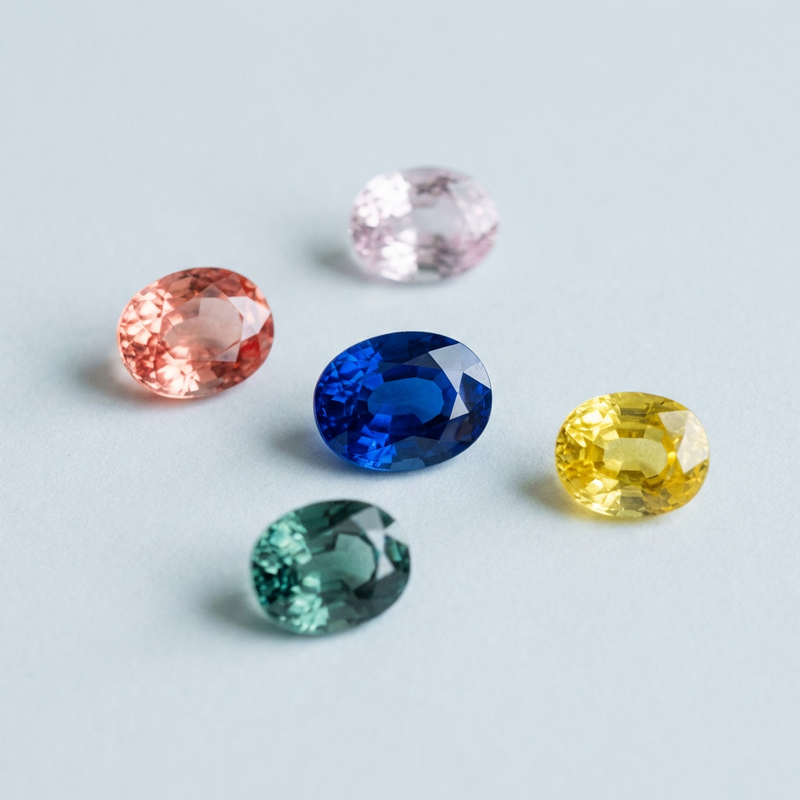
Sapphire
Deep / Vivid / Durable
Sapphires in earrings are exceptional. The depth of colour — particularly cornflower or royal blue — reads beautifully as both a stud and a drop, and the hardness means they wear as well as diamonds for daily use. The colour range, from deep blue to pink and yellow, gives enormous design flexibility.
Hardness9 / Mohs
DurabilityExcellent
Colour rangeBlue, pink, yellow, padparadscha
Sapphires score 9 on the Mohs scale, second only to diamond in hardness. For earrings, colour saturation and tone matter most — stones are seen at a distance and must hold their character in varying light conditions. Oval and cushion cuts display colour particularly well in earring formats.
Excellent for all formats. Sapphires are hard enough for daily studs and vivid enough to justify a statement drop or chandelier. For matched pairs we source from the same parcel wherever possible so both earrings read identically in colour and tone.
Clean with warm soapy water and a soft brush. Avoid ultrasonic cleaners for heavily included stones. Sapphires are robust and maintain their colour and lustre well with regular wear.
Best paired with18ct yellow gold or platinum — yellow gold enriches blue sapphires; platinum keeps the colour cool and precise; yellow gold is the natural choice for pink and padparadscha
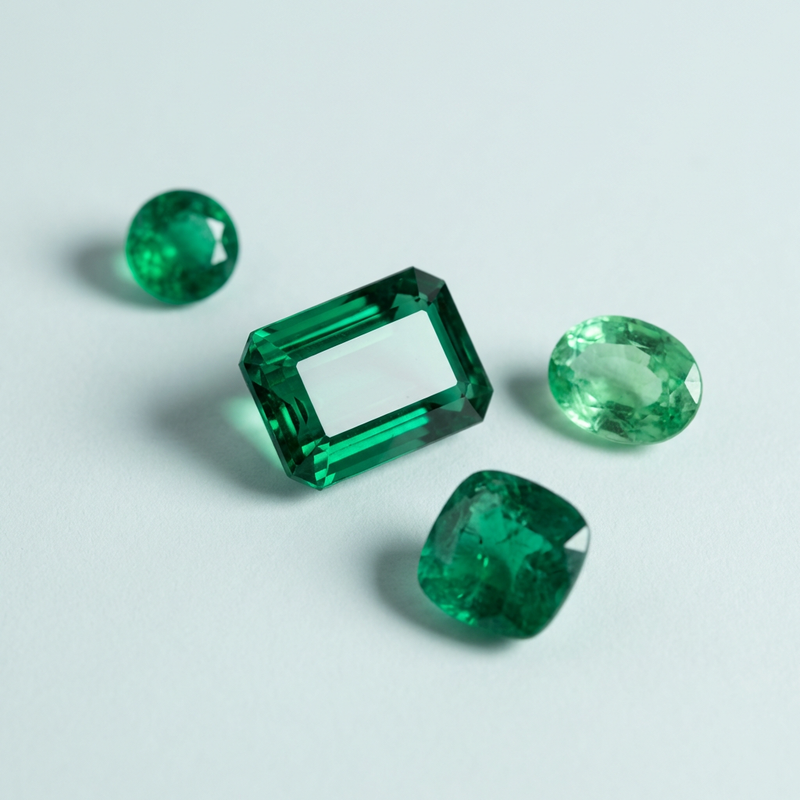
Emerald
Rich / Distinctive / Considered
Emeralds in earrings reward careful handling. The rich green is unmatched in depth and character — but the stone requires a protective setting and considered wearing habits. Best suited to drops and occasion pieces rather than daily studs.
Hardness7.5–8 / Mohs
DurabilityGood with care
Colour rangeLight to deep green
Emeralds score 7.5–8 on the Mohs scale. Their natural inclusions — known as a jardin — are considered part of their character rather than flaws. Colour and transparency are the primary quality indicators for emeralds in fine earrings. Emerald-cut stones are the traditional choice for this stone in drop settings.
Better suited to drops and occasion earrings than daily studs. Earrings expose the stone to less impact than rings or bracelets, making emeralds more practical here than almost anywhere else. A bezel or rub-over setting provides additional protection. Avoid wearing emerald earrings while applying hairspray or styling products.
Clean gently with a damp cloth only. Never use ultrasonic cleaners — the vibration can affect inclusions and any oil treatments. Store separately from harder stones. Handle with more care than diamond or sapphire earrings.
Best paired with18ct yellow gold — the warmth of the metal enriches the green and is the classic complement to emerald
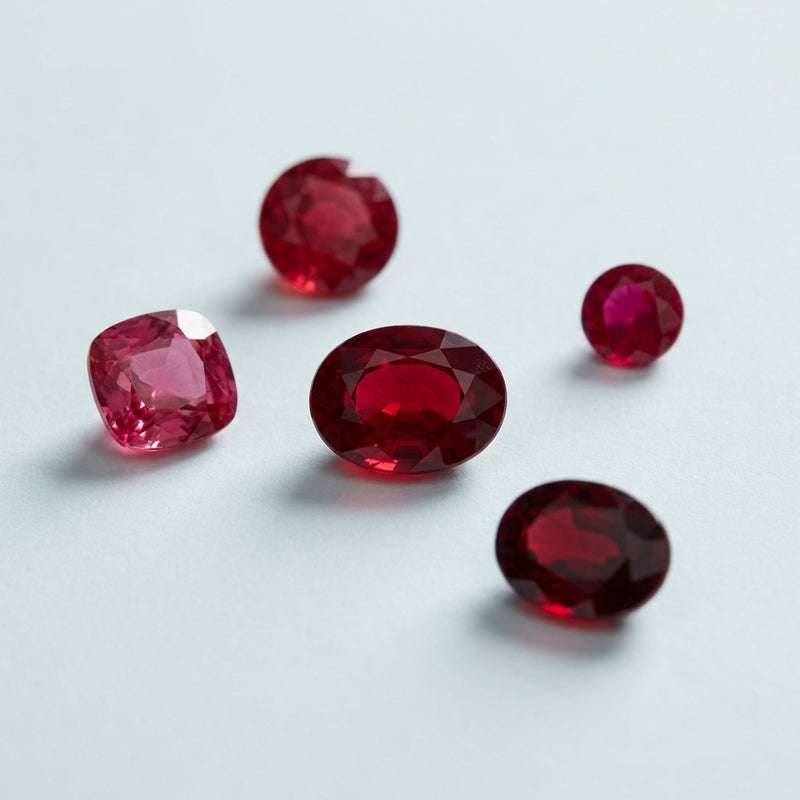
Ruby
Bold / Symbolic / Vivid
Ruby earrings make an immediate statement. The red of a fine ruby is one of the most striking colours in jewellery and holds its presence across a room in a way few other stones achieve. A matched pair of deep, vivid rubies is one of the most impactful earring commissions we make.
Hardness9 / Mohs
DurabilityExcellent
Colour rangePink-red to deep pigeon blood
Rubies are the red variety of corundum, scoring 9 on the Mohs scale. Their colour — from vivid pinkish-red to deep pigeon blood — is the primary value driver. For earrings, matching colour and saturation between the pair is as critical as the quality of each individual stone.
Excellent for all formats. The high hardness makes rubies practical for daily studs, and the colour intensity makes them exceptional for drops and occasion pieces. We source matched pairs from the same parcel wherever possible. A single ruby as an asymmetric statement piece is also available.
Clean with warm soapy water and a soft brush. Rubies are generally robust enough for regular wear and routine cleaning. Generally safe for ultrasonic cleaning unless heavily fractured — a jeweller's assessment is recommended first.
Best paired with18ct yellow gold — intensifies the red and creates a rich, warm combination that is the classic fine jewellery pairing for ruby
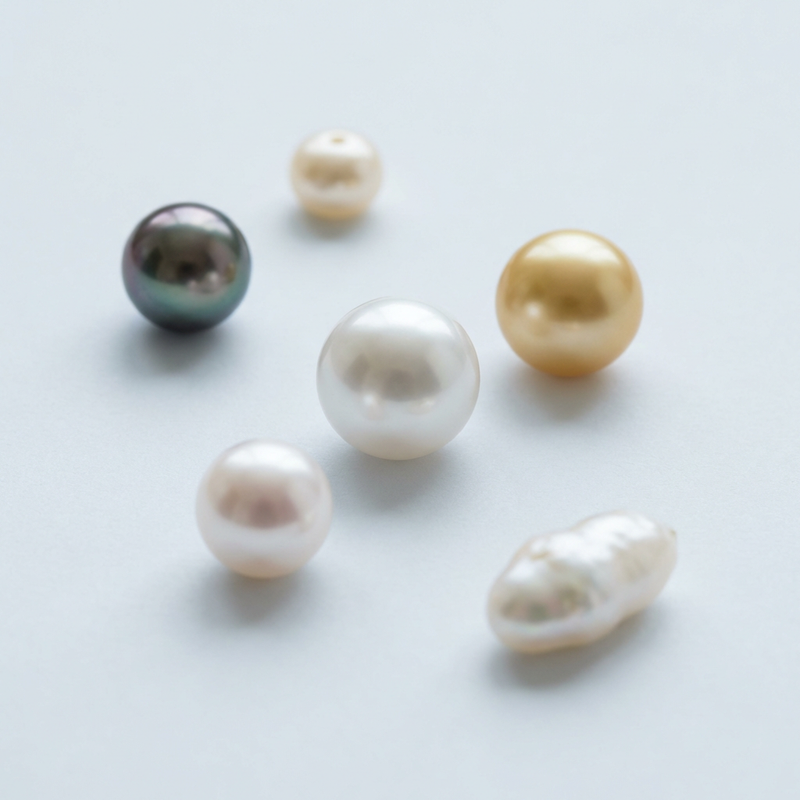
Pearl
Classic / Organic / Timeless
Pearls are the only organic gemstone used in fine jewellery and one of the oldest. In earrings they are unmatched for elegance — the soft, diffused lustre of a high-quality Akoya or South Sea pearl at the ear is a look no mineral gem replicates. The definitive fine earring material for formal occasions and daily refinement alike.
Hardness2.5–4.5 / Mohs
DurabilityRequires care
TypesAkoya / South Sea / Tahitian / Freshwater
Pearls form inside oysters and mussels and are graded by lustre, surface quality, shape, and nacre thickness. Akoya pearls are the classic fine earring choice — round, white to cream, with exceptional lustre and a size range perfectly suited to studs and drops. South Sea pearls offer larger sizes and more luminous surfaces.
Excellent for studs and drops. The softness of pearls means they should not be stored against harder stones. They are best put on last — after applying perfume, hairspray, and cosmetics. A secure cup or half-bezel setting protects the nacre from contact. Pearls benefit from being worn — contact with skin keeps the nacre conditioned.
Wipe with a soft damp cloth after wearing. Never use ultrasonic cleaners, steam, or chemical cleaning agents. Store separately from harder stones that can scratch the nacre surface. Avoid exposure to hairspray, perfume, and acids.
Best paired with18ct yellow gold or platinum — yellow gold is the traditional pairing and suits Akoya and South Sea pearls beautifully; platinum creates a more contemporary, graphic contrast particularly suited to Tahitian pearls
Choosing your metal
Which metal is right for your earrings?
Earrings sit close to the face and are among the most personal pieces you wear. Metal choice affects appearance, longevity, and how the stone is presented against your skin.
Recommended
Platinum
950 Purity
The benchmark for fine earrings with significant stones. Naturally white, hypoallergenic, and holds stones more securely than any gold alloy. The weight of platinum gives studs and drops a well-made feel. Never needs replating — the colour is permanent.
No platingHypoallergenicMost secure
White Gold
18ct / 75% Pure
The most popular white metal for diamond earrings. Rhodium-plated for a bright white finish. Earrings see less friction than rings, so replating is needed less often — typically every three to four years for daily-worn studs.
Rhodium platedBright white18ct standard
Recommended
Yellow Gold
18ct / 75% Pure
The traditional choice for earrings and the classic pairing for coloured stones. 18ct is the fine jewellery standard. No plating required — the colour is intrinsic to the alloy. Particularly beautiful against pearls, rubies, sapphires, and warm-toned stones.
No platingClassic warmthLow maintenance
Recommended
Rose Gold
18ct / 75% Pure
A flattering and distinctive choice for earrings — the blush tone sits close to the face and complements a wide range of skin tones. The copper content makes it slightly harder than yellow gold. No plating required.
No platingSlightly harderSkin-flattering
Silver
Sterling / 92.5% Pure
Too soft for fine stone-set earrings over the long term and prone to tarnishing with skin contact. While earrings see less friction than rings, silver does not hold stones reliably over time and is not a material we use for bespoke commissions.
Everything we think through before your earrings are designed.
Proportion and face shape
Earring length, width, and silhouette all affect how they read against your face. Longer drops add vertical length and suit rounder faces. Wider statement pieces suit longer face shapes. Studs and huggies suit all proportions. We consider your face shape and proportion before settling on dimensions — a stone size that suits one person may be lost or overwhelming on another.
Weight and long-term comfort
Heavier earrings pull on the lobe over hours of wear and can stretch the piercing over time. We manage weight carefully — particularly for drops and chandeliers — using techniques like hollow construction or strategic metal reduction where it is not structurally or visually critical. The backing choice also distributes weight differently.
Matching the pair
For two-stone commissions, both earrings are seen simultaneously and compared directly. We source from the same parcel wherever possible — meaning the same rough, the same cutting, the same grading session. Where an exact match is not available, we present the closest options and let you decide. A mismatched pair is immediately and permanently visible.
Post, fitting, and backing choice
The post gauge, fitting style, and backing all affect security and daily comfort. Butterfly backs are standard but screw backs offer more security for higher-value stones. Labret and disc backs distribute weight better for heavier pieces and suit elongated lobes. We discuss fitting preference as part of every earring brief.
Daily wear versus occasion
A daily earring is designed differently from one worn twice a year. Daily wear calls for lower-profile settings, more secure backings, harder-wearing metals, and stones that handle incidental contact with hair and skin products. Occasion pieces can prioritise visual impact, weight, and drama over everyday practicality.
Matching existing jewellery
Earrings are routinely worn alongside necklaces, rings, and bracelets. We consider how the metal, stone, and style of the earring relates to what you already wear — so the pieces feel cohesive rather than competing. If you are commissioning earrings to pair with an existing necklace or ring, bring them or send photographs at the brief stage.
Our commitment to you
Designed with clarity from start to finish
You remain in control from first conversation to finished piece.
Direct communication at every stage
You work directly with our team throughout. No account managers, no handoffs. Clear updates at every step of the process.
No intermediaries
Nothing is made until you approve the design
We present the full design, stone selection, and pricing before a single piece of metal is worked. You see exactly what you are commissioning before any work begins.
Full approval control
Stone shown and approved before setting
For significant commissions, we present the stone — or matched pair — for your approval before any setting work begins. You see what you are getting, not a grade on a certificate.
Stone approved first
Pricing agreed before production begins
The full cost is confirmed before any work starts. There are no surprises at the end of the process.
Transparent pricing
Every piece inspected before dispatch
Each pair is checked for stone alignment, post security, backing function, and finish quality before it leaves us. We do not dispatch work we would not wear ourselves.
Quality assured
The process
Typical timeline
Most bespoke earring commissions are completed within four to five weeks from approved design. If you have a date in mind — a birthday, an anniversary, an event — include it in your enquiry and we will plan around it.
1
1-2 weeks
Brief and stone selection
We discuss the style, stone, occasion, face proportion, and any reference material you have. For matched-pair commissions, we begin sourcing stones from the same parcel at this stage.
2
1-2 weeks
Design and approval
We prepare the design for your review — showing proportion, setting style, post type, and dimensions. You approve every element before anything is made.
3
Your call
Your confirmation
You confirm the final design, stone selection, and agreed price. Nothing moves to production without this step.
4
2-3 weeks
Made and delivered
Your earrings are made, set, and finished. Post security and backing function checked before dispatch. Delivered securely to you.
Everything you need to know before you begin.
Frequently asked questions
Face shape and proportion are the primary guides. Longer drop earrings add vertical length and flatter rounder faces. Studs and huggies suit all face shapes and are the most straightforward starting point for a bespoke commission. Wider chandelier-style earrings can add width to a longer face. We discuss proportion during the brief and make a recommendation based on what you describe or show us before any design work begins.
For two-stone commissions we source stones from the same lot wherever possible — meaning they were cut from the same rough, graded together, and are as close as achievable in colour, clarity, and cut. Where an exact match is not available, we present the closest options and let you decide before committing. A mismatched pair is immediately visible in wear, and it is something we take seriously at the sourcing stage rather than at the setting stage.
Weight management is something we design around from the start. For drops and chandeliers we balance visual scale against actual weight — often using hollow construction or lighter-gauge metal in areas where it does not compromise the visual result. The backing choice matters too: a labret or wider disc back distributes weight more evenly than a standard butterfly. We advise on this as part of every commission where weight is a concern.
Yes — studs, huggies, and smaller hoops are entirely practical for daily wear. The stone, setting style, post gauge, and backing are chosen with wearing frequency in mind. A daily earring is designed with a lower profile, more secure fittings, and harder-wearing metals than a piece intended for occasional use. We ask about intended use at the start of every brief so the design decisions reflect it.
Yes — we make single earrings regularly, whether as a deliberate design choice or as a replacement for a lost piece. If you are replacing a lost earring, bring or send us the remaining one and we will match it as closely as possible in metal, setting style, and stone character. If you are commissioning a single piece intentionally, tell us at the brief stage and we will design it accordingly.
Pearls are the softest material we work with and require more considered handling than gemstone earrings. Put them on last — after applying perfume, hairspray, and cosmetics. Wipe with a soft cloth after wearing. Store separately from harder stones. Despite this, well-made pearl studs or drops in a secure setting are entirely practical for regular wear and look better with use — contact with skin helps condition the nacre.
Yes — the back of an earring fitting or a flat element within the design can carry an initial, a date, or a short inscription. The available space is limited by the earring's scale, but we advise on what is achievable before confirming the brief. For locket-style drops or locket earrings, a small keepsake or message inside is also possible.
Most commissions are completed within four to five weeks from design approval. Simpler pieces — a pair of diamond studs, for example — can be completed more quickly. More complex pieces such as chandeliers or multi-stone drops take longer due to the volume of setting work. If you are commissioning for a specific occasion, include your date when you enquire and we will confirm whether it is achievable.
Still have a question? Our team typically responds within one business day.
This isn't luxury for the few. This is bespoke for everyone
Bespoke does not have to mean inaccessible. Understanding what drives the cost of a pair of earrings helps you make decisions that suit your budget — and get the result you want.
01
The Stone
The stone — or the pair of stones — is the largest variable in any earring commission. For two-stone pieces, the sourcing of a matched pair from the same parcel can affect both cost and timeline. Cut quality matters more in earrings than almost anywhere else, and a better-cut stone at smaller carat weight consistently outperforms a larger stone with a poor cut.
Price influence
02
The Metal
Metal type, earring scale, and total weight all contribute. Platinum costs more than gold by weight and requires more precise labour. A chandelier or drop uses significantly more metal than a pair of studs. The post, fitting, and backing are small in scale but add precision labour time.
I have wanted a pair of diamond studs made properly for years. What arrived was extraordinary — the cut quality is immediately obvious and they catch light in a way nothing from a high street jeweller ever has. I wear them every single day.
Verified Review
Google
The sapphire drops are beyond anything I imagined
I described what I was looking for and they came back with a design that was better than my reference. The matching between the two stones is perfect — they read as identical from every angle. The blue under different lighting conditions is remarkable.
Verified Review
Direct
Worth every penny
I was nervous commissioning something I could not see first. The design process removed every concern — I knew exactly what I was getting before a single piece of metal was worked. The earrings arrived and they were exactly right. Exactly.
Verified Review
Google
The pearl studs are my most-worn piece
I wanted Akoya pearl studs that were properly made — a secure setting, the right size for my face, in yellow gold. They got all of it right without me having to over-explain. Exactly the kind of piece I will wear every day for the rest of my life.
Verified Review
Direct
A replacement done perfectly
I lost one of a pair of diamond studs I had owned for years. I brought in the remaining earring and they matched it so closely I cannot tell the difference between the original and the replacement. Exactly what I had hoped for but did not expect was achievable.
Verified Review
Trustpilot
Wore them to the wedding and have not taken them off
Commissioned these as my wedding earrings — diamond drops to wear on the day and as a lasting piece afterwards. The process was seamless, the design was exactly what I described, and they arrived in time with days to spare. I have worn them almost every week since.
Featured
Verified Review
Trustpilot
The most beautiful studs I have ever owned
I have wanted a pair of diamond studs made properly for years. What arrived was extraordinary — the cut quality is immediately obvious and they catch light in a way nothing from a high street jeweller ever has. I wear them every single day.
Verified Review
Google
The sapphire drops are beyond anything I imagined
I described what I was looking for and they came back with a design that was better than my reference. The matching between the two stones is perfect — they read as identical from every angle. The blue under different lighting conditions is remarkable.
Verified Review
Direct
Worth every penny
I was nervous commissioning something I could not see first. The design process removed every concern — I knew exactly what I was getting before a single piece of metal was worked. The earrings arrived and they were exactly right. Exactly.
Verified Review
Google
The pearl studs are my most-worn piece
I wanted Akoya pearl studs that were properly made — a secure setting, the right size for my face, in yellow gold. They got all of it right without me having to over-explain. Exactly the kind of piece I will wear every day for the rest of my life.
Verified Review
Direct
A replacement done perfectly
I lost one of a pair of diamond studs I had owned for years. I brought in the remaining earring and they matched it so closely I cannot tell the difference between the original and the replacement. Exactly what I had hoped for but did not expect was achievable.
Verified Review
Trustpilot
Wore them to the wedding and have not taken them off
Commissioned these as my wedding earrings — diamond drops to wear on the day and as a lasting piece afterwards. The process was seamless, the design was exactly what I described, and they arrived in time with days to spare. I have worn them almost every week since.


 Contemporary