learn about DIAMOND CLARITY
Diamond clarity explained
Clarity describes a diamond’s internal and surface features; what matters is whether they affect beauty or durability. Learn how clarity grades work, what eye clean really means, and where the best value usually sits.
Diamond clarity is graded by the size, type, and position of inclusions and blemishes; but not all inclusions matter equally.
On this page you will learn what to prioritise by shape and size, which inclusion types to avoid, and how to balance clarity with cut and carat for the best looking result.
If you want a diamond that looks clean in normal wear, you do not need the highest grade; you need the right stone, screened properly.
Diamond education
How diamond clarity is graded
Clarity is graded face up under 10x magnification, with attention to the size, nature, and placement of inclusions. The certificate grade is useful, but it does not tell you everything about what you will notice day to day.
Two diamonds with the same clarity grade can look very different. A small inclusion near the edge can be far less noticeable than a dark crystal under the centre. Transparency matters too — a diamond with heavy clouds can look dull even if the grade sounds acceptable.

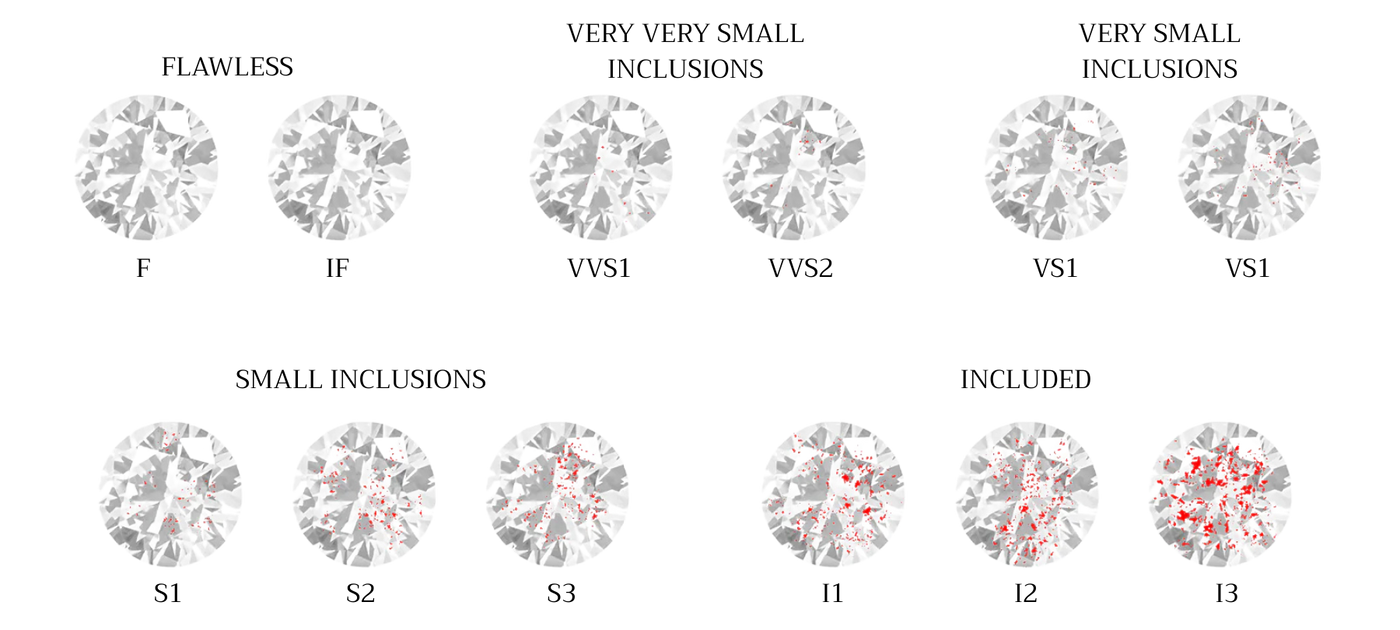
GIA international diamond clarity scale — FL through I3
GIA clarity grade groups
- FL–IF No inclusions visible, even under 10× magnification
- VVS Minute inclusions, difficult for a skilled grader to see
- VS Minor inclusions, observed with effort under magnification
- SI Inclusions noticeable to a skilled grader under 10× loupe
- I Obvious inclusions, may affect transparency and brilliance
Our advice
For most settings, we recommend VS2–SI1 as the sweet spot — eye-clean to the naked eye at a meaningful saving over FL–VVS, allowing you to reinvest in cut quality and carat weight instead.
Diamond clarity explained by GIA
Clarity guide
Choosing the right clarity grade
The grade on the certificate is a useful starting point, but it does not tell you everything about what you will notice day to day.
Best value ranges
VS2 to SI1 is often the sweet spot for engagement rings. Many diamonds in this range look clean in normal wear, while avoiding the significant price jump of VVS and above.
For brilliant cuts like round, oval, and cushion, you can often prioritise cut quality and millimetre spread first, then choose the cleanest-looking option within your clarity range.
Our recommendation
When to go higher
Step cuts like emerald and asscher tend to show inclusions more easily because of their broad facets and open windows. Larger carat sizes can also reveal inclusions sooner, especially when you view the diamond from the side.
If you want a crisp, minimal-inclusion look in a step cut, many buyers prefer VS grades. We guide you based on your shape, size, and setting.
What we avoid
We avoid inclusions that are likely to be visible face-up or that reduce transparency. That includes dark crystals under the table, heavy clouds that make a diamond look hazy, and inclusions that create a dull centre.
We also flag durability risks — surface-reaching features in vulnerable areas. If a stone carries a higher risk, it does not make the shortlist unless you explicitly want it and understand the trade-offs.
Our process
How we help you choose online
Buying a diamond online without being able to see it demands a different kind of service. Here is exactly how we work.
-
Sourced to order
We do not hold stock. Every diamond is sourced fresh for you from a network of trusted suppliers and marketplaces — which means access to a far wider selection than any single showroom could carry.
Once you choose a stone, we confirm availability and secure it before any work begins on your setting.
Selection Thousands of stones, filtered for you
-
Shortlisted with guidance
You receive a curated shortlist with certificates, precise millimetre measurements, and plain-language notes on what each clarity grade means for that specific shape and size.
We explain the trade-offs — size versus clarity, cut versus colour — so you can decide based on what you actually care about, not just what looks good on paper.
Turnaround Shortlist within 1–2 business days
-
Checked for visibility and risk
Before anything is confirmed, we assess each shortlisted diamond for inclusions likely to be visible face-up, clouds that affect transparency, and durability concerns — particularly surface-reaching features in vulnerable positions.
If a stone is a poor bet at its price, we say so and offer a better alternative.
Our standard Eye-clean unless you request otherwise
How we work
Standards & Provenance
Certified and responsibly sourced
Every diamond we supply is independently graded and responsibly sourced.

IGI Certified Diamonds
Diamonds independently graded by IGI for cut, colour, clarity, and carat.

GIA Certified Diamonds
Diamonds graded by GIA, widely recognised as the global standard for diamond certification.

Kimberley Process Compliant
Diamonds sourced in compliance with the Kimberley Process to prevent conflict diamonds.