

Ethically Sourced

Emeralds chosen for colour. Set for daily wear.

We source natural emeralds for bespoke engagement rings and fine jewellery. Every stone is assessed for colour, clarity, treatment, and wearability before we recommend it.

Quality

Clarity, in practical terms

Emeralds are expected to have inclusions. The question is how they present.

Natural emeralds commonly show inclusions, often described as an emerald's garden. Many are perfectly acceptable when they do not distract at normal viewing distance. What matters is whether the emerald looks transparent and lively, rather than cloudy. We prioritise emeralds that appear crisp face up, and we avoid features that reduce brightness or create obvious haziness.

Clarity, in practical terms

Eye clean · Slightly included · Moderately included · Heavily included

01
Eye clean

No inclusions visible to the naked eye at arm's length. The emerald looks transparent and lively — our preferred starting point.

02
Slightly included

Minor inclusions that do not reduce transparency or brightness. Can still present beautifully and represent excellent value.

03
Moderately included

Visible inclusions that may affect face up appearance. Acceptable where colour and cut are exceptional and price reflects the trade-off.

04
Heavily included

Inclusions noticeably reduce brilliance or transparency. We advise caution and will be direct about the impact on wearability and value.

What we look for

We prioritise emeralds that appear crisp and transparent face up at arm's length. Inclusions should feel like character — not distraction. Haziness or obvious veiling is always a reason to look further.

Why it matters in a ring

A heavily included emerald may look fine in isolation but lose its presence once set, especially in lower or diffuse light. We advise on practical expectations for daily wear before any stone is selected.

Colour & Character

Emerald colour and character

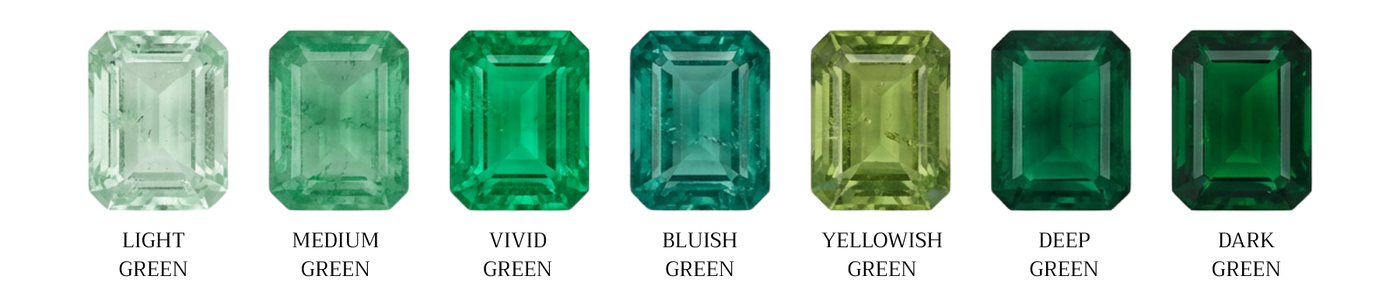
Emeralds are prized for green. The most desirable stones show a balanced hue with strong saturation and a tone that still looks bright in everyday lighting. The goal is a confident, elegant green that reads evenly across the stone, rather than patchy, overly dark, or washed out.

Emeralds naturally contain inclusions, often called an emerald's garden. The key is how they present. We prioritise stones with attractive character and good transparency, so your emerald ring looks lively and refined on the hand.

Emerald colour scale from very light to very dark

The cut

The Emerald Cut

A deliberate optical choice, not a decorative one

The emerald cut is one of the oldest cutting styles in gemology. It exists not because it is beautiful — though it is — but because it is the most honest geometry for this stone. It shows colour as it truly is, preserves weight from fine rough, and creates a quality of light that no brilliant cut can replicate.

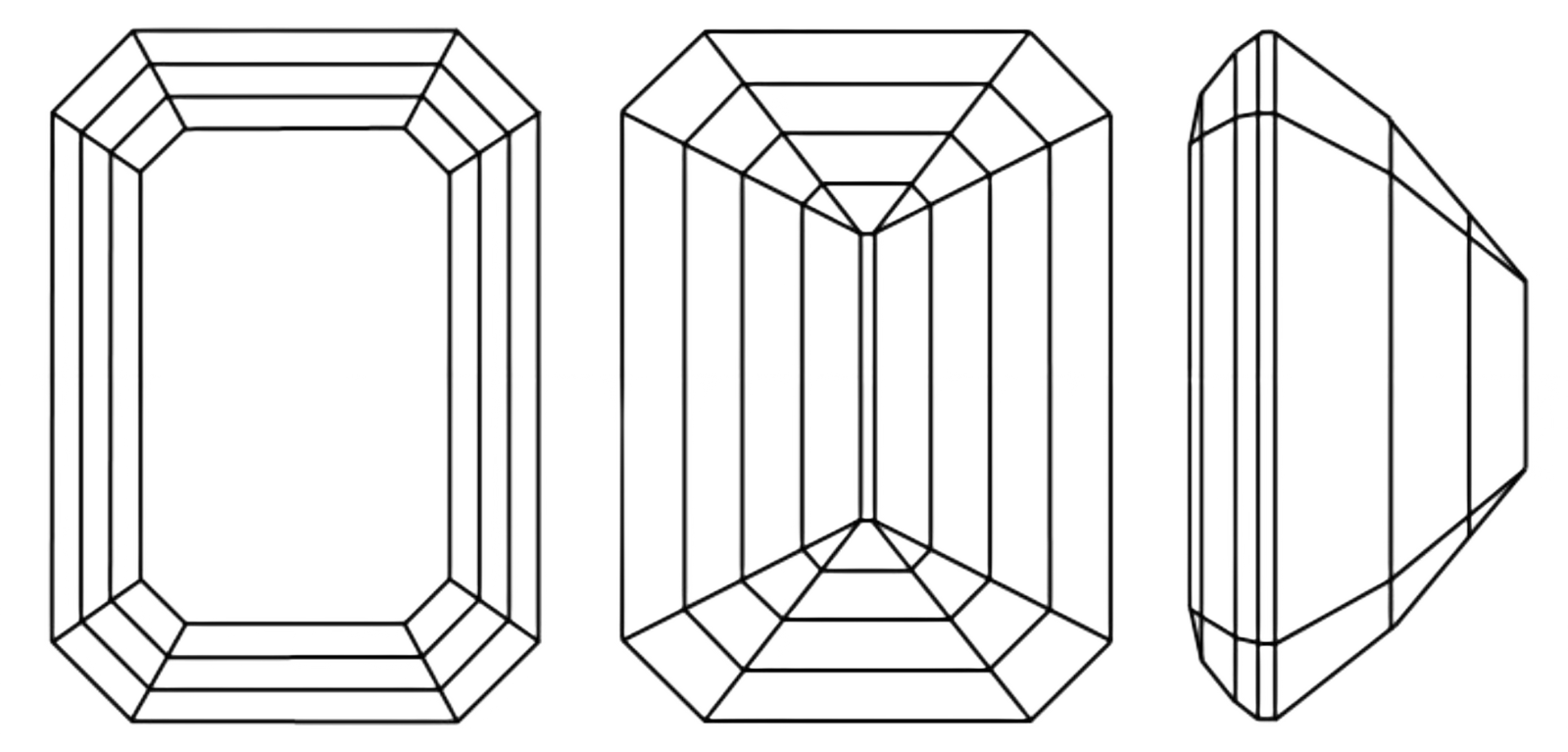
Emerald cut facet diagram
Emerald cut — table view, bottom view and side profile showing step-cut facet structure
01

Why the cut exists

The step cut was not invented for emerald — but it became synonymous with it. Developed to reduce stress on a stone during cutting and to showcase depth of colour rather than brilliance, the large flat table and parallel facets suit stones where colour is the primary quality rather than light return.

02

The hall of mirrors

Where a brilliant cut scatters light into sparkle, a step cut bounces light between its parallel facets in long, slow reflections. The effect is called the hall of mirrors — an architectural depth that draws the eye into the stone rather than off its surface. In a fine emerald, this reveals the inner garden of inclusions as a feature rather than a flaw.

03

What the cut reveals

The open table of an emerald cut hides nothing. Inclusions, colour zoning, and treatment are all immediately visible in a way they are not in a brilliant. This transparency is intentional — it is why the cut demands higher rough quality and why a clean emerald cut stone commands a significant premium over the same weight in a cushion or oval.

04

Five centuries of pairing

The step cut and the emerald have been refined together since the Colombian trade opened in the 16th century. Spanish craftsmen working with the stone found that reducing facet count preserved colour saturation and reduced loss from fragile corners. The cut became the default not by convention but because it shows what emerald does better than any other stone — depth of colour, the garden inside, a quality of light that is slow and deliberate.

The open table

What the emerald cut reveals

01
Inclusions are more visible

The large flat table of the emerald cut acts like a window into the stone. There is no facet complexity to scatter or hide internal characteristics. A jardin that would disappear in a brilliant cut reads clearly here, which is why the cut demands cleaner rough and why eye-clean emerald cuts are priced at a premium.

02
Colour reads truer

Step facets distribute colour more evenly across the face of the stone than brilliant facets do. What you see in an emerald cut is closer to the stone's actual colour than in any other cut geometry. This makes it the definitive cut for assessing — and displaying — colour quality.

03
Quality of the rough matters more

The emerald cut cannot hide. Treatment, zoning, fractures — they all read under the open table in a way they do not in a cushion or pear. This is why buying an emerald cut requires more scrutiny, and why a fine emerald cut stone in a significant size is one of the rarest and most valuable gems in the world.

The cut and the stone found each other over five centuries. The result is a geometry that asks more of the rough, shows more to the eye, and rewards the buyer who understands what they are looking at.

Treatment & disclosure

Treatments and transparency

Clear information supports confident buying.

Many emeralds are treated to improve apparent clarity. This is most commonly done with oils, and sometimes with resins. Treatment type and degree can influence value and collectability, so what matters is disclosure and realistic expectations. We explain what is known about treatment for each emerald and what it means for price, care, and long term wear. Where certification or supporting documentation is available, we recommend keeping it with the piece as part of the emerald's provenance.

Drag to compare · Oil treatment effect

After oil
Before oil
Before oil After oil
Drag to compare

Oil treatment scale

Emerald oil treatment scale comparison

Oil Free

No filler material detected. The rarest commercial grade. Commands a significant price premium and is particularly prized by collectors and investment buyers.

Rarest · Highest value

Very Light Oil

A minor presence of filler. Barely distinguishable from oil free in appearance. Well regarded by laboratories and carries minimal impact on value relative to untreated.

Minor · Negligible impact

Light Oil

A small amount of filler that improves the face-up appearance of the stone. The most common grade in fine jewellery. Well disclosed and priced accordingly.

Common · Well accepted

Moderate Oil

A meaningful quantity of filler. The stone's face-up appearance is noticeably improved by treatment. Value is reduced relative to less-treated stones of similar appearance.

Noticeable · Reduces value

Heavy Oil

Significant fracture filling present. The apparent clarity improvement is substantial. Requires careful disclosure. Significantly lower value per carat than comparable untreated stones.

Significant · Disclose fully
Provenance

Origin and provenance

Where an emerald comes from can influence its value — when the evidence supports it.

Origin can influence an emerald's market perception and pricing, but it should be treated as its own factor, separate from the 4Cs. Two emeralds can share a similar colour and size yet differ in value if one has reliable origin documentation or recognised provenance, such as Colombian emeralds and well documented Zambian emeralds. We prioritise the emerald's beauty, performance, and suitability for long term wear, and we keep provenance clear and honest.

Emerald origins
ZambiaFine colour
Brazil
ColombiaMost prized
Russia
Afghanistan
Ethiopia

What origin means in practice

Origin can add value when the stone quality supports it and the documentation is reliable. We explain what evidence exists and how much weight it should carry in your decision.

  • Colombia

    The benchmark for fine emerald. Colombian stones are prized for their warm, rich green and strong fluorescence. Muzo, Chivor, and Coscuez are the principal mining regions.

  • Zambia

    Zambian emeralds are known for a slightly cooler, bluish-green hue and often excellent clarity. The Kagem mine produces consistent quality and documentation is well established.

  • Brazil

    Brazilian emeralds tend toward a lighter, more yellowish green. Often more affordable for a given size, and some regions produce stones of very good colour and transparency.

  • Other origins

    Ethiopia, Afghanistan, and Russia each produce distinct material. Quality and documentation vary — we assess each stone on its merits and explain provenance honestly.

Understanding Value

What determines emerald value?

The core factors that influence price, beauty, and rarity — applied specifically to emeralds.

Colour

The most important factor in gemstone valuation. Vivid, saturated hues command premium prices. Tone, saturation, and hue uniformity are all assessed.

Note —

For emeralds, hue, saturation, and tone are all assessed together. The ideal is a vivid, warm green — neither too yellowish nor too bluish — with strong, even saturation and a tone that reads lively in all lighting.

Cut Quality

Precision cutting maximises brilliance, fire, and colour distribution. A well-cut stone returns light evenly across its face.

Note —

Emerald cutters prioritise face-up colour over ideal proportions. A slightly deeper pavilion or asymmetric outline is common and acceptable when it improves colour distribution and face-up appearance.

Clarity

Internal characteristics affect transparency and light performance. Eye-clean stones are highly valued, though some inclusions are characteristic of certain stones.

Note —

Emeralds almost always contain inclusions — called the jardin (garden). Eye-clean stones command a significant premium. Haziness or veiling that affects transparency is more detrimental than discreet needle-like inclusions.

Carat Weight

Larger stones are exponentially rarer. Price per carat increases significantly with size, particularly above key thresholds.

Note —

Fine emeralds above 2 carats with exceptional colour and clarity are genuinely rare. Price per carat increases significantly above 1 carat, and above 3 carats with top colour, the premium becomes substantial.

Treatments

Untreated stones command substantial premiums. Common treatments include heat, fracture filling, and clarity enhancement.

Note —

Most emeralds on the market are oiled to some degree. GIA and Gübelin rate treatment as None, Minor, Moderate, or Significant. An oil-free or minor oil emerald of strong colour commands a large premium over a heavily treated stone of similar appearance.

Origin

Certain locations produce stones with exceptional and distinctive characteristics, adding provenance and collector value.

Note —

Colombian emeralds, particularly from Muzo and Chivor, are the benchmark. Zambian stones are well regarded for their slightly cooler hue and often excellent transparency. Origin should be supported by a recognised laboratory report to carry full market weight.

Certification

Independent laboratory reports from GIA, Gubelin, or SSEF verify authenticity, treatment status, and origin, providing confidence and market liquidity.

Note —

For emeralds of significant value, a GIA, Gübelin, or SSEF report confirming colour grade, treatment status, and ideally origin is the standard. Reports add market liquidity and support honest pricing.

Emerald

How this applies to emeralds

For emeralds, colour is the dominant value driver above all others. A vivid, well-saturated green with strong brightness commands a significant premium over darker or more muted stones of the same size. Treatment disclosure is equally critical: an oil-free or very lightly oiled emerald of comparable appearance to a heavily treated stone can be worth multiples of its price. Origin adds value when the evidence supports it — Colombian provenance from a recognised laboratory carries real weight in the market.

How they compare

Emerald vs other gemstones

Every stone has a character. Here is how emerald sits alongside the alternatives.

EmeraldColour and characterSapphireClassic and durableRubyRare and vividDiamondBrilliance and hardness
Colour character
Warm, vivid green — unique among gemstones
Rich blue to blue-green range
Pure red — the rarest vivid colour
Colourless — brilliance over colour
Durability
7.5–8 Mohs, prone to chipping
9 Mohs, excellent for daily wear
9 Mohs, very durable
10 Mohs, hardest natural material
Rarity
Fine colour is genuinely scarce
Good quality readily available
Fine unheated rubies extremely rare
Abundant at commercial grades
Treatment
Oiling is universal and accepted
Heat treatment is standard
Heat and fracture filling common
Most are natural, some laser-drilled
Value retention
Strong for certified fine stones
Consistent long-term demand
Finest examples appreciate strongly
Commodity grades less reliable
Care required
No ultrasonics, gentle cleaning only
Low maintenance, easy to clean
Low maintenance, very robust
Minimal care needed
Price per carat
Premium for fine colour and low oil
Fine Kashmir or Burma commands premium
Highest per-carat of the three
Wide range by cut and certification
Character
Jardin inclusions add individuality
Clean, consistent appearance
Silk inclusions can confirm origin
Standardised grading, less unique

The process

Typical timeline

Most bespoke engagement rings take around four to six weeks from approved design to completion. If you have a deadline, include it in your enquiry.

1–2 weeks

Brief and stone shortlist

We discuss colour preference, size, treatment tolerance, budget, and how the ring will be worn daily. This shapes the sourcing brief.

1–2 weeks

Stone sourcing and options

We search our network and present a shortlist with video, photography, and laboratory documentation for each stone. Nothing is committed at this stage.

Your call

Stone selection and approval

You confirm the final design, stone selection, and agreed pricing. Nothing moves forward without this.

3–4 weeks

Design, production, and delivery

We design around your stone, refine proportions, cast, set, and finish. You approve the CAD before production begins.

Frequently asked questions

Yes — the majority of fine emerald jewellery contains treated stones, and treatment is not inherently a negative. What matters is full disclosure, appropriate pricing, and matching expectations to the treatment level. A lightly oiled emerald of exceptional colour is a beautiful and sensible choice. We explain treatment for every stone we recommend and price accordingly.

Natural emeralds are confirmed by independent gemological laboratory reports from organisations such as GIA, Gübelin, or SSEF. These reports verify that the stone is natural, assess treatment type and degree, and in many cases confirm geographic origin. We recommend certification for any emerald of significant value.

It can, when the evidence supports it. Colombian emeralds — particularly from Muzo and Chivor — are the most sought-after origin and command a premium when certified. Zambian emeralds are increasingly well regarded. However, origin should be considered alongside the stone's actual colour, clarity, and treatment. We explain what the documentation says and how much weight it realistically carries.

Emeralds are relatively durable at 7.5–8 on the Mohs scale but are more prone to chipping than diamonds due to their natural inclusions. Avoid ultrasonic and steam cleaners, which can remove oils and expand fractures. Clean gently with warm water and a soft brush. The setting choice matters too — we advise on protective styles for emeralds intended for daily wear.

Most bespoke emerald commissions are completed within four to eight weeks from stone selection and design approval. Sourcing a specific colour, size, or treatment grade may extend this if we need to search beyond our current stock. We confirm timelines at the start and keep you updated throughout.

Yes. We provide detailed video footage, photography, and laboratory documentation for every stone before any commitment is made. For clients who would like to view in person, we can arrange a viewing. We do not expect you to purchase a significant stone without having confidence in it.

Still have a question? Our team typically responds within one business day.

Bespoke · Made to Order · UK Based

Ready to find your emerald?

We source stones to brief, present options with full documentation, and design around your stone once you're confident in it. No pressure, no commitment until you're ready.

Tell us about the emerald you have in mind