ring setting

Cluster engagement rings: maximalist sparkle, deeply personal design

A cluster engagement ring groups multiple diamonds into a single composition — creating a ring that delivers exceptional sparkle, apparent size, and character at a fraction of the cost of one large stone.

RING SETTINGS EXPLAINED

The cluster setting

Everything you need to know about the cluster before making a decision.

THE BASICS

What is a cluster engagement ring?

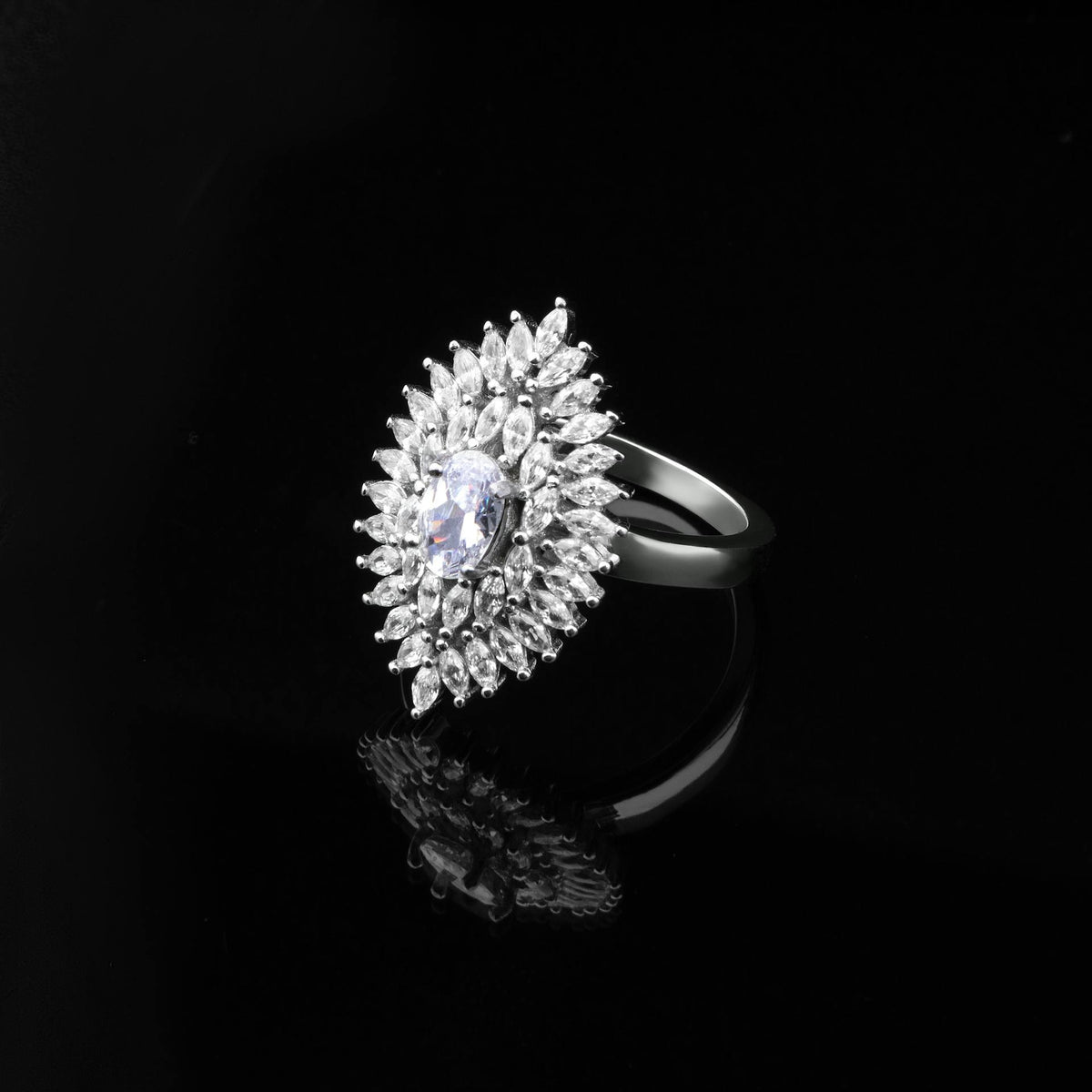
A cluster engagement ring arranges multiple diamonds into a single composition that reads as one larger stone — delivering outstanding sparkle and apparent size at a fraction of the cost.

The cluster ring is one of the most historically rich and visually generous engagement ring styles in fine jewellery. Rather than relying on a single large centre stone, a cluster groups multiple diamonds — usually a dominant anchor stone surrounded by smaller melee — into a composition that creates the impression of a considerably larger piece.

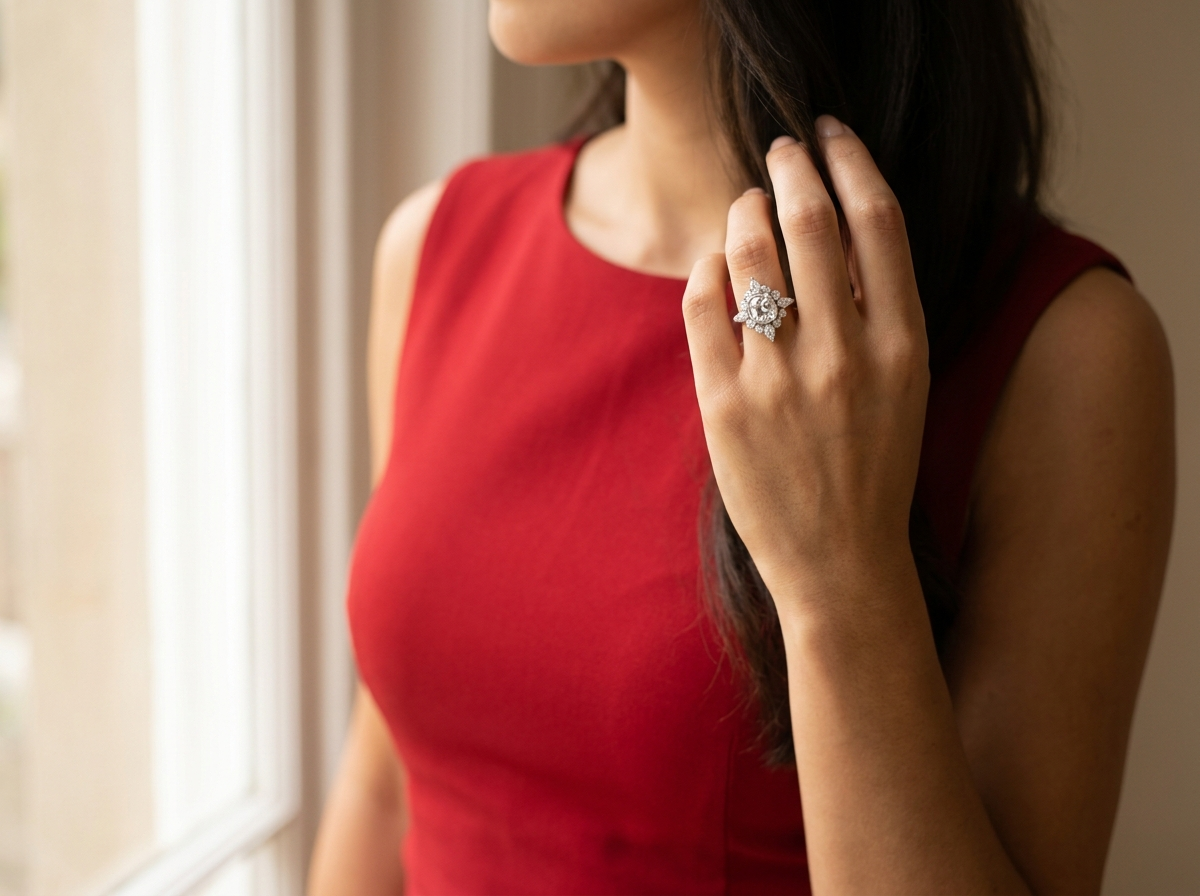
From a distance, a well-designed cluster can appear as one substantial stone. Up close, it reveals itself to be a jewellery-led composition of individual diamonds, each contributing its own light. The total sparkle of a cluster can exceed that of a solitaire at the same price point because of the cumulative surface area of the stones involved.

Cluster rings come in four broad styles. A round-led cluster places a round brilliant anchor stone at the centre of a tight circuit of smaller rounds — the most classic and balanced approach. An oval-led cluster uses an elongated anchor for a wider spread on the finger. A pear-led cluster has an inherently directional, romantic character. An asymmetrical cluster is the most design-led of all — defined by composition rather than a single dominant stone — and produces the most distinctive results.
IS IT RIGHT FOR YOU?

Who chooses a cluster setting?

The cluster is chosen by clients who want maximum visual presence from the ring and who value creative, jewellery-led design over the purity of a single stone. It is an excellent choice for anyone who finds that a solitaire within their budget feels too modest for the statement they want to make.

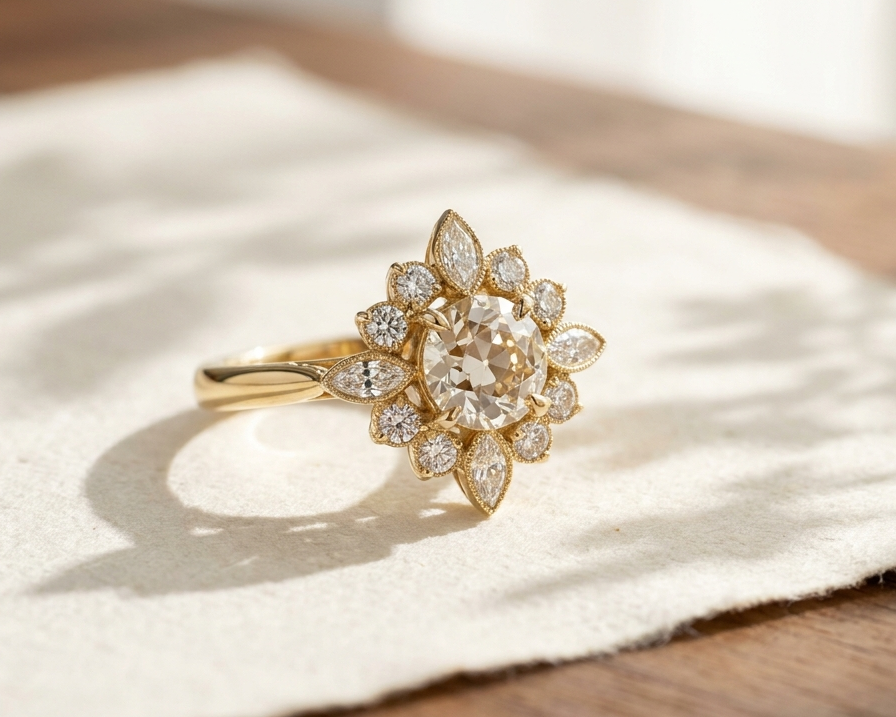
It also suits clients who are drawn to antique and vintage jewellery. The most beloved cluster rings in the world were made in the Victorian and Edwardian eras, and a bespoke cluster can be designed to reference that tradition directly — through old-cut anchor stones, milgrain borders, gallery openwork, and warm yellow gold settings.

The cluster is also the most flexible engagement ring style in terms of personalisation. Unlike a solitaire, where the stone shape is the primary creative decision, a cluster ring can be built around a specific stone pairing, a floral or geometric arrangement, a mix of coloured and white stones, or a wholly original composition. No two cluster rings need to look alike.

If you want a ring that is genuinely unique, that maximises sparkle at your budget, and that gives a designer latitude to create something specifically for you, the cluster deserves serious consideration.

WORTH KNOWING

What to consider before choosing a cluster

A cluster ring has more stones than a solitaire, and more stones means more maintenance points. Individual stones in a closely-set cluster can loosen over time, particularly those on the outer edge of the composition. The ring should be checked periodically — exactly as you would with a halo or pavé-shouldered solitaire. A well-made cluster from a skilled bench jeweller will last for decades, but it is not maintenance-free.

Profile height is worth thinking about. Cluster rings tend to sit higher than solitaires because the gallery needs to accommodate the setting for multiple stones. If a low profile is important to you, the asymmetrical or round-led styles can be designed to sit closer to the finger, but it requires specific decisions at the design stage.

Wedding band fit is also a consideration. Because the cluster head is usually wider than the band, a standard straight wedding band will often not sit flush. Most clients choose a shaped or contoured wedding band designed to fit around the cluster, or commission both the engagement ring and wedding band together so they work as a matched pair.

Finally, the cluster is more design-dependent than a solitaire. The quality of the result depends significantly on the layout, the proportions of the anchor stone relative to the surrounding melee, and the finish of the setting. A cluster rings merits more back-and-forth at the design stage than a straightforward prong solitaire. If you are unsure where to start, a free consultation is the right first step.

COMPATIBILITY

Anchor stone shape and composition compatibility

Select a cluster style above to see how it works with different anchor stone shapes and overall compositions. Conditional ratings are discussed at the design stage.

A round brilliant as the dominant anchor stone, surrounded by smaller round melee in a tight circuit. The most familiar cluster language and the easiest to keep balanced. Works with virtually any surrounding stone shape or arrangement.

An oval anchor stone with surrounding melee shaped or arranged to follow its elongated outline. The result reads wider on the finger than a round-led cluster of the same total weight. Particularly effective with marquise or pear melee echoing the oval’s outline.

A pear-shaped anchor stone with surrounding melee that follows or contrasts its directional outline. The point of the pear needs careful consideration — either protection within the cluster arrangement or a specific prong at the tip.

No single dominant anchor stone or a deliberate off-centre arrangement. The cluster is defined by composition rather than a focal shape. More design-led and more consultation-dependent than the other three styles.

Anchor stone shape compatibility

Shape
Round-led
Oval-led
Pear-led
Asymmetrical

Round Brilliant

Works with all four cluster languages as anchor or melee

Yes
Yes
Discuss
Yes

Oval

Strong anchor for oval-led and asymmetrical clusters

Discuss
Yes
Discuss
Yes

Cushion

Soft corners make cushion a sympathetic anchor for round-led clusters

Yes
Discuss
Discuss
Yes

Pear

Natural anchor for pear-led clusters; tip protection required

Discuss
Discuss
Yes
Yes

Emerald

Step-cut geometry can be striking in an asymmetrical cluster

Discuss
Discuss
No
Yes

Marquise

Elongated form works well in oval-led and asymmetrical arrangements

Discuss
Yes
Discuss
Yes

Asscher

Square step-cut suits asymmetrical and design-led clusters

Discuss
No
No
Yes

Old European Cut

The traditional cluster anchor — naturally at home in a round-led arrangement

Yes
Discuss
No
Yes

Old Mine Cut

Square-ish outline suits round-led and asymmetrical antique clusters

Yes
Discuss
Discuss
Yes
Compatible Conditional Not compatible N/A

Conditional ratings depend on the size and proportions of the anchor stone relative to the surrounding melee. Discuss at the design consultation.

Profile and composition compatibility

Profile / band
Round-led
Oval-led
Pear-led
Asymmetrical

Low profile

Cluster sits close to the finger — achievable but requires a shallow gallery

Discuss
Discuss
Discuss
Discuss

Elevated gallery

Gallery raised above the band — the most common cluster profile

Yes
Yes
Yes
Yes

Flush-fit wedding band

Whether a straight wedding band can sit neatly beside it

Discuss
Discuss
Discuss
No

Wide band support

Whether the cluster sits comfortably on a wide band

Yes
Yes
Discuss
Discuss

Tapering shoulders

Shoulders narrow toward the cluster head

Yes
Yes
Yes
Discuss

Cluster rings tend to sit higher than solitaires. Band width, setting height, and melee density all affect how the ring wears. Discuss wedding-band fit at the consultation stage.

Additional features

Mixed-shape cluster

Available

Different stone shapes — for example round brilliants combined with marquise or pear melee — can be arranged to create movement and a more handmade, jewellery-led character. Most effective when the shapes complement rather than compete.

Coloured accent stones

Available

Sapphires, rubies, or other coloured gemstones used as accent stones within the cluster. Can be used as a single focal point, a scattering, or a specific symbolic detail. All colours discussed at the design stage.

Milgrain detail

Available

A beaded border around the outer edge of the cluster or along the band. Adds vintage character and is particularly effective on antique-style and old-cut cluster designs.

Hidden stone

Available

A small coloured stone or diamond set inside the shank or beneath the cluster head. A private detail that does not affect the face-up appearance of the ring.

Floral arrangement

Available

Melee stones arranged in a petal pattern around the anchor stone. A natural fit for round-led clusters and one of the most enduring cluster compositions in antique and vintage jewellery.

Asymmetrical spread

Available

Stones deliberately arranged off-centre or in an organic, non-symmetrical composition. Most appropriate for design-led briefs where uniqueness matters more than visual balance.

Antique-style detailing

Available

Gallery work, engraving, or openwork beneath the cluster head inspired by Victorian and Edwardian jewellery. Works best on round-led and old-cut cluster designs where the overall character supports it.

Not sure which cluster style suits your brief? Start a free consultation — no obligation, no payment until you approve the final design.

Start your free consultation

How do they compare?

Cluster styles compared

Compare the four cluster styles side by side to find the right balance of sparkle, composition, and design complexity for your brief.

Most classic · Balanced

Round-led

A round brilliant anchor stone surrounded by a tight circuit of smaller rounds. The most recognisable and balanced cluster language — a natural fit for clients drawn to the antique tradition.

Wearability Medium

Gallery sits higher than a solitaire — check wedding band fit.

Elongated · Wider spread

Oval-led

An oval anchor stone with melee arranged to follow its elongated outline. Reads wider on the finger and can incorporate marquise or pear melee to echo the oval’s shape.

Wearability Medium

Similar profile to round-led. Elongated footprint.

Directional · Romantic

Pear-led

A pear anchor stone with surrounding melee that follows its directional outline. The most romantic of the four styles — suits clients who want movement and character in the composition.

Wearability Medium

Tip of pear anchor needs protection — discuss at design stage.

Design-led · Unique

Asymmetrical

No dominant anchor stone — the cluster is defined by composition rather than a single focal shape. The most distinctive and personal of the four styles. Requires more design input.

Wearability Medium

Profile and fit depend on the specific design — discuss at consultation.

Most classic · Balanced

Round-led

A round brilliant anchor stone surrounded by a tight circuit of smaller rounds. The most recognisable and balanced cluster language — a natural fit for clients drawn to the antique tradition.

Wearability Medium

Gallery sits higher than a solitaire — check wedding band fit.

Elongated · Wider spread

Oval-led

An oval anchor stone with melee arranged to follow its elongated outline. Reads wider on the finger and can incorporate marquise or pear melee to echo the oval’s shape.

Wearability Medium

Similar profile to round-led. Elongated footprint.

Directional · Romantic

Pear-led

A pear anchor stone with surrounding melee that follows its directional outline. The most romantic of the four styles — suits clients who want movement and character in the composition.

Wearability Medium

Tip of pear anchor needs protection — discuss at design stage.

Design-led · Unique

Asymmetrical

No dominant anchor stone — the cluster is defined by composition rather than a single focal shape. The most distinctive and personal of the four styles. Requires more design input.

Wearability Medium

Profile and fit depend on the specific design — discuss at consultation.

Sparkle

Exceptional — tight circuit of rounds creates continuous brilliance

Very good — elongated spread gives a different light pattern

Very good — directional arrangement catches light with movement

Variable — depends on stone selection and composition

Perceived size

Reads as one large stone from a distance

Reads wider than a round-led cluster of the same weight

Directional — reads longer than it is wide

Variable — depends on the spread and composition

Balance

Naturally balanced — the most symmetrical cluster

Good balance — symmetrical along the long axis

Inherently directional — asymmetrical by nature

Deliberately unbalanced — that is the point

Wedding band fit

Conditional — shaped band usually needed

Conditional — same as round-led

Conditional — shaped band needed to follow pear outline

Not recommended — asymmetrical head makes band pairing very difficult

Design input needed

Low — the composition is well-established

Medium — melee selection and oval proportions need care

Medium — tip protection and melee placement must be agreed

High — requires significant design-stage discussion

Style character

Antique, classic, jewellery-led

Contemporary, elongated, feminine

Romantic, directional, distinctive

Artistic, original, maximally personal

Maintenance

Outer melee should be checked annually

Similar to round-led

Similar to round-led, plus tip prong

Higher — more complex composition means more setting points

Best suited to

Clients wanting a classic, antique-inspired cluster

Clients wanting a modern, elongated composition

Clients wanting romanticism and directional character

Clients wanting something entirely original

Sparkle

Exceptional — tight circuit of rounds creates continuous brilliance

Very good — elongated spread gives a different light pattern

Very good — directional arrangement catches light with movement

Variable — depends on stone selection and composition

Perceived size

Reads as one large stone from a distance

Reads wider than a round-led cluster of the same weight

Directional — reads longer than it is wide

Variable — depends on the spread and composition

Balance

Naturally balanced — the most symmetrical cluster

Good balance — symmetrical along the long axis

Inherently directional — asymmetrical by nature

Deliberately unbalanced — that is the point

Wedding band fit

Conditional — shaped band usually needed

Conditional — same as round-led

Conditional — shaped band needed to follow pear outline

Not recommended — asymmetrical head makes band pairing very difficult

Design input needed

Low — the composition is well-established

Medium — melee selection and oval proportions need care

Medium — tip protection and melee placement must be agreed

High — requires significant design-stage discussion

Style character

Antique, classic, jewellery-led

Contemporary, elongated, feminine

Romantic, directional, distinctive

Artistic, original, maximally personal

Maintenance

Outer melee should be checked annually

Similar to round-led

Similar to round-led, plus tip prong

Higher — more complex composition means more setting points

Best suited to

Clients wanting a classic, antique-inspired cluster

Clients wanting a modern, elongated composition

Clients wanting romanticism and directional character

Clients wanting something entirely original

The bottom line

Choose round-led for the most classic, balanced cluster — ideal if you are drawn to antique and Victorian jewellery.

Choose oval-led or pear-led for a more contemporary, finger-flattering composition with strong visual character.

Choose asymmetrical if uniqueness is the priority — but allow more time at the design stage and expect a more involved consultation process.

Not sure which cluster style suits your brief? We can help you decide before any commitment is made.

Talk to us

DESIGN OPTIONS

Additional features

Every feature below can be discussed and incorporated at the design stage. The cluster setting is one of the most flexible styles for personalisation.

Mixed-shape cluster

Available

Different stone shapes — rounds combined with marquise, pear, or baguette melee — create movement and a more handmade feel. Most effective when the shapes are chosen to complement the anchor stone rather than compete with it.

Coloured accent stones

Available

Sapphires, rubies, emeralds, or other coloured gemstones set as accent stones within the cluster. Can form a deliberate focal point, a symbolic detail, or a scatter of colour throughout the composition.

Floral arrangement

Available

Stones arranged in a petal pattern around the anchor stone — one of the most enduring and beloved cluster compositions in antique and vintage jewellery. Works best on round-led clusters with a symmetrical anchor.

Hidden stone

Available

A small coloured stone or diamond set inside the shank or beneath the cluster head. A private detail that does not affect the face-up appearance of the ring — ideal for a birthstone or meaningful personal touch.

Milgrain detail

Available

A beaded border along the outer edge of the cluster or the band. Adds vintage character and is particularly effective on antique-style designs with old-cut anchor stones.

Antique-style detailing

Available

Gallery openwork, hand engraving, or structural details beneath the cluster head inspired by Victorian and Edwardian jewellery. Adds considerable depth and character to round-led and old-cut designs.

Mixed-shape cluster Available

Different stone shapes — rounds combined with marquise, pear, or baguette melee — create movement and a more handmade feel. Most effective when the shapes are chosen to complement the anchor stone rather than compete with it.

Coloured accent stones Available

Sapphires, rubies, emeralds, or other coloured gemstones set as accent stones within the cluster. Can form a deliberate focal point, a symbolic detail, or a scatter of colour throughout the composition.

Floral arrangement Available

Stones arranged in a petal pattern around the anchor stone — one of the most enduring and beloved cluster compositions in antique and vintage jewellery. Works best on round-led clusters with a symmetrical anchor.

Hidden stone Available

A small coloured stone or diamond set inside the shank or beneath the cluster head. A private detail that does not affect the face-up appearance of the ring — ideal for a birthstone or meaningful personal touch.

Milgrain detail Available

A beaded border along the outer edge of the cluster or the band. Adds vintage character and is particularly effective on antique-style designs with old-cut anchor stones.

Antique-style detailing Available

Gallery openwork, hand engraving, or structural details beneath the cluster head inspired by Victorian and Edwardian jewellery. Adds considerable depth and character to round-led and old-cut designs.

What to budget

A cluster engagement ring from £1,400 — designed around your brief

The cost of a cluster ring is driven by the anchor stone, the melee quality and quantity, the metal, and the complexity of the composition. Here is what to expect at each level.

Essential

From £1,400

A classic round-led cluster on a plain band. A well-proportioned anchor stone, a tight circuit of round melee, and no additional shoulder detail. The most accessible bespoke cluster commission we offer.

Plain bandRound-led cluster

Statement

£5,000 and above

A cluster commission where the anchor stone, the complexity of the composition, or the craftsmanship is a significant investment. Old-cut anchors, asymmetrical designs, antique gallery work, or coloured gemstone accents sit comfortably in this range.

Old-cut or large anchorAntique-style detailingFull bespoke

Everything you need to know

Frequently asked questions about the cluster setting

A cluster engagement ring groups multiple diamonds into a single composition that reads as one larger stone from a distance. The design typically uses a dominant anchor stone surrounded by smaller melee, creating a ring with exceptional total sparkle and apparent size — often at a significantly lower cost than a single stone of equivalent visual presence.

The four main cluster styles are: round-led (a round anchor surrounded by a circuit of smaller rounds — the most classic and balanced), oval-led (an elongated anchor with melee following its outline), pear-led (a directional, romantic composition with a pear anchor stone), and asymmetrical (a design-led arrangement with no single dominant focal stone). Each produces a very different result in character and feel.

For the same visual impact, yes — usually significantly so. A cluster can achieve the apparent face-up size of a much larger single stone because the combined surface area of multiple smaller stones creates the impression of one substantial piece. Smaller stones of equivalent quality cost considerably less per carat than larger ones, so the price advantage can be substantial.

Round brilliants work with all four cluster styles as both anchor and melee. Oval and cushion anchors suit round-led and oval-led compositions well. Pear-shaped anchors are the natural choice for pear-led clusters. Emerald and Asscher cuts work well in asymmetrical, design-led clusters. For antique-style clusters, old European and old mine cut anchor stones are the historically correct and most characterful choices.

In most cases, a standard straight wedding band will not sit completely flush because the cluster head is wider than the band. Most clients choose a shaped or contoured wedding band made to fit around the cluster, or commission both pieces together so they work as a matched set. Asymmetrical clusters are the most challenging for wedding band pairing and require discussion at the design stage.

A cluster ring has more stones than a solitaire, so there are more potential maintenance points. The outer melee stones can loosen over time, particularly on the outer edge of the composition. The ring should be inspected annually, just as you would with a halo or pavé-shouldered ring. A well-made cluster will last for decades with appropriate care.

Yes — this is one of the most effective ways to personalise a cluster. Sapphires, rubies, or other coloured gemstones can be incorporated as accent stones within the arrangement, as a single symbolic focal point, or as scattered colour throughout the melee. All colour choices are discussed and agreed at the design stage before anything is made.

Extremely. Some of the finest engagement rings from the Victorian and Edwardian eras were clusters — the floral cluster in particular has endured for over 150 years. Old European and old mine cut anchor stones, milgrain borders, gallery openwork, and warm yellow gold settings all work naturally within the cluster language and produce results that feel genuinely rooted in the antique tradition rather than simply inspired by it.

Yes. All precious metals work well with a cluster setting. Yellow gold is particularly associated with antique and vintage cluster styles and brings warmth to the composition. Platinum and white gold maximise the apparent brightness of the diamonds and suit more contemporary designs. Rose gold offers a softer, romantic feel that works especially well with round-led and oval-led clusters.

Still have a question? Our team typically responds within one business day.

Ring settings

Engagement ring styles

Choose a setting that suits your lifestyle and design vision. Each style is engineered for security, comfort, and proportion.

15 setting styles

Select a setting style to explore it

Solitaire

Solitaire

A classic single stone that puts the diamond first

Side Stone

Side Stone

Shoulder stones that add brilliance and visual width

Trilogy

Trilogy

Three stones symbolising past, present, and future

Toi et Moi

Toi et Moi

Two stones side by side — modern and deeply personal

Bezel

Bezel

A smooth metal rim that protects and frames the stone

Prong

Prong

Prongs maximise light return with a variety of claw styles

Bar-Set

Bar-Set

Clean lines with diamonds held between upright metal bars

Channel-Set

Channel-Set

Diamonds set flush within a continuous channel in the band

Pave

Pave

A surface of micro-set diamonds delivering continuous sparkle

Bead-Set

Bead-Set

Small beads of metal raised to secure each individual stone

Flush

Flush

Stone sits level with the band surface for a minimal profile

Tension

Tension

The stone appears suspended between two ends of the band

East-West

East-West

Stone set horizontally for a contemporary elongated look

Knife-Edge

Knife-Edge

A crisp ridge runs along the band for a structured profile

Split Shank

Split Shank

The band divides to frame the centre stone with added presence

Bespoke cluster engagement rings

Commission your cluster engagement ring

Every piece designed around your brief, your stones, and your budget. No showroom. No pressure. Just a considered process from first conversation to finished piece.