Bespoke - Made to Order - UK

A necklace made for you

Worn closest to the body of anything you will own. Designed with that in mind.

Styles available7Pendant to rivière
Stones to choose from10+Diamond to opal
Typical turnaround3-4 wksFrom approved design
Nothing made untilYou approveFull design sign-off
Made to order

The necklace styles we make

Every piece is designed to order. Choose the style that suits your occasion, your wardrobe, and your budget.

Pendant Most popular

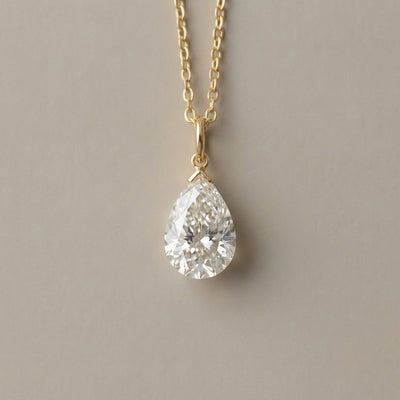
Pendant

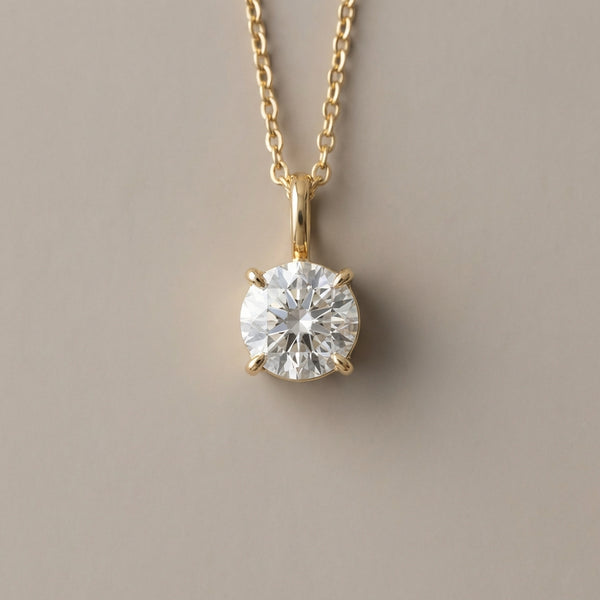
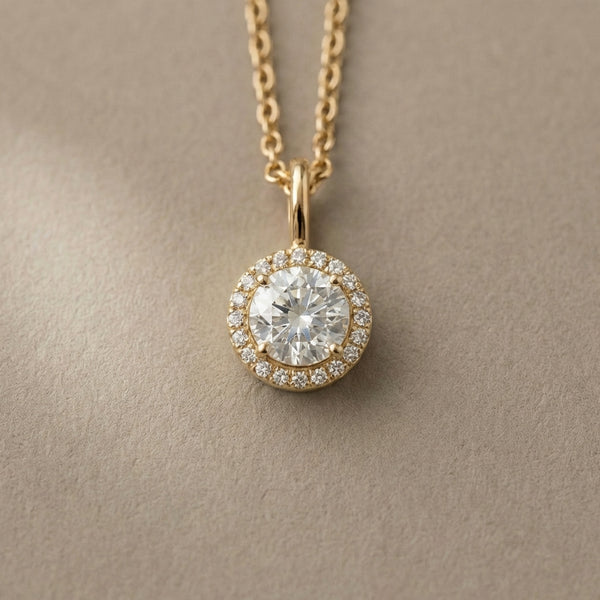
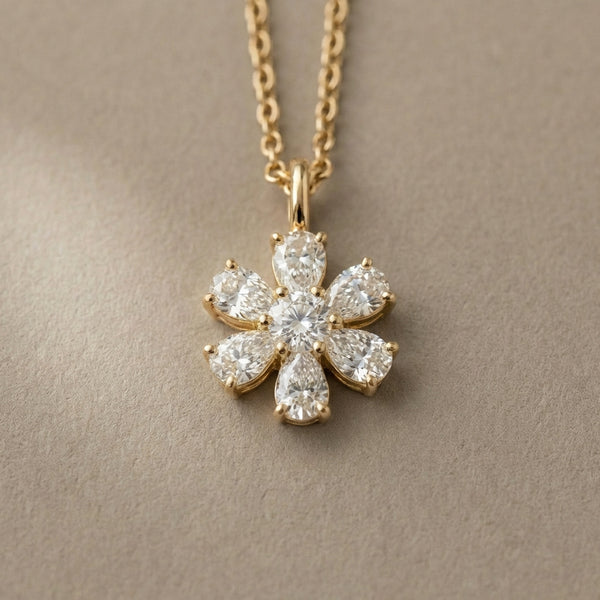
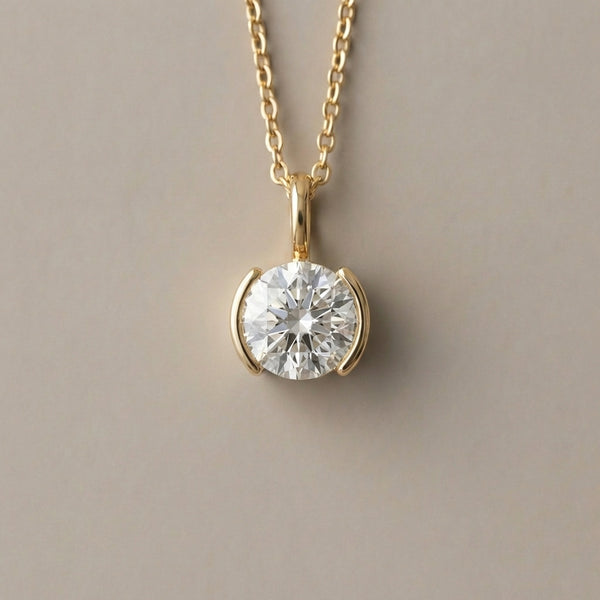
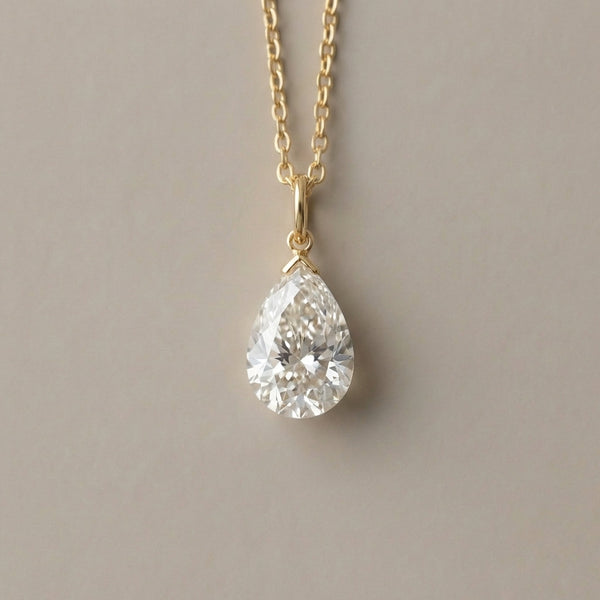
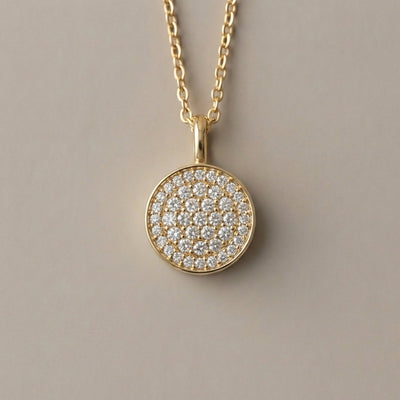
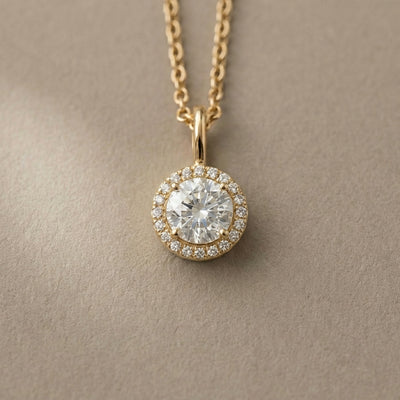
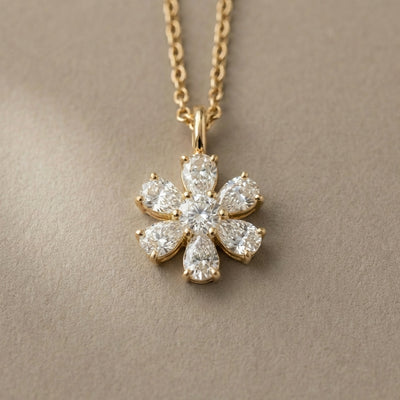
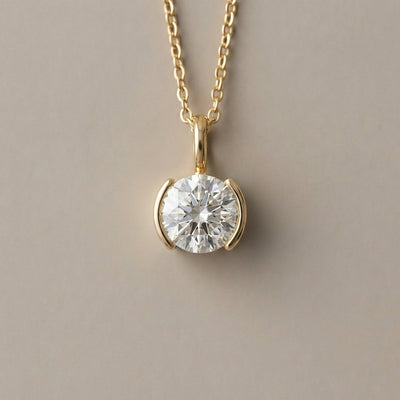
The most versatile necklace form. A single stone or setting suspended from a chain - the chain and pendant designed together as one piece.

Solitaire or cluster All metals Daily wear or occasion From a single stone
Chain only

Chain only

A fine metal chain with no pendant. Worn alone as a daily piece or as the foundation layer of a deliberately assembled necklace stack.

Plain or diamond-set Yellow gold most popular Perfect for layering
Locket Most personal

Locket

A hinged pendant that opens to hold a photograph, lock of hair, or small personal object. One of the most meaningful commissions we take on.

Plain or engraved front All metals Sized to your content Heirloom quality
Riviere Statement piece

Riviere

A continuous line of matched stones around the full circumference of the necklace. The necklace equivalent of a full eternity ring.

Full circumference Matched stones throughout Diamond or coloured stone Flexible setting
Collar / Choker Occasion

Collar / Choker

A close-fitting necklace at the collarbone. Occasion-led, higher price point.

Station necklace

Station necklace

Individual stones at spaced intervals along a fine chain. More delicate than a riviere.

Negligee Rare

Negligee

Two pendants of different lengths on a single chain. An Edwardian form rarely offered by standard jewellers.

Setting styles

How the stone sits

The setting determines how much light reaches the stone, how the pendant hangs, and how the necklace reads on the body. Each style has a distinct character.

9 setting styles

Claw / Prong

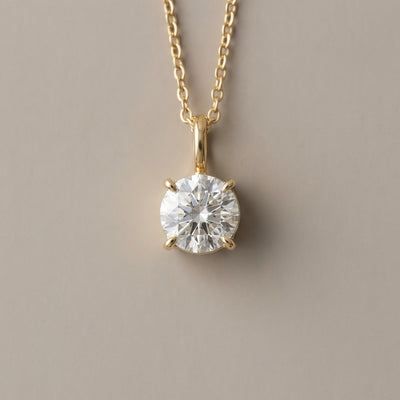
Claw / Prong

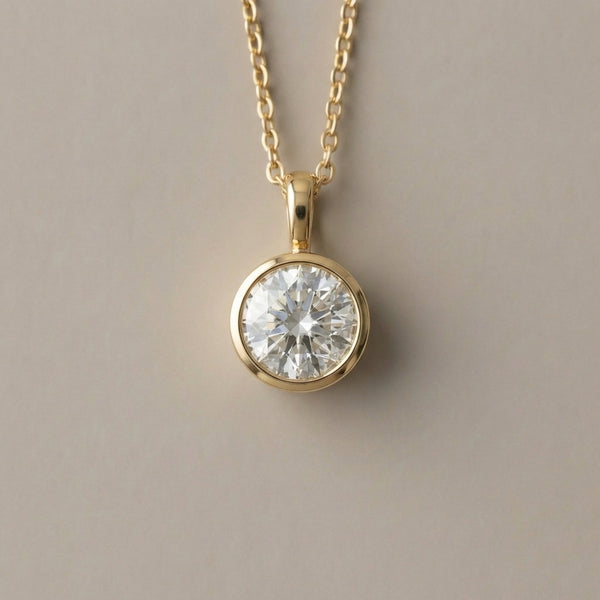
Bezel

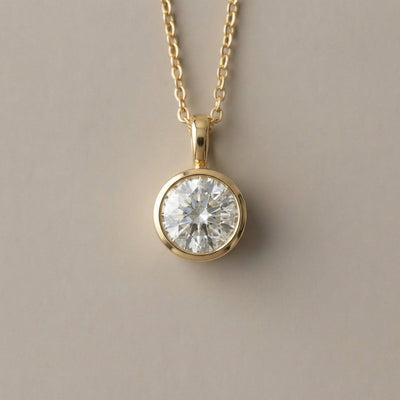
Bezel

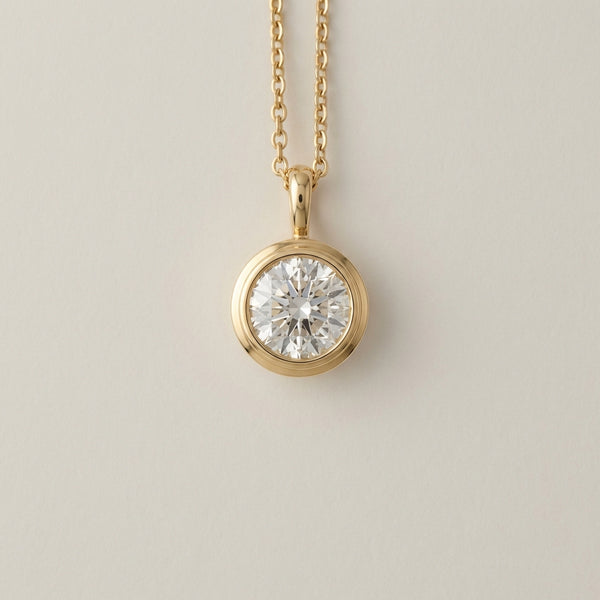
Collet

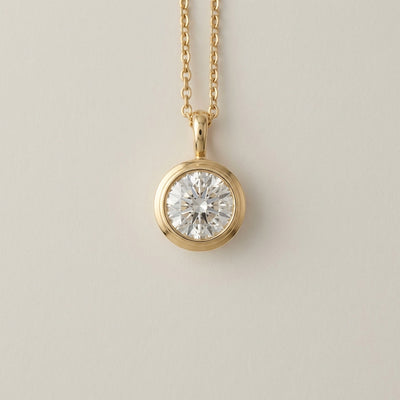
Collet

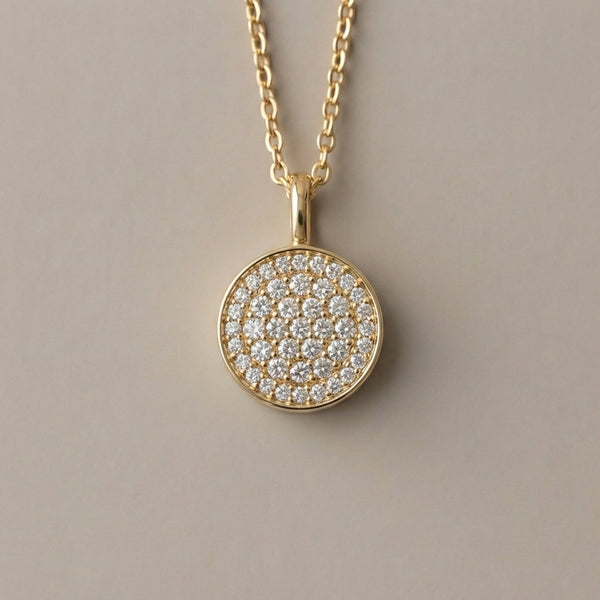
Pavé

Pavé

Halo

Halo

Cluster

Cluster

Tension

Tension

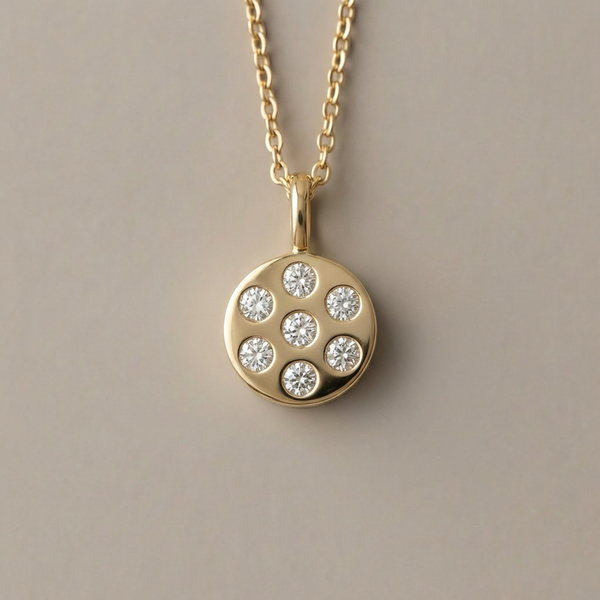
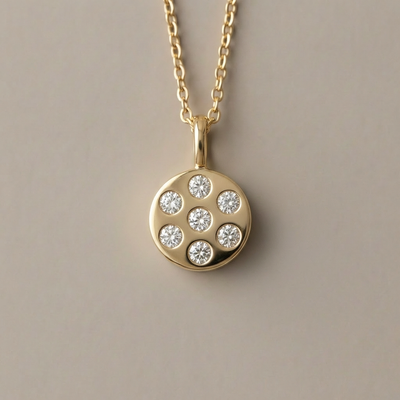
Flush / Burnish

Flush / Burnish

Briolette / Drill-set

Briolette / Drill-set

Choose your stone

Every stone, considered

The stone shapes the character of the pendant — its colour, its light, and how it interacts with the neckline and the wearer.

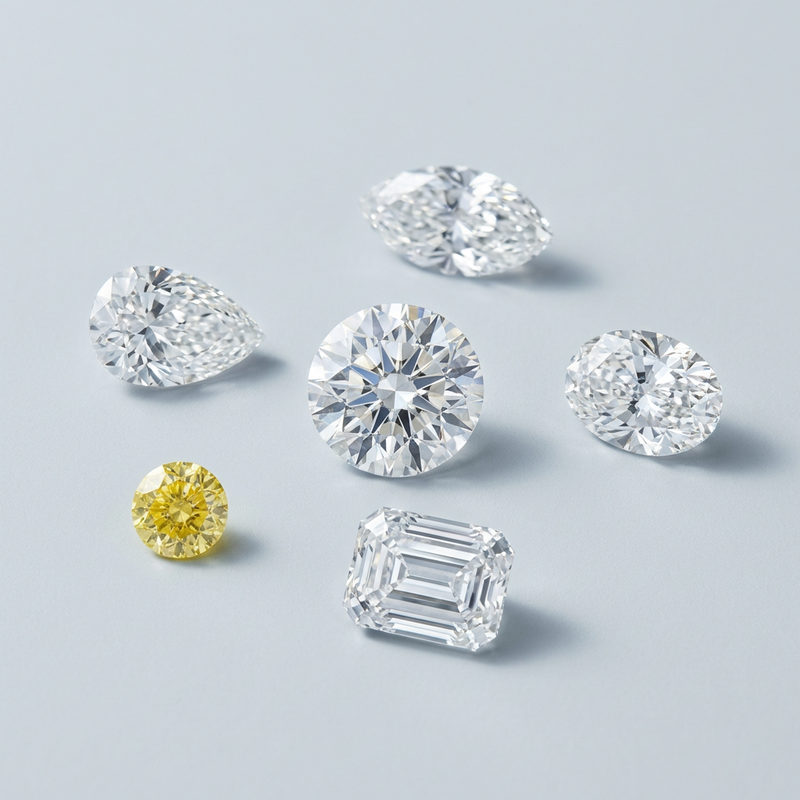
Diamond

Diamond

Timeless / Brilliant / Durable

The classic choice for a bespoke pendant. Unmatched brilliance at the neckline — catching light with every movement. Diamonds suit everything from a minimal solitaire to an elaborate halo or cluster.

Hardness 10 / Mohs
Durability Exceptional
Colour range D–Z scale

Diamonds are the hardest natural material on earth, scoring 10 on the Mohs scale. In a pendant, they catch light from above, below, and the sides — producing exceptional brilliance in movement as well as stillness.

Excellent for daily wear in any setting style. The hardness means a diamond pendant withstands constant contact with skin and clothing without dulling or chipping. A secure bail is as important as the setting itself.

Clean with warm soapy water and a soft brush. Diamonds attract grease from skin and body products — a periodic professional clean keeps the pendant performing at its best.

Best paired with Platinum or 18ct white gold — allows the diamond's brilliance to lead without colour competition
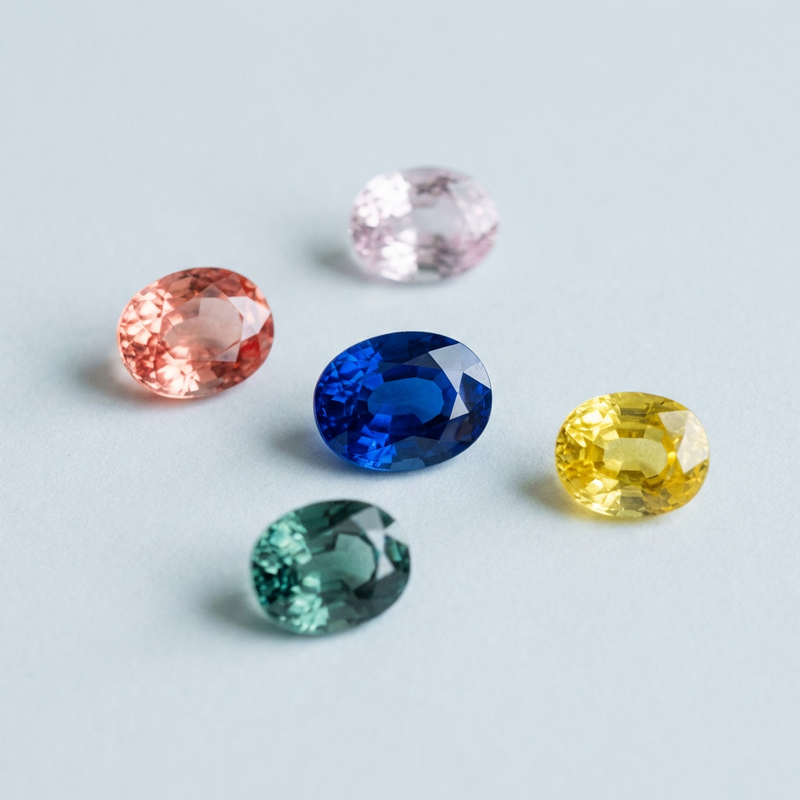
Sapphire

Sapphire

Deep / Vivid / Durable

Deep blues or vivid alternative colours that hold their intensity at the neckline. Sapphires are the most durable coloured stone for a pendant worn daily, and the blue catches light with a depth no other stone replicates.

Hardness 9 / Mohs
Durability Excellent
Colour range Blue, pink, yellow, padparadscha

Sapphires score 9 on the Mohs scale, making them second only to diamond in hardness. In a pendant they are an exceptionally practical choice — the hardness means they resist the surface contact that pendants experience against skin and clothing.

Excellent for daily wear. Sapphires maintain their lustre and colour intensity over decades without treatment or ongoing maintenance, making them one of the most rewarding stones for a pendant worn constantly.

Clean with warm soapy water and a soft brush. Avoid ultrasonic cleaners for heavily included stones. A professional check every year or two is recommended.

Best paired with 18ct yellow gold or platinum — both complement the depth of blue; yellow gold adds warmth to pink and padparadscha sapphires
Emerald

Emerald

Rich / Distinctive / Luxuriant

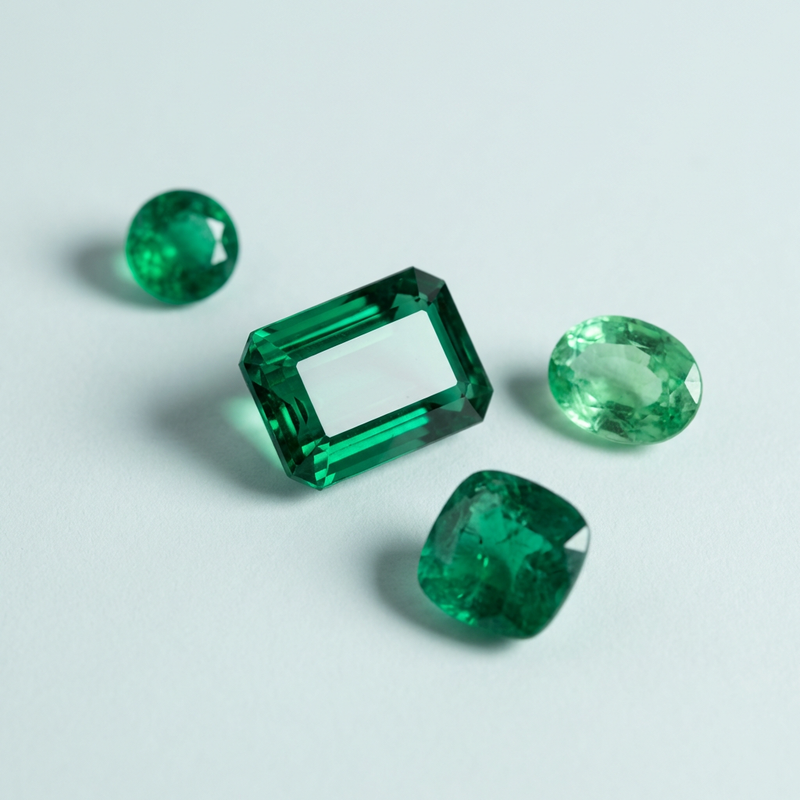
Rich green with a depth of colour and historical prestige that no other stone carries. In a pendant, emeralds make an immediate statement. A protective bezel or collet setting is recommended for daily wear.

Hardness 7.5–8 / Mohs
Durability Good with care
Colour range Light to deep green

Emeralds score 7.5–8 on the Mohs scale. Their colour comes from chromium and vanadium. Most contain a natural jardin of inclusions — part of their character rather than a flaw. In a pendant they are less exposed to impact than in a ring.

Good for regular wear with appropriate setting. Pendants are less prone to sharp impacts than rings, making emeralds a more practical choice at the neckline than on the finger. A bezel or collet is still recommended for the most active wearers.

Clean gently with a damp cloth only. Avoid ultrasonic cleaners and steam entirely. Emeralds are often treated with oil to improve clarity — heat and chemicals can affect this.

Best paired with 18ct yellow gold — the warmth of the metal enriches the green and suits the stone's historical character
Ruby

Ruby

Bold / Symbolic / Vivid

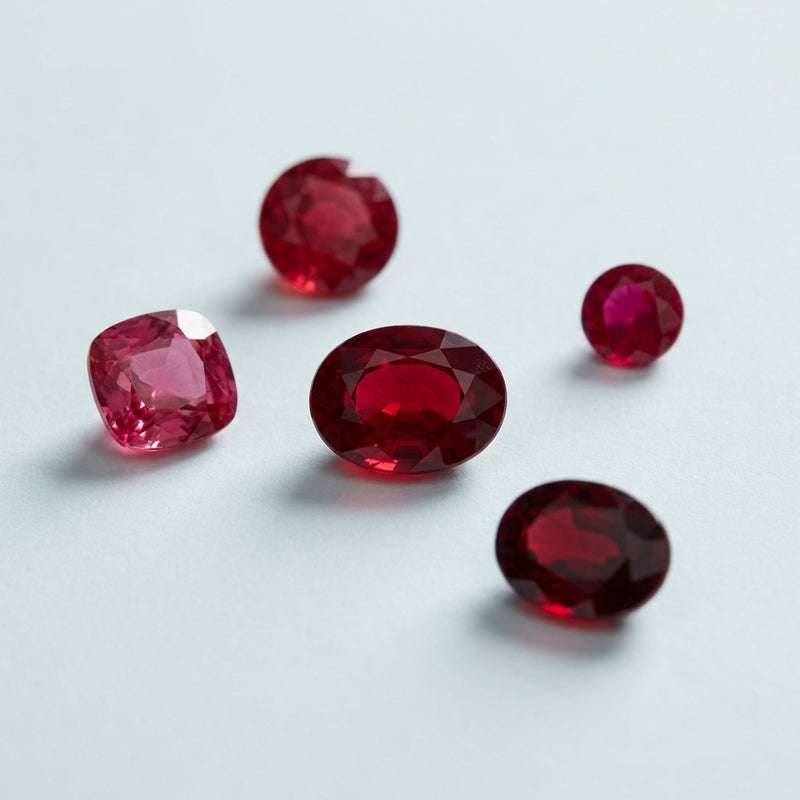
Bold red at the neckline — immediate, symbolic, and deeply personal. Ruby pendants carry strong colour at any size and are one of the most requested coloured stone choices for a solo statement pendant.

Hardness 9 / Mohs
Durability Excellent
Colour range Pink-red to deep pigeon blood

Rubies are the red variety of corundum, scoring 9 on the Mohs scale. Their colour comes from chromium — ranging from pinkish-red to the deep pigeon blood red of Burmese origin, the most prized tone in the trade.

Excellent for daily wear. The high hardness makes rubies a very practical pendant stone. They resist surface dulling from skin contact better than softer stones and maintain their colour intensity over decades.

Clean with warm soapy water and a soft brush. Generally durable enough for ultrasonic cleaning unless heavily fractured — a jeweller's assessment is recommended first.

Best paired with 18ct yellow gold or platinum — yellow gold intensifies the red; platinum presents the colour alone without competition
Pearl

Pearl

Classic / Luminous / Timeless

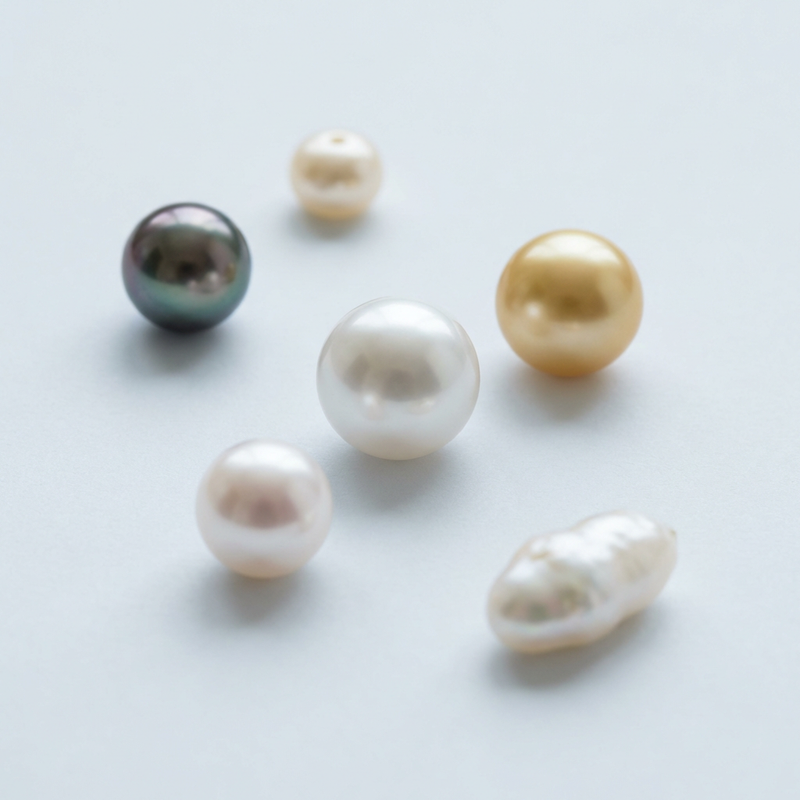
The pendant pearl is one of the oldest and most enduring forms in all of jewellery. The warm, organic luminosity of a pearl at the neckline is unlike any mineral gem — it interacts with skin tone in a way that catches and diffuses light rather than refracting it.

Hardness 2.5–4.5 / Mohs
Durability Handle with care
Colour range White, cream, gold, black

Pearls are organic gems formed by molluscs. Akoya pearls are the classic white pendant pearl. South Sea pearls offer the largest sizes and most lustrous surfaces. Tahitian pearls provide deep grey, green, and black tones with strong iridescence.

Good for regular wear with care. Pendants are gentler on pearls than rings — the stone faces less direct impact. The main risks are perfume, body lotion, and perspiration, all of which dull nacre over time.

Wipe with a soft damp cloth after wearing. Never use ultrasonic cleaners, steam, or chemical solutions. Store separately from harder stones that can scratch the nacre.

Best paired with 18ct yellow or rose gold — warm metals complement the organic warmth of pearl nacre beautifully
Aquamarine

Aquamarine

Cool / Luminous / Elegant

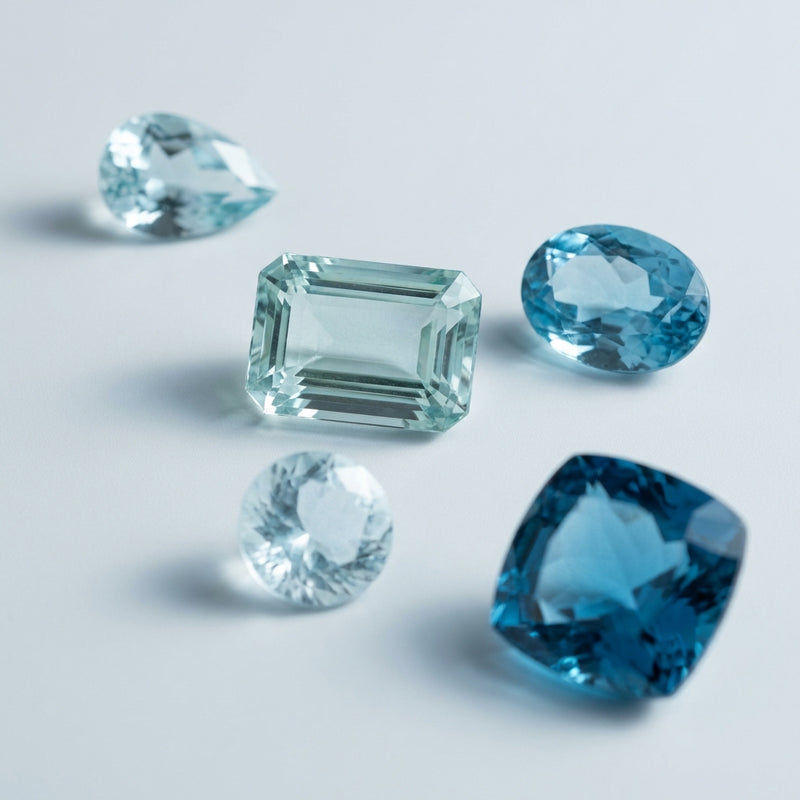
Pale blue to deep sea-blue with an exceptional clarity that makes it one of the most luminous pendant stones. Aquamarine's transparency gives pendants a light, almost ethereal quality at the neckline — particularly in larger sizes.

Hardness 7.5–8 / Mohs
Durability Good
Colour range Pale blue to deep sea-blue

Aquamarine is a blue variety of beryl, the same mineral family as emerald. It scores 7.5–8 on the Mohs scale. Aquamarines are typically very clean — inclusions are rare and eye-clean stones are the norm even at larger sizes.

Good for daily wear as a pendant — the stone faces less direct impact than in a ring setting. Aquamarine's moderate hardness means it can develop light surface scratches over years of wear, but these rarely affect the face-up appearance significantly.

Clean with warm soapy water and a soft brush. Generally safe for ultrasonic cleaning unless heavily included. Avoid prolonged exposure to strong sunlight, which can gradually fade the colour in some stones.

Best paired with Platinum or 18ct white gold — cool metals complement the icy blue without competing with it
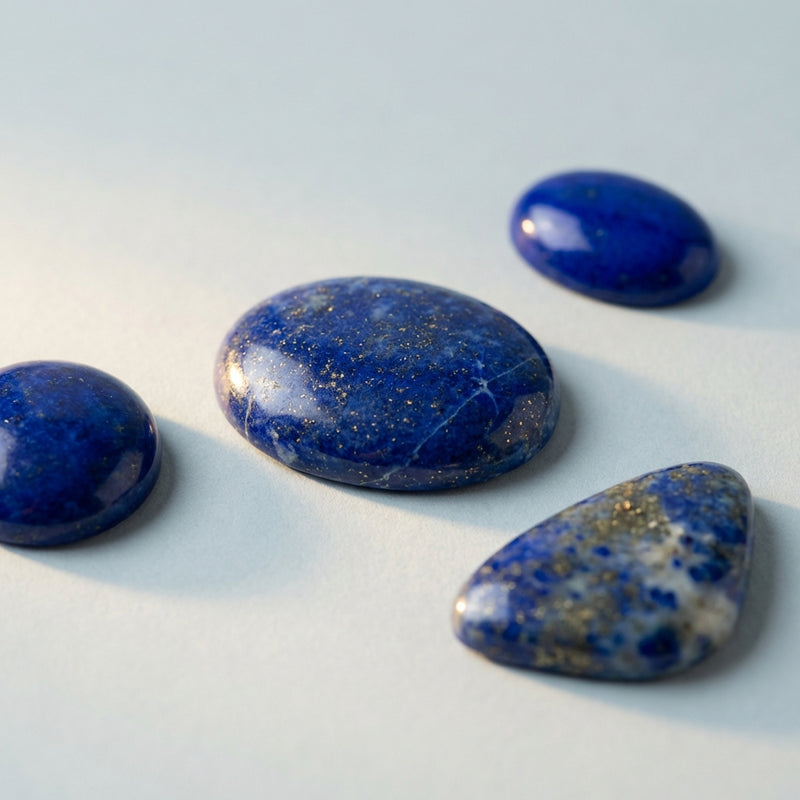
Lapis Lazuli

Lapis Lazuli

Opaque / Ancient / Distinctive

One of the oldest gemstones in decorative use. Lapis lazuli's deep royal blue — flecked with gold pyrite — is immediately recognisable and carries a weight of history shared by no other stone. Suited to pendants and statement pieces where its bold, opaque character can read clearly.

Hardness 5–6 / Mohs
Durability Moderate — handle with care
Colour range Deep royal blue with pyrite and calcite

Lapis lazuli is a metamorphic rock composed primarily of lazurite, which gives it its deep blue colour. The gold flecks are iron pyrite; white veining is calcite. The finest material — deep, uniform blue with minimal calcite — comes from Afghanistan, where it has been mined for over six thousand years.

Moderate — lapis lazuli is softer than most gemstones at 5–6 on the Mohs scale, making it vulnerable to surface scratching. In a pendant it faces less mechanical stress than in a ring, but a protective bezel or collet setting is recommended over an open prong setting. Avoid impact and abrasive surfaces.

Wipe gently with a soft, barely damp cloth. Never use ultrasonic or steam cleaners — both can damage the surface. Avoid acids, chemicals, and prolonged exposure to water. Store separately from harder stones that may scratch the surface.

Best paired with 18ct yellow gold — the warmth of the metal enriches the deep blue and echoes the gold pyrite within the stone
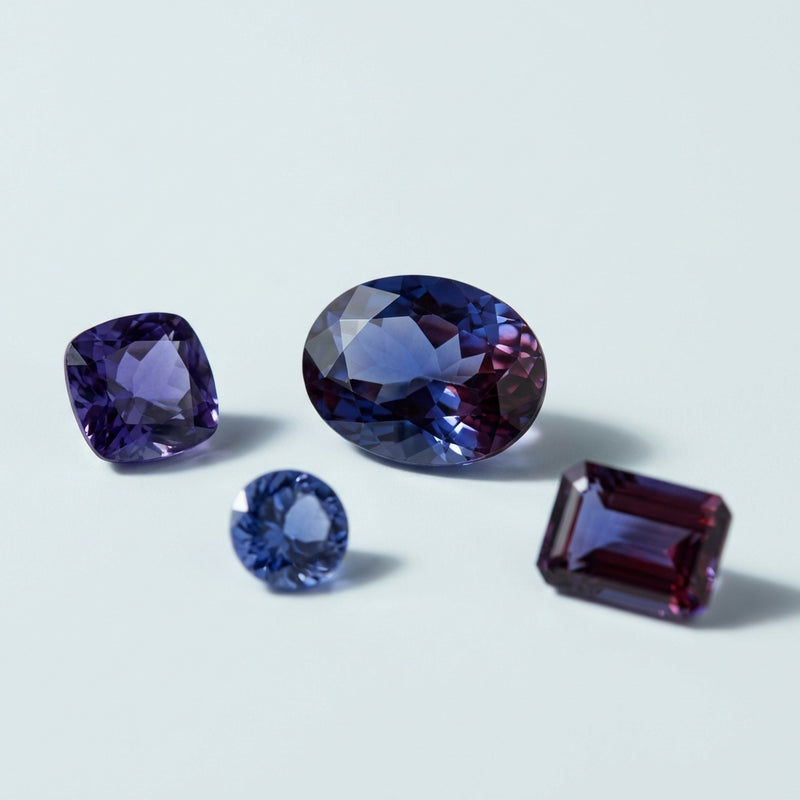
Tanzanite

Tanzanite

Rare / Trichroic / Collectible

Found only in a single square mile near Mount Kilimanjaro, Tanzania. Tanzanite's extraordinary trichroism — shifting between blue, violet, and burgundy depending on viewing angle and light source — makes it one of the most visually dynamic pendant stones available. Its singular origin makes it a genuine collector's choice.

Hardness 6–7 / Mohs
Durability Moderate — handle with care
Colour range Blue-violet to deep indigo

Tanzanite is the blue-violet variety of the mineral zoisite, found exclusively in a small mining area in Tanzania. It is strongly trichroic — showing different colours along different crystal axes. Most tanzanite is heat-treated to reduce brown tones and enhance the blue-violet. Only one known deposit exists worldwide, making it considerably rarer than diamond.

Moderate — better suited to pendant and earring settings than rings. Its hardness of 6–7 Mohs and perfect cleavage in one direction make it vulnerable to hard knocks. As a pendant it faces far less mechanical stress, but a protective bezel or halo setting is recommended over an exposed prong setting.

Clean with warm soapy water and a soft brush only. Never use ultrasonic or steam cleaners — tanzanite's perfect cleavage makes it vulnerable to vibration and thermal shock. Avoid direct heat, rapid temperature changes, and harsh chemicals. Store separately from harder stones that may scratch the surface.

Best paired with 18ct white gold or platinum — cool metals enhance the blue-violet and complement the stone's cool depth; yellow gold works beautifully with more violet or indigo specimens where warmth adds contrast
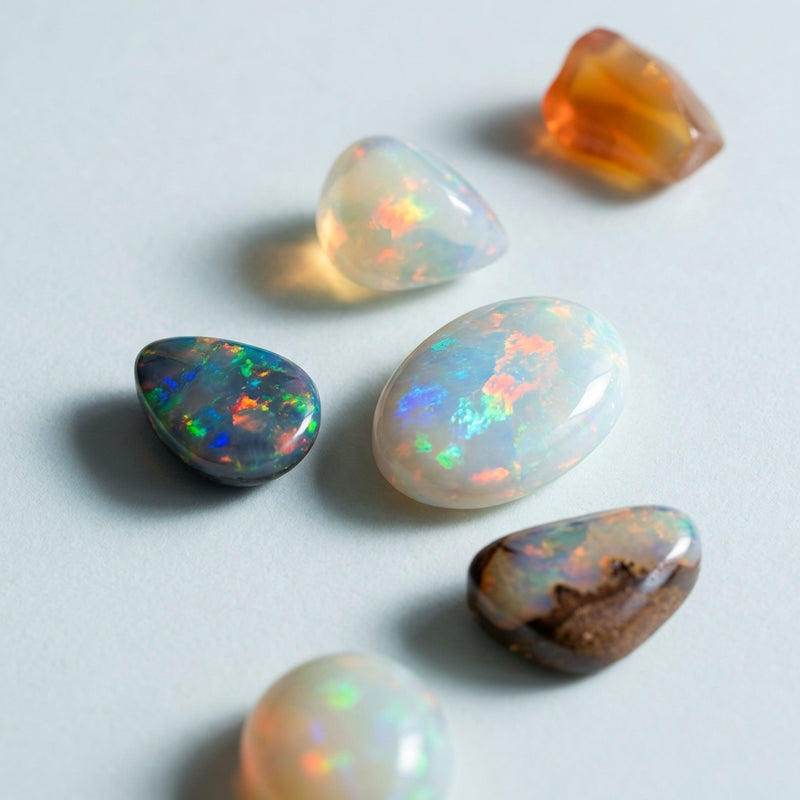
Opal

Opal

Iridescent / Unique / Organic

No two opals are alike. The play-of-colour — brilliant flashes of red, green, blue, and gold that shift as the stone moves — makes opal the most visually individual pendant stone available. Each stone carries an unrepeatable pattern. Best suited to pendants and earrings where it is protected from direct impact.

Hardness 5.5–6.5 / Mohs
Durability Handle with care
Colour range White, black, crystal, boulder

Opal is a hydrated amorphous silica containing between 3–20% water. The play-of-colour is caused by light diffracting through silica spheres arranged in a regular grid structure. Australian opals dominate the fine market — Lightning Ridge produces the most prized black opal; Coober Pedy is known for white opal. Ethiopian opal offers striking crystal-clear material with vivid play-of-colour.

Moderate — best suited to pendant and earring settings where the stone is shielded from direct impact and abrasion. Opal's lower hardness benefits from a bezel or protective setting rather than an exposed prong setting. Avoid sudden temperature changes and very dry environments, both of which can stress the stone.

Wipe gently with a soft, barely damp cloth only. Never use ultrasonic or steam cleaners — both can cause fracturing or crazing. Avoid harsh chemicals, hand sanitiser, and perfume. Because opal contains water, very dry conditions or rapid temperature changes can cause surface cracking. Do not soak in water or expose to prolonged heat.

Best paired with 18ct yellow or rose gold — warm metals complement opal's natural warmth and organic character; white gold or platinum suit black opal particularly well, where the contrast between the dark stone and cool metal is striking
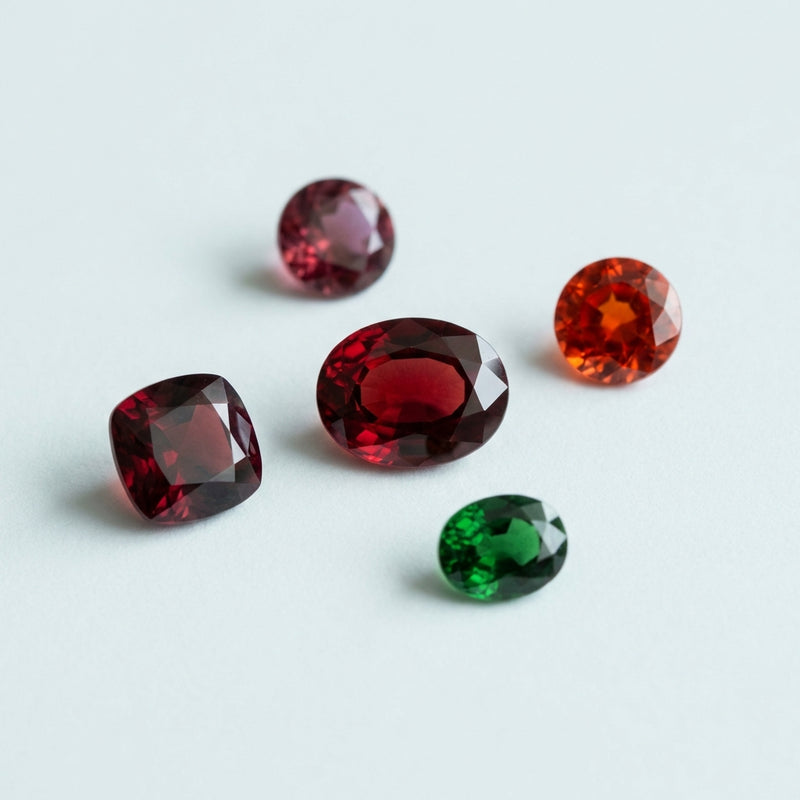
Garnet

Garnet

Rich / Varied / Underrated

Garnet is not one stone but a family of related minerals spanning almost every colour. The finest pendant garnets — demantoid (vivid green with fire exceeding diamond) and tsavorite (intense emerald-green) — are among the most brilliant coloured stones available. Rhodolite offers a rich raspberry-pink; spessartite a blazing mandarin orange.

Hardness 6.5–7.5 / Mohs
Durability Good to very good
Colour range Red, orange, pink, green — nearly all colours

The garnet group includes pyrope, almandine, spessartite, grossular (including tsavorite and hessonite), andradite (including demantoid), and uvarovite. Each variety has distinct optical properties. Demantoid garnet has the highest dispersion of any natural coloured stone — greater than diamond — giving it extraordinary fire and brilliance in pendant settings.

Good for daily pendant wear across most varieties. A hardness of 6.5–7.5 Mohs and the absence of cleavage make most garnets resilient and practical. Demantoid is the softest fine variety at 6.5 Mohs and benefits from a protective bezel or halo setting. No variety requires unusual precautions in pendant wear.

Clean with warm soapy water and a soft brush. Most varieties are safe for ultrasonic cleaning, but demantoid — particularly stones with the prized horsetail inclusions — and any stone with visible surface fractures should be cleaned by hand only. Store separately from harder stones such as diamonds and sapphires to avoid surface scratches.

Best paired with 18ct yellow gold — suits the warmth of red, orange, and raspberry-pink garnets beautifully; white gold or platinum complement tsavorite and demantoid, letting their vivid greens take full prominence

Choosing your metal

Which metal is right for your necklace?

The pendant and the chain do not need to be the same metal — mixing yellow gold chain with white gold setting is common and can be the most flattering combination for certain stones.

Recommended
Platinum
950 Purity

The finest choice for a pendant with a significant stone. Naturally white, hypoallergenic, and holds stones more securely than any gold alloy. Chain weight means platinum is less common for long necklaces but ideal for pendants.

No platingHypoallergenicMost secure
White Gold
18ct / 75% Pure

The most popular white metal for diamond pendants. Rhodium-plated for a bright finish. The pendant itself sees more polishing contact than a ring, so replating is needed less often — typically every two to three years.

Rhodium platedBright white18ct standard
Recommended
Yellow Gold
18ct / 75% Pure

A timeless choice that requires no plating and ages beautifully. 18ct is the fine jewellery standard. Particularly suited to coloured stones and pearls — the warmth of the metal enriches the stone and complements most skin tones.

No platingClassic warmthLow maintenance
Recommended
Rose Gold
18ct / 75% Pure

A flattering choice at the neckline — the blush tone complements a wide range of skin tones. The copper content makes it slightly harder than yellow gold. No plating required. Particularly beautiful against pearls and warm-toned stones.

No platingSlightly harderSkin-flattering
Silver
Sterling / 92.5% Pure

Prone to tarnishing with constant skin contact — a significant concern for a pendant worn daily. Too soft for fine stone settings over the long term. Not recommended for a piece intended to last decades.

TarnishesSoft metalNot recommendedNot recommended
Metal Durability Maintenance Plating needed Everyday wear Starting purity
Platinum Very low 950
18ct White Gold Low — replate every 2–3 yrs 75% (18ct)
18ct Yellow Gold Low 75% (18ct)
18ct Rose Gold Low 75% (18ct)
Silver High — tarnishes 92.5% (sterling)

Durability rated 1-5. Maintenance reflects typical upkeep for a pendant worn daily against skin.

Designed with purpose

Design considerations for bespoke necklaces

Everything we account for before a single link is formed.

Chain length and neckline

Chain length determines where the pendant sits on the body and how it interacts with necklines. 16 inches sits at the collarbone, 18 inches just below — the most versatile length. 20 inches reaches the top of the chest and suits lower necklines and layering. We discuss your wardrobe and wearing context before specifying length.

Pendant weight and chain gauge

A heavy pendant on a fine chain will pull the chain out of position and accelerate wear at the bail. We match chain gauge and link weight to pendant mass — a 5ct stone needs a substantially different chain to a 0.5ct solitaire. The bail design is as important as the chain.

Bail design and chain compatibility

The bail is the connecting element between pendant and chain. It needs to be wide enough for the chain to pass through easily and move freely, strong enough to carry the pendant's weight without deforming, and proportioned correctly so it does not visually interrupt the transition from chain to stone.

Layering and stacking

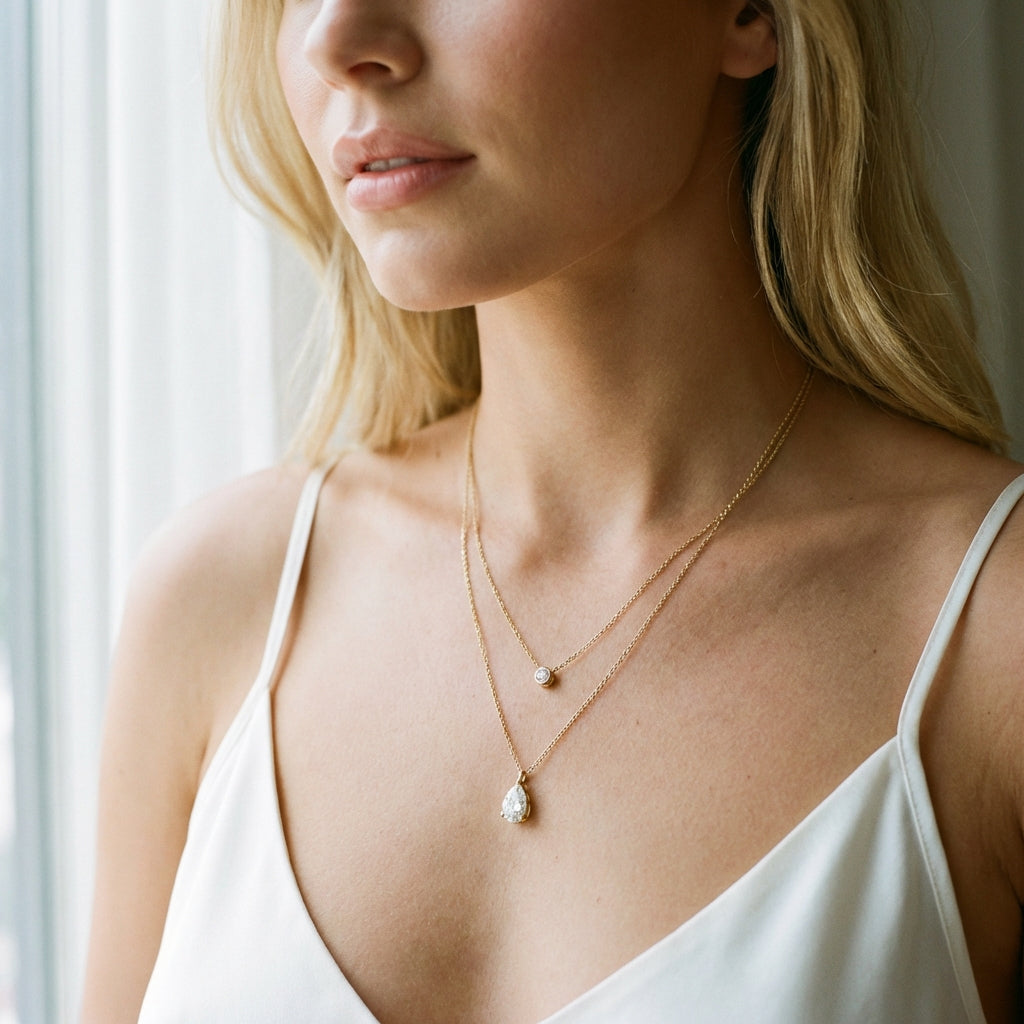
If the necklace will be worn alongside other chains or pendants, the lengths need to be designed as a set rather than chosen independently. We space lengths 2–3 inches apart so each piece sits in its own visual band and avoids tangling. Metal and chain style consistency ties the look together.

Skin contact and metal sensitivity

A necklace sits against skin for hours at a time. Metal sensitivity — particularly to nickel in white gold alloys — is more relevant for pendants than for rings, which are more easily removed. We use platinum or 18ct gold throughout and can specify hypoallergenic chain findings on request.

Daily wear versus occasion

A necklace designed for daily wear has different priorities to one made for occasional use. Daily wear calls for a lower-profile setting, a more secure clasp, and a chain gauge that withstands repeated fastening and unfastening. Occasion pieces can prioritise visual impact over robustness.

Wearing multiple necklaces together

Layering and stacking

Wearing multiple necklaces together

Layering necklaces is one of the most personal forms of jewellery styling — but it works best when the pieces are designed or chosen with each other in mind. We consider length, weight, metal, and pendant scale together so the stack looks considered, not accumulated.

Length spacing

Space layered necklaces 2–3 inches apart in length so each piece sits in its own visual band. 16, 18, and 20 inches is the most reliable three-piece layering combination.

Chain weight hierarchy

The shortest chain should be the finest; the longest can be the heaviest. A delicate chain at the collarbone with a more substantial chain lower down reads as considered rather than accidental.

Mixing metals intentionally

Mixed metal layering works when the metals are chosen deliberately rather than accumulated by default. Yellow and white gold together reads as a considered choice. Adding rose gold to the mix requires more care — three metals can compete rather than complement.

Pendant placement within a stack

One pendant within a layered set is usually enough. Two pendants at different lengths can work if their visual weight and scale are deliberately contrasted. More than two tends to create visual noise at the neckline.

Personalisation
Engravings

Engravings

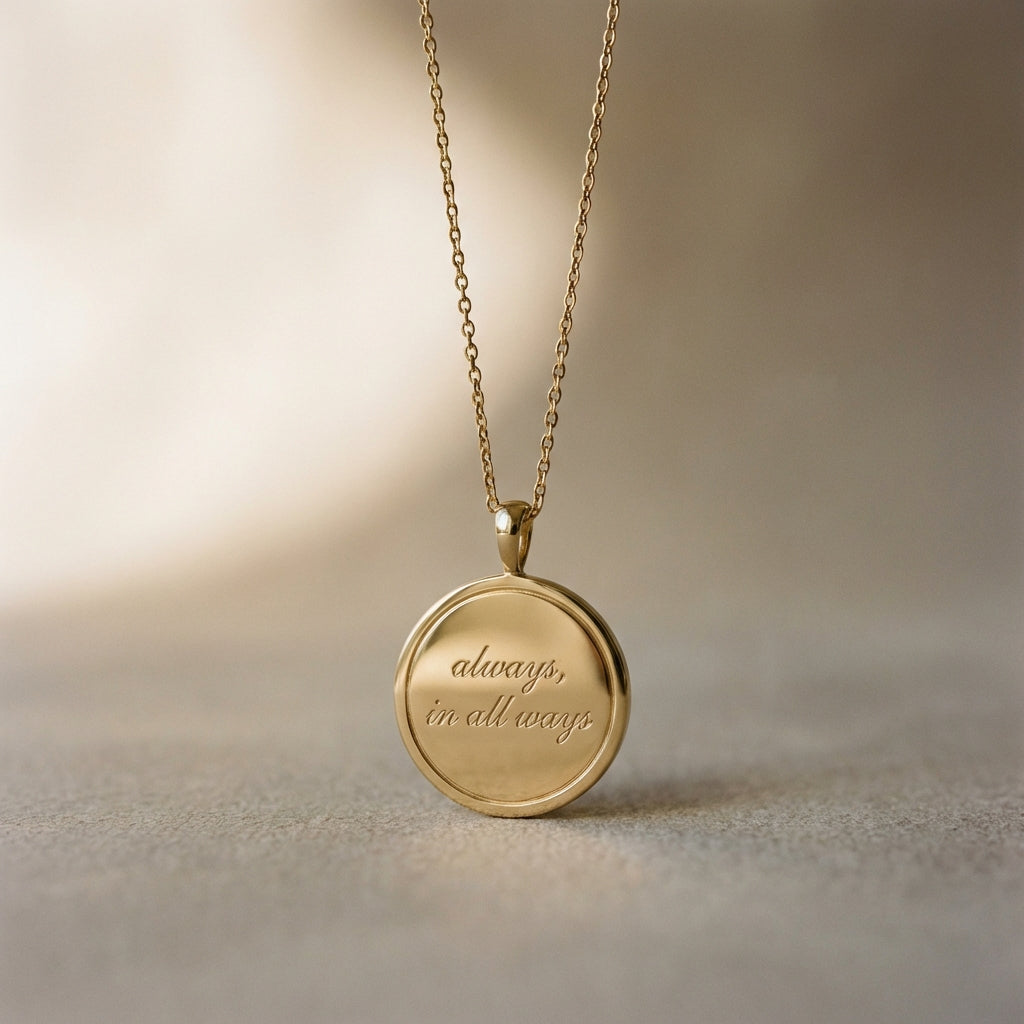
Engraving turns a necklace into something deeply personal. Hidden on the back of a pendant or displayed on the face of a locket, it often carries the most meaning of anything on the piece.
The most personal location — hidden against the skin, visible only when removed. Ideal for a date, initials, a name, or a short inscription. Available in classic block lettering or flowing script. Character limits depend on pendant size and shape, which we confirm at the design stage.
For locket commissions, the inner face of each door can carry engraving alongside the photograph or keepsake inside. The interior edge — the narrow band around the opening — can also carry a short inscription. A particularly meaningful location given it faces whatever is held inside.
Executed by a specialist engraver using traditional graver tools. Each line is cut by hand, giving the work a warmth and organic quality that machine engraving cannot replicate. Particularly suited to script lettering, decorative borders, and motifs on locket faces.
Precision laser or CNC engraving that produces razor-sharp, highly consistent lines. Well-suited to technical text, dates, coordinates, and designs that require absolute accuracy. Faster turnaround and lower cost than hand engraving for standard requests.
Discuss your engravingIncluded on all bespoke commissions

Our commitment to you

Designed with clarity from start to finish

You remain in control from first conversation to finished piece.

Direct communication at every stage

You work directly with our team throughout. No account managers, no handoffs. Clear updates at every step of the process.

No intermediaries

Nothing is made until you approve the design

We present the full design, stone, chain specification, and pricing before a single link is formed. Your sign-off comes first.

Full approval control

Stone shown and approved before setting

For significant commissions, we present the stone for your approval before it goes to the bench. You see what you are getting — not a grade on a certificate.

Stone approved first

Pricing agreed before production begins

The full cost — pendant, chain, clasp, and any engraving — is confirmed before any work starts. There are no surprises at the end.

Transparent pricing

Every piece inspected before dispatch

Each piece is checked for setting security, clasp function, chain integrity, and finish quality before it leaves us. We do not dispatch work we would not wear ourselves.

Quality assured

The process

Typical timeline

Most bespoke necklace commissions are completed within four to six weeks from approved design. If you have a date in mind — a birthday, an anniversary, a wedding — include it in your enquiry and we will plan around it.

1-2 weeks

Brief and stone selection

We discuss the style, stone, chain, occasion, and any reference material you have. We begin sourcing stones or confirming chain specifications at this stage.

1-2 weeks

Design and approval

We prepare the design for your review — pendant, bail, chain length, and clasp. You approve every element before anything is made.

Your call

Your confirmation

You confirm the final design, stone, chain specification, and agreed price. Nothing moves to production without this step.

3-4 weeks

Made and delivered

Your pendant and chain are made, set, and finished. Clasp and bail function checked before dispatch. Delivered securely to you.

Everything you need to know before you begin.

Frequently asked questions

The most versatile length for most people is 18 inches — it sits just below the collarbone and works with the majority of necklines. 16 inches sits at the collarbone itself and suits higher necklines and more delicate pendants. 20 inches falls to the top of the chest and suits lower necklines and larger pendants. If you wear the necklace primarily under clothing, a shorter length keeps it visible; if over clothing, a longer length gives more presence. We advise based on your body proportions and wardrobe during your consultation.

No — and in some cases a mixed metal combination is the most considered choice. A diamond pendant in white gold or platinum set on a yellow gold chain is a classic combination that suits many stone types and skin tones. We will advise on the most flattering combination for your specific design during the consultation.

Yes. The back of a pendant can carry a name, date, initials, or a short inscription. The available space depends on the pendant's design and size. We advise on character limits and typography options before confirming the brief. For locket commissions, engraving on both the front face and the interior edge is possible.

The most common clasps are the lobster claw (secure, easy to operate), the spring ring (compact and clean), and the box clasp (suits flat chains and bracelets). For necklaces worn daily, we recommend a lobster claw for its combination of security and ease. For more elaborate pieces or those worn less frequently, a box clasp or toggle can be a considered design feature in its own right. We discuss clasp preference during the brief.

Yes — this is one of the most satisfying commissions we take on. Designing necklaces as a set from the outset means the lengths, weights, chain styles, and metals are chosen to complement each other rather than assembled piecemeal. The result looks deliberately considered in a way that accumulated individual pieces rarely do. Tell us how many layers you want and we will design the set as a whole.

Yes. Lockets are one of our most personal commissions — a piece designed to carry something inside as well as to be seen from the outside. We can make lockets in any metal, with plain or engraved fronts, in oval, round, rectangular, or bespoke forms. The interior can be sized for a specific photograph, a lock of hair, or a small personal object. Tell us what you want to put inside and we will design around it.

Yes, provided it is designed for it. A well-made pendant in a secure setting on an appropriately gauged chain — with a reliable clasp — is designed for daily wear. The main risks are catching the chain on clothing when dressing and undressing, and exposing the piece to chemicals in perfume, hairspray, and swimming pools. We recommend removing a fine necklace before swimming, applying perfume, and sleeping.

Most commissions are completed within four to six weeks from design approval. Simple solitaire pendants on stock chain at the lower end; elaborate cluster or pavé pendants with bespoke chain at the upper end. If you are commissioning for a specific occasion, include your date when you enquire and we will confirm whether it is achievable.

Still have a question? Our team typically responds within one business day.

Pricing & Accessibility

This isn't luxury for the few. This is bespoke for everyone

Bespoke does not have to mean inaccessible. Understanding what drives the cost of a piece helps you make decisions that suit your budget — and get the result you want.

The Stone

The stone is the single largest variable in any commission. Carat weight, cut quality, colour grade, and rarity all move the cost significantly — and the same setting can look entirely different depending on what sits inside it.

Price influence

The Metal

Metal type, chain length, and total weight all contribute. Platinum costs more than gold by weight and requires more labour to work. A rivière necklace uses far more metal than a solitaire pendant on a fine chain.

Price influence

The Making

Setting complexity, hand work, and any engraving determine the labour cost. A flush-set disc pendant and an elaborate cluster require very different amounts of bench time — and that difference is reflected in the price.

Price influence

Tell us your budget. We will tell you what is possible.

Start the conversation

Standards & Provenance

Certified and responsibly sourced

Every diamond we supply is independently graded and responsibly sourced.

IGI — International Gemological Institute

IGI Certified Diamonds

Diamonds independently graded by IGI for cut, colour, clarity, and carat.

Independent grading
GIA — Gemological Institute of America

GIA Certified Diamonds

Diamonds graded by GIA, widely recognised as the global standard for diamond certification.

Global standard
Kimberley Process Certification Scheme

Kimberley Process Compliant

Diamonds sourced in compliance with the Kimberley Process to prevent conflict diamonds.

Conflict-free sourcing

Begin here

Tell us what you have in mind

Every necklace we make is designed to order. Your stone, your chain, your occasion. A brief description is enough to start the conversation.

Start your bespoke necklace

Verified Reviews

Loved by our customers

GIA & IGI Certified
Verified Reviews
UK Based
Bespoke with Care
Free UK Delivery
47 verified reviews
Verified Review
Direct

The locket is beyond anything I imagined

I came with a loose idea of what I wanted and left with something I will treasure forever. The engraving on the interior is exquisite and the photograph fits perfectly. It has already become a piece I can imagine passing on.

Google

The sapphire is the most beautiful I have seen

The stone selection was extraordinary. They showed me three sapphires before we settled on the one that became the pendant. The blue at the neckline is unlike anything from a high street jeweller.

Verified Review
Google

A chain worth investing in

I wanted a simple yellow gold chain that I could layer and wear daily. What arrived was beautifully finished, correctly proportioned, and the clasp is the most satisfying I have ever used. Exactly right.

Verified Review
Direct

My mother cried when she opened it

We commissioned a pearl pendant as a gift for my mother's seventieth birthday. The South Sea pearl they sourced is extraordinary — an enormous, perfectly round stone with a lustre I have never seen in a shop. The process was seamless and it arrived in the most beautiful packaging.

Verified Review
Direct

The rivière is extraordinary

This was a significant purchase and they made the entire process feel completely considered. The stone matching across the full necklace is flawless — every diamond reads as the same colour and cut face-up. I had been quoted elsewhere and the quality here is simply in a different category.

Verified Review
Direct

The locket is beyond anything I imagined

I came with a loose idea of what I wanted and left with something I will treasure forever. The engraving on the interior is exquisite and the photograph fits perfectly. It has already become a piece I can imagine passing on.

Google

The sapphire is the most beautiful I have seen

The stone selection was extraordinary. They showed me three sapphires before we settled on the one that became the pendant. The blue at the neckline is unlike anything from a high street jeweller.

Verified Review
Google

A chain worth investing in

I wanted a simple yellow gold chain that I could layer and wear daily. What arrived was beautifully finished, correctly proportioned, and the clasp is the most satisfying I have ever used. Exactly right.

Verified Review
Direct

My mother cried when she opened it

We commissioned a pearl pendant as a gift for my mother's seventieth birthday. The South Sea pearl they sourced is extraordinary — an enormous, perfectly round stone with a lustre I have never seen in a shop. The process was seamless and it arrived in the most beautiful packaging.

Verified Review
Direct

The rivière is extraordinary

This was a significant purchase and they made the entire process feel completely considered. The stone matching across the full necklace is flawless — every diamond reads as the same colour and cut face-up. I had been quoted elsewhere and the quality here is simply in a different category.