Every piece is designed to order. Choose the style that suits your wrist, your wardrobe, and your budget.
Most popular
01
Tennis bracelet
A continuous line of matched stones in a flexible setting, running the full circumference of the wrist. The most requested fine jewellery bracelet commission.
Full circumferenceDiamond, sapphire or rubyClaw, box or bezel setDaily wear or occasion
A tennis bracelet sets a continuous line of individually matched stones in a flexible setting that runs the full circumference of the wrist. Every stone is selected for consistency of colour, cut, and face-up appearance. Diamonds are the most common choice. Sapphires and rubies are increasingly requested. Setting style - claw, box, or bezel - changes the character of the piece significantly and is a key design decision.
Most popular
02
Bangle
A rigid circular band in plain metal, engraved, or stone-set. Worn singly as a statement or stacked in multiples. Hinged or solid - sizing matters significantly.
Plain, engraved or stone-setHinged or solidAll metalsStackable
A bangle is a rigid band that slides over the hand onto the wrist. We make bangles in plain polished metal, with engraved surfaces, or stone-set across the face or full circumference. Sizing is critical - we take a wrist and knuckle measurement to ensure the bangle passes over the hand comfortably and sits correctly when worn. Hinged bangles are available where sizing is difficult.
Most personal
03
Chain bracelet
A fine chain with a single stone, initial, or symbolic charm. Personal, wearable every day, and frequently gifted. The bracelet equivalent of a pendant necklace.
Fine chainStone, initial or charmAll metalsIdeal gift
A chain bracelet with a single pendant element is one of the most personal commissions we take on. The chain gauge, clasp style, and pendant design are all considered together. The pendant can be a single stone in a collet, an engraved initial, a signet-style charm, or a symbolic form. Frequently given as a milestone gift and designed to be worn every day.
Statement piece
04
Cuff
A wide open-ended band that slides onto the wrist. Can be plain, engraved, or stone-set across the face. Architectural and statement-making.
Open-endedPlain, engraved or setHigher metal weightOccasion or daily
A cuff is a wide, open-ended band that slides over the wrist and is adjusted to fit. Higher metal weight than a bangle - the width and gauge are design decisions that affect the price and presence of the piece. Can be left plain and polished, engraved with a pattern or inscription, or set with stones across the face. The open back distinguishes it from a bangle and allows for some adjustment after making.
Also available to commission
Charm bracelet
A chain designed to accumulate charms over time. Requires considered link design from the start.
A charm bracelet commission starts with the chain and link design, not the charms. The link must suit the current selection and allow for additions over time. We design the base bracelet as a considered piece in its own right and advise on charm attachment styles that will age well and maintain balance as the collection grows.
ID bracelet
A flat link bracelet with an engraved panel. Originally masculine, now worn across all genders. Frequently personalised with names, dates, or coordinates.
An ID bracelet carries a flat rectangular panel for engraving. Originally worn as military identification, the form has become a staple of fine jewellery personalisation. The panel can be engraved with a name, date, coordinates, or a short text. We design the link and panel together so the proportions are balanced for the wrist it is being made for.
Unusual
Hand chain
A bracelet connected by a fine chain to a ring on the finger. Contemporary, unusual, requires precise joint sizing of both elements.
A hand chain connects a bracelet at the wrist to a ring on a finger via a fine chain or a series of linked elements. Both the bracelet and ring must be sized simultaneously and the connecting chain must be the right length for natural hand movement. An unusual commission that requires more design input than either element alone.
Eternity bracelet
A full circle of matched stones in a channel, pave, or grain setting. The wrist equivalent of a full eternity ring.
An eternity bracelet runs matched stones continuously around the full circumference, with no plain metal sections. The setting style - channel, pave, or grain - affects the profile and how the bracelet sits on the wrist. Sizing is more critical than for a ring as the bracelet must pass over the hand. Frequently commissioned as a companion piece to an eternity ring.
Link bracelet
A structural chain in a specific link design - curb, belcher, figaro, or anchor. A significant commission in its own right.
A link bracelet is defined by its link design. Curb, belcher, figaro, anchor, and oval bolt ring are the most requested forms. Each link is made individually and connected. Metal gauge, link width, and clasp style are all specified at commission. Frequently made in heavy 18ct yellow gold as a statement piece that will last a lifetime.
Popular searches we can help with
Personalised bracelet options to compare
Bracelet searches are strongest around personalised bracelets, men's bracelets and silver or gold gift pieces.
Personalised
Personalised bracelets
A bespoke bracelet can include engraving, birthstones, initials, diamonds or a meaningful metal choice rather than relying on a standard charm layout.
The stone defines the character of the bracelet — its colour, its light, and how it performs against the demands of wrist wear.
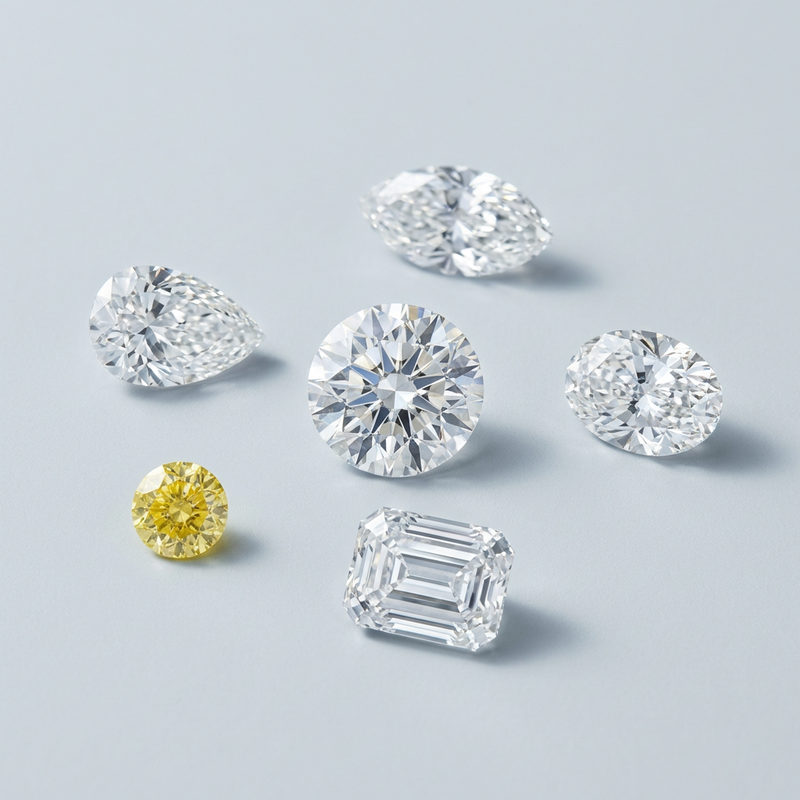
Diamond
Timeless / Brilliant / Durable
The definitive bracelet stone. Whether set across a full tennis line, scattered through a chain, or held as a single feature stone, diamonds at the wrist catch light with every movement of the hand. No other stone performs as consistently across every bracelet form.
Hardness10 / Mohs
DurabilityExceptional
Colour rangeD–Z scale
Diamonds are the hardest natural material on earth, scoring 10 on the Mohs scale. On the wrist they experience constant movement and incidental contact — the hardness means they handle this without dulling, chipping, or losing their polish over decades of wear.
Excellent for daily bracelet wear in any setting style. Claw settings on a bracelet should be checked periodically — the wrist experiences more catching and snagging than any other jewellery position. A bezel or rub-over setting offers maximum security for active daily wear.
Clean with warm soapy water and a soft brush. Diamonds attract grease from skin and hand products — a bracelet worn against the wrist accumulates this faster than most other jewellery. A periodic professional clean restores peak brilliance and allows the setting to be checked at the same time.
Best paired withPlatinum or 18ct white gold — allows the diamond's brilliance to lead without colour competition
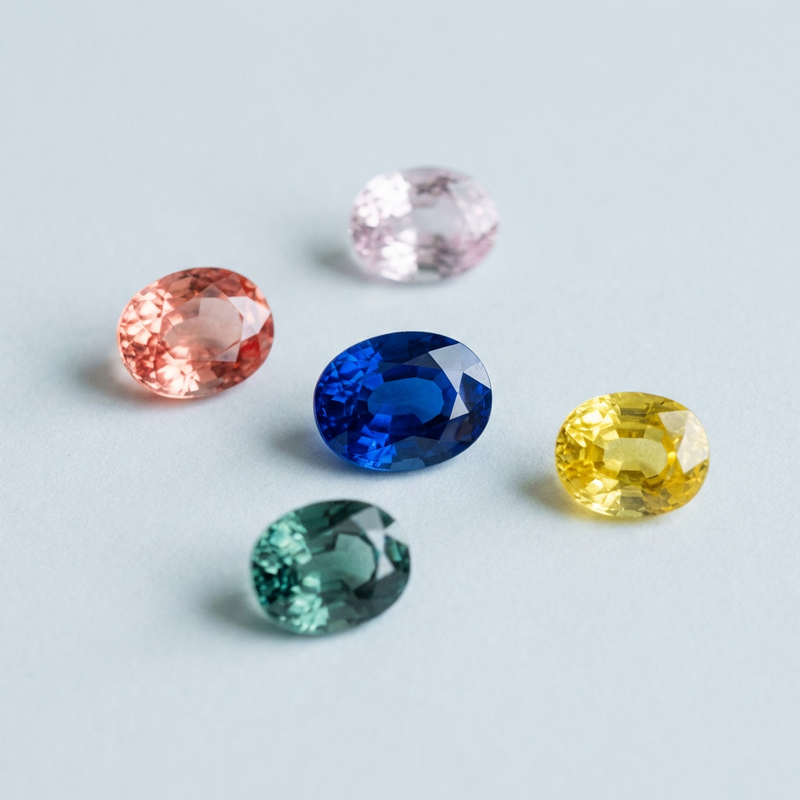
Sapphire
Deep / Vivid / Durable
The most durable coloured stone choice for a bracelet worn daily. Deep blue or vivid alternative colours hold their intensity at the wrist over years of wear. Sapphires withstand the incidental contact that bracelet stones face better than almost any other coloured stone.
Hardness9 / Mohs
DurabilityExcellent
Colour rangeBlue, pink, yellow, padparadscha
Sapphires score 9 on the Mohs scale, second only to diamond in hardness. For a bracelet worn constantly, this hardness is a practical advantage — the stone resists the surface abrasion that wrist wear generates across years of contact with surfaces, clothing, and skin.
Excellent for daily bracelet wear. Sapphires maintain their lustre and colour intensity over decades without ongoing treatment. Of all the coloured stones suited to a bracelet, sapphire requires the least compromise between aesthetics and practicality.
Clean with warm soapy water and a soft brush. Avoid ultrasonic cleaners for heavily included stones. A professional check every year or two is recommended — bracelet settings experience more stress than ring or earring settings.
Best paired with18ct yellow gold or platinum — both complement the depth of blue; yellow gold adds warmth to pink sapphires
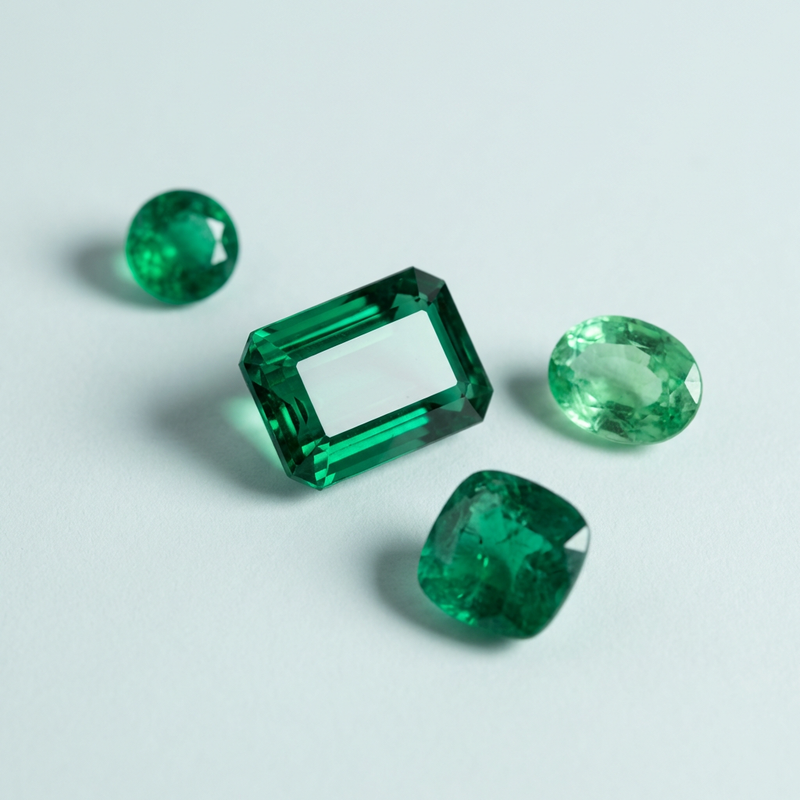
Emerald
Rich / Distinctive / Considered
Rich green with a historical prestige that no other stone carries. Emeralds in a bracelet make an immediate statement but require a more protective setting than in a ring. Best suited to a bezel or collet setting and occasional rather than daily wear.
Hardness7.5–8 / Mohs
DurabilityHandle with care
Colour rangeLight to deep green
Emeralds score 7.5–8 on the Mohs scale but are more vulnerable than their hardness suggests — most contain natural inclusions that can become fracture points under impact. A bracelet stone faces more direct contact with surfaces than almost any other jewellery position, making setting choice critical.
Moderate — better suited to occasion wear than daily bracelet use. If worn daily, a full bezel or collet setting is essential to protect the stone from the lateral impacts a wrist bracelet encounters. Not recommended in a claw or prong setting for active daily wear.
Clean gently with a damp cloth only. Never use ultrasonic cleaners or steam. Emeralds are often treated with oil to improve clarity — heat, chemicals, and vibration can all affect this. Remove before any activity that risks direct impact to the wrist.
Best paired with18ct yellow gold — the warmth of the metal enriches the green and suits the stone's historical character
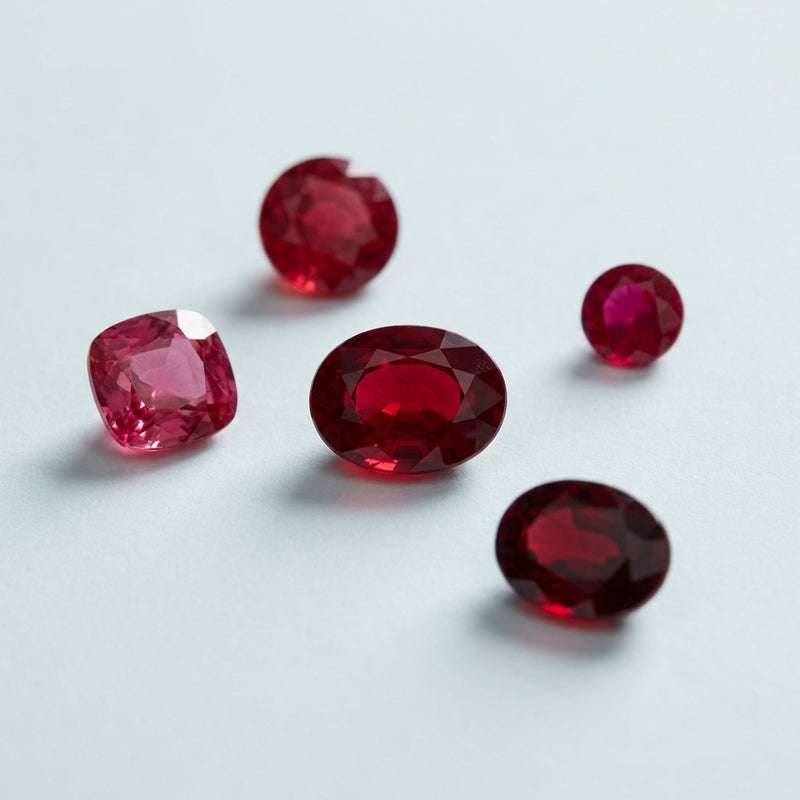
Ruby
Bold / Symbolic / Vivid
Bold red at the wrist — immediate, symbolic, and deeply personal. Rubies carry strong colour at any size and wear well in a bracelet setting thanks to their high hardness. A single ruby as a feature stone or a line of smaller stones both make a confident statement.
Hardness9 / Mohs
DurabilityExcellent
Colour rangePink-red to deep pigeon blood
Rubies are the red variety of corundum, scoring 9 on the Mohs scale. Their colour comes from chromium, ranging from pinkish-red to the deep pigeon blood red of Burmese origin. The high hardness makes them one of the most practical coloured stones for bracelet wear.
Excellent for daily bracelet wear. The hardness means rubies resist surface dulling from wrist contact better than most coloured stones. Claw settings should be checked annually — the wrist movement that makes a bracelet so visible also stresses the setting over time.
Clean with warm soapy water and a soft brush. Generally durable enough for ultrasonic cleaning unless heavily fractured — a jeweller's assessment is recommended first. Remove before activities involving direct impact to the wrist.
Best paired with18ct yellow gold or platinum — yellow gold intensifies the red; platinum presents the colour alone without competition
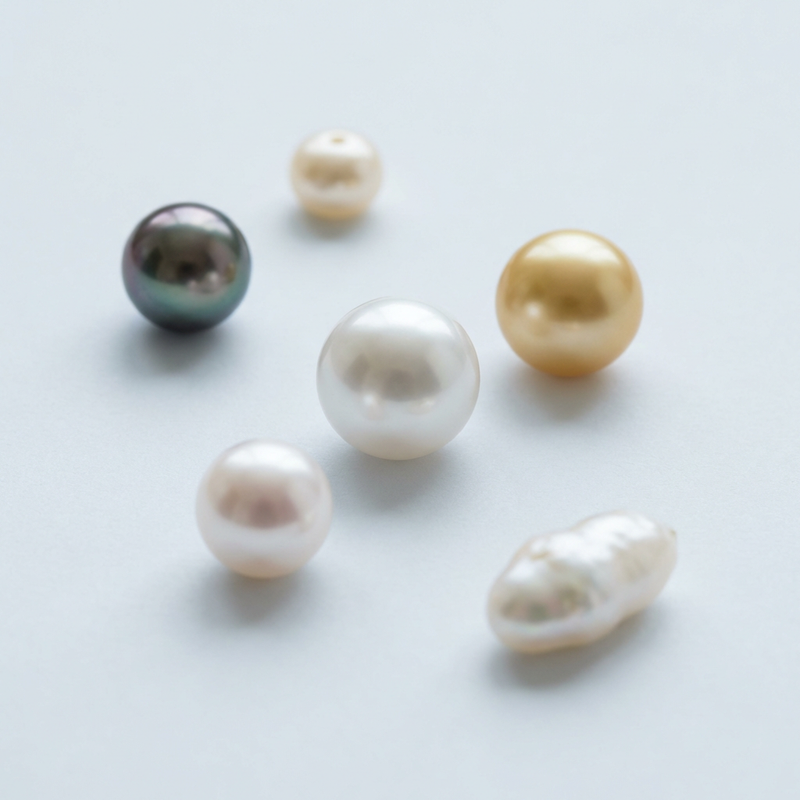
Pearl
Classic / Luminous / Occasion
The pearl bracelet is one of the most enduring forms in jewellery. The warm, organic luminosity at the wrist is unlike any mineral gem. Best suited to occasional wear or a strand bracelet rather than a set stone — the wrist environment is more demanding on pearl nacre than a necklace or earring.
Hardness2.5–4.5 / Mohs
DurabilityHandle with care
Colour rangeWhite, cream, gold, black
Pearls are organic gems formed by molluscs, with a nacre surface that is both their beauty and their vulnerability. At the wrist they face more abrasion and surface contact than in earrings or a brooch. A bracelet with set pearls requires a bezel or cup setting to protect the nacre from lateral impact.
Moderate — more suitable for occasional wear than daily bracelet use. The main risks are perfume, hand cream, and surface abrasion, all of which damage nacre over time. A strand pearl bracelet is the most appropriate form for frequent wear; set-stone pearl bracelets should be treated as occasion pieces.
Wipe with a soft damp cloth after wearing. Never use ultrasonic cleaners, steam, or chemical solutions. Store separately from harder stones that can scratch the nacre. Apply perfume and hand cream before putting on the bracelet, not after. Restring periodically if worn on a knotted strand.
Best paired with18ct yellow or rose gold — warm metals complement the organic warmth of pearl nacre beautifully
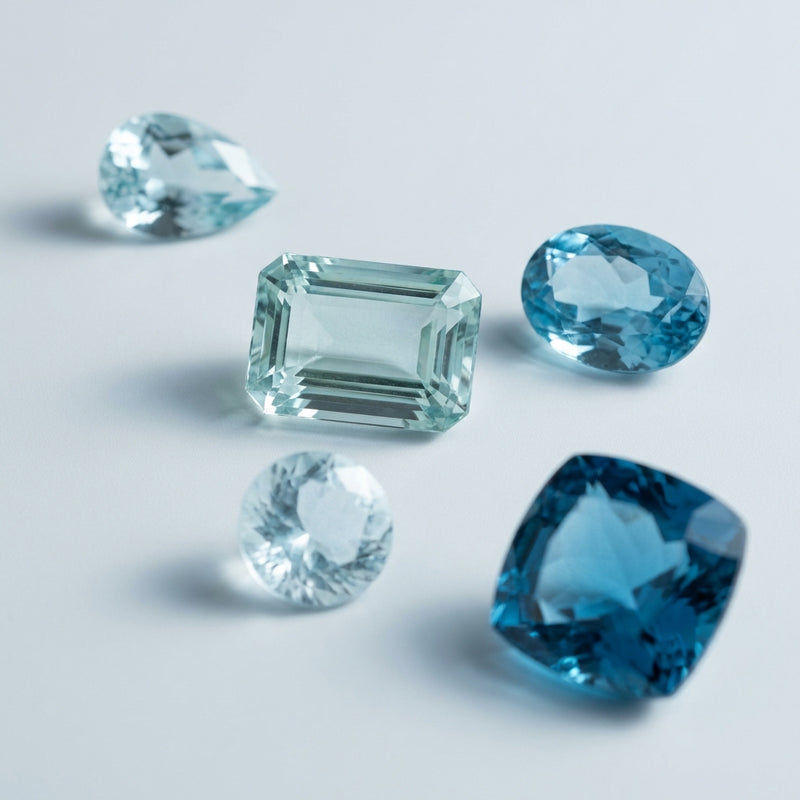
Aquamarine
Cool / Luminous / Elegant
Pale blue to deep sea-blue with the clarity that makes it one of the most luminous bracelet stones. Aquamarine's transparency means it catches light across the full length of a bracelet. Its moderate hardness makes it a practical choice for everyday wear when set with care.
Hardness7.5–8 / Mohs
DurabilityGood
Colour rangePale blue to deep sea-blue
Aquamarine is the blue variety of beryl, scoring 7.5–8 on the Mohs scale. It is typically very clean — inclusions are rare even at larger sizes. The hardness is sufficient for bracelet wear, though a protective setting is advisable if the piece will be worn constantly against hard surfaces.
Good for regular bracelet wear with appropriate setting. Aquamarine can develop light surface scratches over years of wrist contact, but these rarely affect the face-up appearance at bracelet stone sizes. A bezel or half-bezel setting is preferred for daily wear over an open claw setting.
Clean with warm soapy water and a soft brush. Generally safe for ultrasonic cleaning unless heavily included. Avoid prolonged exposure to strong sunlight, which can gradually fade the colour. Remove before activities involving direct impact to the wrist.
Best paired withPlatinum or 18ct white gold — cool metals complement the icy blue without competing with it
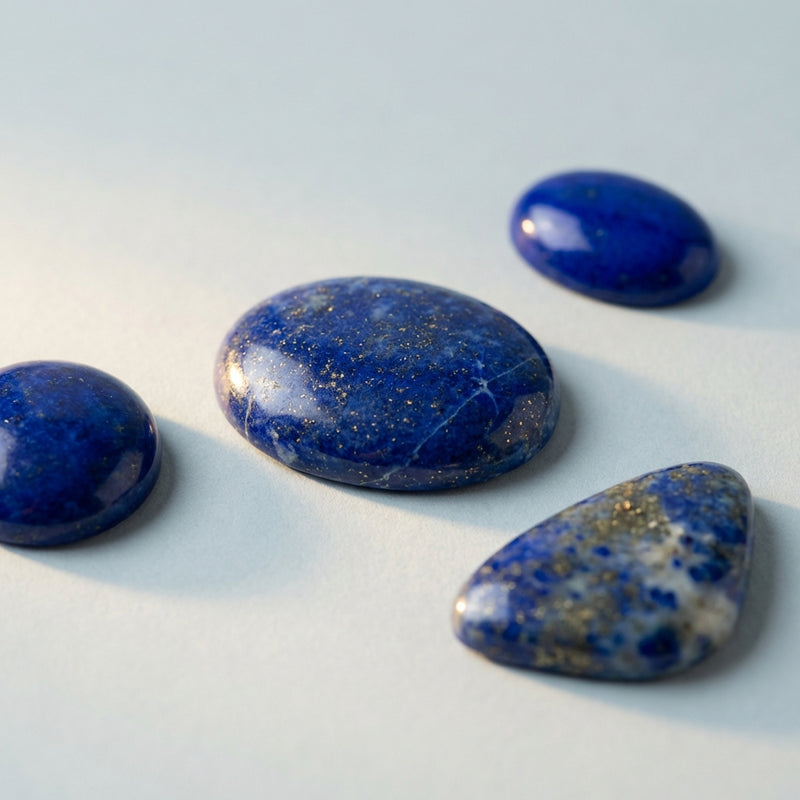
Lapis Lazuli
Rich / Durable / Versatile
Hardness
Durability
Colour range
Clean with warm soapy water and a soft brush. Generally safe for ultrasonic cleaning unless heavily included or fracture-filled. Store away from prolonged direct light to preserve colour saturation. Avoid harsh chemicals and steam. Remove before activities involving direct impact to the wrist.
Best paired with18ct yellow gold or rose gold — warm metals deepen the purple and complement the richness of the stone; white gold or platinum work well with cooler, more violet specimens
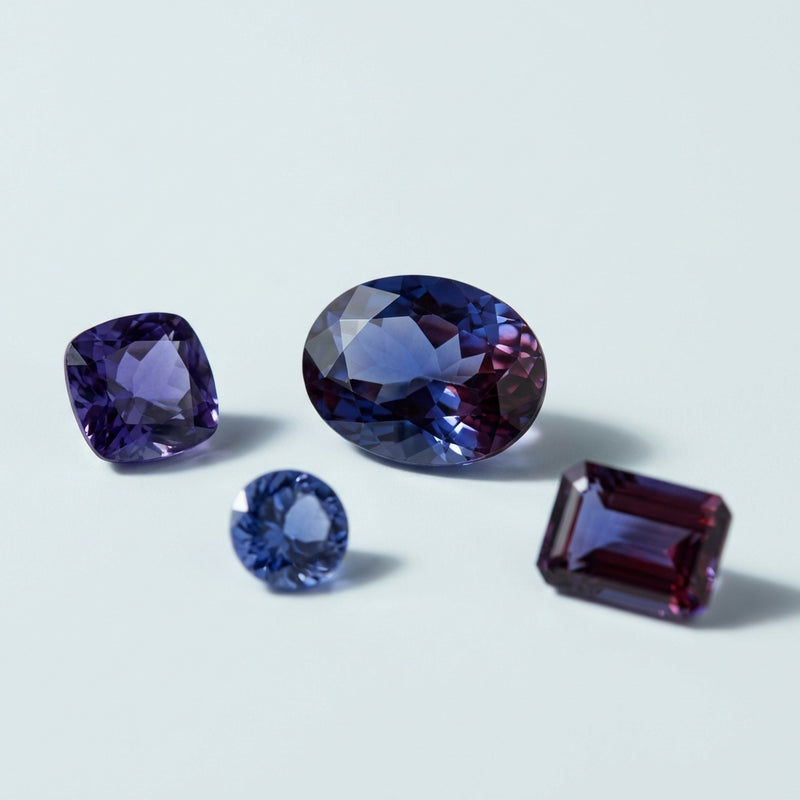
Tanzanite
Rare / Trichroic / Occasion
Tanzanite's extraordinary colour-shift — blue, violet, and burgundy depending on the light — makes it visually exceptional at the wrist. Its rarity and visual drama suit it best as an occasion piece or a single feature stone in a protective setting rather than daily bracelet wear.
Hardness6–7 / Mohs
DurabilityModerate — occasion wear recommended
Colour rangeBlue-violet to deep indigo
Tanzanite is the blue-violet variety of zoisite, found only in Tanzania. Its hardness of 6–7 Mohs and perfect cleavage in one direction make it vulnerable to the lateral impacts a bracelet encounters. It is one of the most visually dramatic stones available, but requires a genuinely protective setting for wrist wear.
Not recommended for daily bracelet wear. The combination of moderate hardness and perfect cleavage makes tanzanite genuinely at risk from the wrist impacts that a bracelet will inevitably receive — against table edges, door frames, and hard surfaces. Best reserved for occasion wear in a full bezel setting.
Clean with warm soapy water and a soft brush only. Never use ultrasonic or steam cleaners — tanzanite's perfect cleavage makes it vulnerable to vibration and thermal shock. Avoid direct heat, rapid temperature changes, and harsh chemicals. Remove before any activity involving wrist impact.
Best paired with18ct white gold or platinum — cool metals enhance the blue-violet and complement the stone's cool depth; yellow gold works beautifully with more violet or indigo specimens
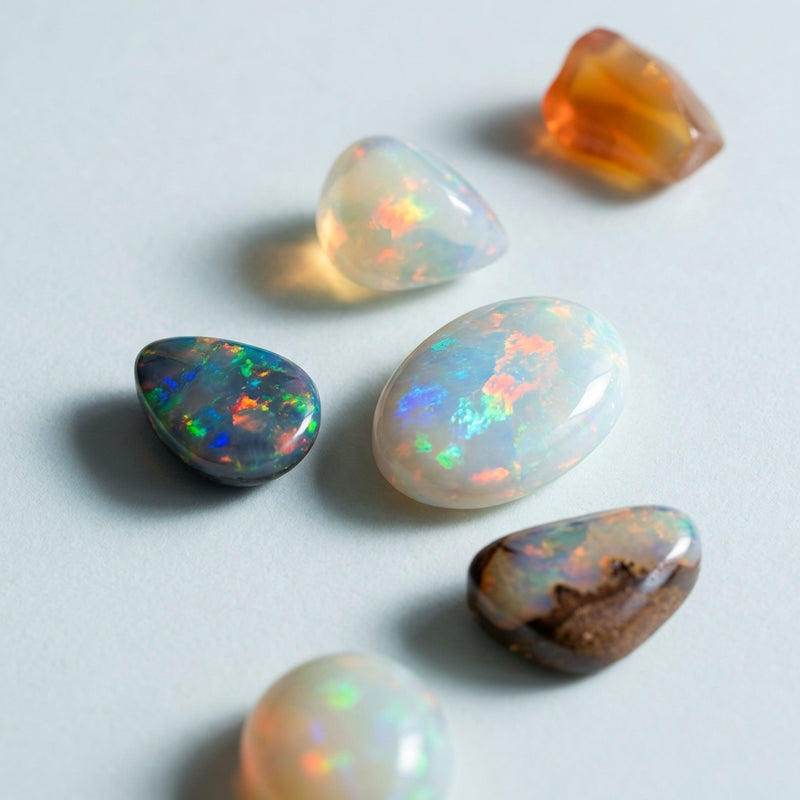
Opal
Iridescent / Unique / Occasion
No two opals are alike — the play-of-colour at the wrist is extraordinary, shifting with every movement of the hand. For this reason, opal is best suited to a single statement piece worn for occasions rather than a daily bracelet. In the right protective setting, it is one of the most visually arresting bracelet stones available.
Hardness5.5–6.5 / Mohs
DurabilityOccasion wear only
Colour rangeWhite, black, crystal, boulder
Opal is a hydrated silica containing between 3–20% water. Its play-of-colour — caused by light diffracting through a grid of silica spheres — is unlike any other gemstone. Australian opals dominate the fine market. The stone's beauty and its fragility are inseparable: the same internal structure that creates the colour makes it sensitive to impact and moisture change.
Not recommended for daily bracelet wear. The wrist is among the most demanding environments for any bracelet stone — opal's low hardness, sensitivity to impact, and vulnerability to temperature change make daily wrist wear a significant risk. A full bezel setting and occasional use is strongly advised. Remove before any activity involving wrist contact with hard surfaces.
Wipe gently with a soft, barely damp cloth only. Never use ultrasonic or steam cleaners — both can cause fracturing or crazing. Avoid hand sanitiser, perfume, and harsh chemicals. Because opal contains water, rapid temperature changes and very dry environments can cause surface cracking. Do not soak in water or expose to prolonged heat.
Best paired with18ct yellow or rose gold — warm metals complement opal's natural warmth; white gold or platinum suit black opal, where the contrast between the dark stone and cool metal is striking
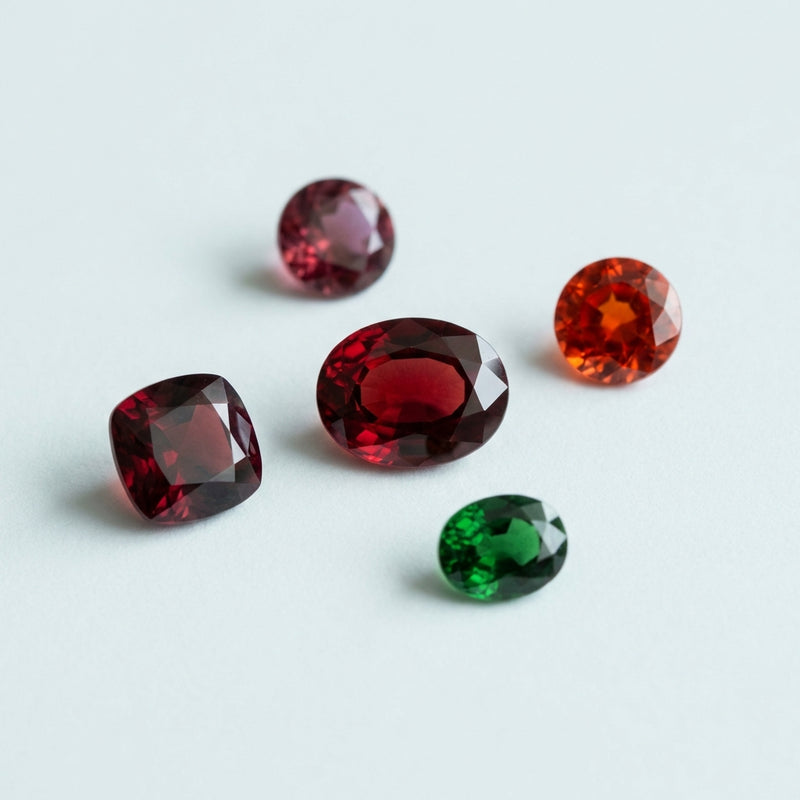
Garnet
Rich / Varied / Underrated
Garnet spans almost every colour — from demantoid green with fire exceeding diamond, to tsavorite's vivid emerald-green, to rhodolite's rich raspberry-pink and spessartine's blazing mandarin orange. Most varieties are practical bracelet stones, combining good hardness with the absence of cleavage.
Hardness6.5–7.5 / Mohs
DurabilityGood to very good
Colour rangeRed, orange, pink, green — nearly all colours
The garnet group includes pyrope, almandine, spessartine, grossular (including tsavorite and hessonite), andradite (including demantoid), and uvarovite. For bracelet wear, the absence of cleavage across all varieties is a significant advantage — garnet tends to resist chipping better than stones of similar hardness that have defined cleavage planes.
Good for regular bracelet wear across most varieties. The absence of cleavage makes garnets resilient to the lateral impacts a bracelet receives. Demantoid is the softest fine variety at 6.5 Mohs and benefits from a full bezel setting for daily wear. Pyrope and almandine are the most practical for everyday bracelet use.
Clean with warm soapy water and a soft brush. Most varieties are safe for ultrasonic cleaning, but demantoid — particularly stones with the prized horsetail inclusions — and any stone with visible surface fractures should be cleaned by hand only. Store separately from harder stones such as diamonds and sapphires to avoid surface scratches.
Best paired with18ct yellow gold — suits the warmth of red, orange, and raspberry-pink garnets beautifully; white gold or platinum complement tsavorite and demantoid, letting their vivid greens take full prominence
Choosing your metal
Which metal is right for your bracelet?
A bracelet is one of the most demanding environments for fine metal — constant wrist movement, surface contact, and skin exposure all factor into which metal performs best over time.
Recommended
Platinum
950 Purity
The finest choice for a bracelet with significant stones. Naturally white, hypoallergenic, and holds stones more securely than any gold alloy. Platinum work-hardens with wear — a bracelet worn daily in platinum actually becomes more resistant to deformation over time.
No platingHypoallergenicWork-hardens
White Gold
18ct / 75% Pure
The most popular white metal for diamond bracelets. Rhodium-plated for a bright finish. A bracelet sees significantly more surface contact than a pendant or ring — replating is typically needed every one to two years for a piece worn daily.
Rhodium platedBright whiteReplating needed
Recommended
Yellow Gold
18ct / 75% Pure
The classic bracelet metal — no plating required, ages beautifully, and suits coloured stones exceptionally well. 18ct is the fine jewellery standard. The warm tone complements most skin tones directly at the wrist, and the metal develops a desirable patina with wear.
No platingClassic warmthAges beautifully
Recommended
Rose Gold
18ct / 75% Pure
A flattering choice at the wrist — the blush tone complements a wide range of skin tones at close range. The copper content makes it slightly harder than yellow gold, a small practical advantage for a bracelet. No plating required.
No platingSlightly harderSkin-flattering
Silver
Sterling / 92.5% Pure
Prone to tarnishing with constant skin contact — a bracelet worn daily tarnishes faster than almost any other jewellery piece. Too soft for fine stone settings over the long term. Not recommended for a piece intended to last decades.
Durability rated 1-5. Maintenance reflects typical upkeep for a bracelet worn daily against skin.
Designed with purpose
Design considerations for bespoke bracelets
Everything we account for before a single link is formed.
Fit and wrist sizing
A bracelet that fits correctly sits just above the wrist bone with enough room to move freely without sliding over the hand. Too tight and the clasp strains; too loose and the piece rotates, presenting the back of the setting. We size around your wrist and add the appropriate ease for the bracelet style and intended wear.
Clasp security and ease of use
The clasp is the weakest point of any bracelet — both structurally and practically. A clasp that is difficult to operate single-handed will be left unfastened. We match clasp type and gauge to the bracelet's weight and the wearer's dexterity, and build in a safety catch on all pieces above a certain value.
Setting style and stone security
Bracelet stones face more lateral movement and incidental contact than ring or pendant stones. Bezel and rub-over settings offer the most security; claw settings provide more brilliance but require periodic checking. We discuss your activity level and wearing frequency before specifying the setting style.
Weight and wearability
A bracelet that is too heavy becomes uncomfortable for extended wear and places stress on the clasp. We balance metal gauge, stone size, and structural design to achieve the right weight for the intended wearing context — a piece worn daily has different requirements to one reserved for evenings.
Skin contact and metal sensitivity
A bracelet is in constant contact with the inner wrist — one of the more sensitive areas of the body. Metal sensitivity, particularly to nickel in white gold alloys, is highly relevant for daily bracelet wear. We use platinum or 18ct gold throughout and avoid nickel-containing alloys in pieces worn close to sensitive skin.
Daily wear versus occasion
A bracelet for daily wear demands greater robustness than one worn occasionally — more secure settings, heavier link gauge, and a clasp that handles thousands of fastening cycles. Occasion pieces can prioritise visual impact over structural resilience. We clarify this before any design decision is made.
Stacking and layering
Wearing multiple bracelets together
Stacking bracelets is one of the most personal expressions in jewellery — but it works best when the pieces are designed or chosen with each other in mind. We consider width, weight, metal, and clasp position together so the stack looks considered, not accumulated.
Wrist space and fit
The wrist has limited space. More than three or four bracelets typically creates a crowded look and tangles when the pieces move. Two or three pieces — chosen with different widths and textures — reads as considered. Leave a small gap between pieces so each one sits distinctly rather than bunching.
Width and visual hierarchy
Stack bracelets with a clear hierarchy of width. One wider or more substantial piece as the anchor, with finer pieces alongside it. Pieces of identical width compete rather than complement. A bangle and a fine chain worn together reads as deliberately contrasted; two identical bangles reads as paired.
Mixing metals intentionally
Mixed metal stacking works when the metals are chosen deliberately. Yellow and white gold together reads as a considered combination at the wrist. Adding rose gold to the mix requires more care — three metals in close proximity can compete rather than complement. Metal temperature matters more on the wrist than anywhere else.
Clasp placement in a stack
When stacking multiple clasped bracelets, clasps should all sit on the same side of the wrist so they can be fastened and unfastened without removing the other pieces. We design stacked sets with clasp position in mind so the stack functions as well as it looks.
Our commitment to you
Designed with clarity from start to finish
You remain in control from first conversation to finished piece.
Direct communication at every stage
You work directly with our team throughout. No account managers, no handoffs. Clear updates at every step of the process.
No intermediaries
Nothing is made until you approve the design
We present the full design, stone, and pricing before a single link is formed. You see exactly what you are commissioning before any work begins.
Full approval control
Stone shown and approved before setting
For significant commissions, we present the stone for your approval before it goes to the bench. You see what you are getting — not a grade on a certificate.
Stone approved first
Pricing agreed before production begins
The full cost — bracelet, clasp, and any engraving — is confirmed before any work starts. There are no surprises at the end.
Transparent pricing
Every piece inspected before dispatch
Each piece is checked for setting security, clasp function, link integrity, and finish quality before it leaves us. We do not dispatch work we would not wear ourselves.
Quality assured
The process
Typical timeline
Most bespoke bracelet commissions are completed within four to six weeks from approved design. If you have a date in mind — a birthday, an anniversary, a wedding — include it in your enquiry and we will plan around it.
1
1-2 weeks
Brief and stone selection
We discuss the style, stone, fit, occasion, and any reference pieces you have. We begin sourcing stones or confirming link specifications at this stage.
2
1-2 weeks
Design and approval
We prepare the design for your review — bracelet form, setting style, clasp, and wrist size. You approve every element before anything is made.
3
Your call
Your confirmation
You confirm the final design, stone, specifications, and agreed price. Nothing moves to production without this step.
4
3-4 weeks
Made and delivered
Your bracelet is made, set, and finished. Clasp security and fit checked before dispatch. Delivered securely to you.
Everything you need to know before you begin.
Frequently asked questions
We measure your wrist and add an appropriate amount of ease depending on the bracelet style. A fitted bangle sits differently to a link bracelet with a clasp — the ease required differs accordingly. For a chain or link bracelet worn loosely, we typically add 1.5–2cm to the wrist measurement. For a stiffer cuff or bangle, the fit is more precise and we may ask for the measurement at both the narrowest and widest point of the wrist. If you are commissioning remotely, we can send a simple paper sizing strip.
The most common clasps for bracelets are the box clasp (secure, suits flat and tennis bracelets), the lobster claw (secure, easy to operate single-handed), the toggle clasp (decorative, suits casual wear), and the fold-over clasp (smooth profile, suits chain bracelets). For pieces above a certain value we always recommend a safety catch in addition to the primary clasp. We discuss clasp preference during the brief and advise on which suits the bracelet style and your dexterity.
Yes, provided it is designed for it. A well-made bracelet in a secure setting with an appropriate clasp and link gauge is designed for daily wear. The main risks are catching the clasp or setting on clothing, exposing the piece to chemicals in perfume and hand cream, and impact from hard surfaces. We recommend removing a fine bracelet before swimming, applying hand products, and sleeping. Some stones — including opal, tanzanite, and emerald — are better suited to occasional rather than daily wear; we will advise on this during the stone selection.
Yes. The inner surface of a bracelet is the traditional location for an inscription — a name, date, initials, or short phrase. The available space depends on the bracelet's width and construction. On a link bracelet, individual links can sometimes carry individual letters or symbols. We advise on character limits and font options before confirming the brief.
Yes — designing a stack from the outset produces a far more coherent result than adding pieces individually over time. We consider width, weight, metal, texture, and clasp position as a set so the pieces work together visually and practically. Tell us how many pieces you want in the stack and we will design the group as a whole.
A well-made tennis bracelet has three things in balance: the stones are matched for cut, colour, and clarity so the line reads as continuous; the setting holds each stone securely without snagging; and the clasp is strong enough to carry the full weight of the piece with a safety mechanism. We source matched stone parcels and design the setting to suit the stone size rather than applying a standard setting to any stone. The clasp is specified after the piece is weighed.
In many cases, yes. Link bracelets can usually have links added or removed. Bangles are more difficult to resize once made — the fit needs to be correct from the outset. Tennis and pavé bracelets can sometimes be shortened by removing a section, but lengthening is more complex and depends on the original construction. We will advise on the resizability of a specific design before the brief is confirmed.
Most commissions are completed within four to six weeks from design approval. A simple link bracelet at the lower end; a full pavé tennis bracelet with matched stone sourcing at the upper end. If you are commissioning for a specific occasion, include your date when you enquire and we will confirm whether it is achievable.
Still have a question? Our team typically responds within one business day.