ring setting

Trilogy engagement rings: balanced, symbolic, endlessly versatile

A trilogy engagement ring places three stones in deliberate proportion across the finger, creating a design with presence, symbolism, and remarkable freedom of composition.

RING SETTINGS EXPLAINED

The trilogy setting

Everything you need to know about the trilogy before making a decision.

THE BASICS

What is a trilogy engagement ring?

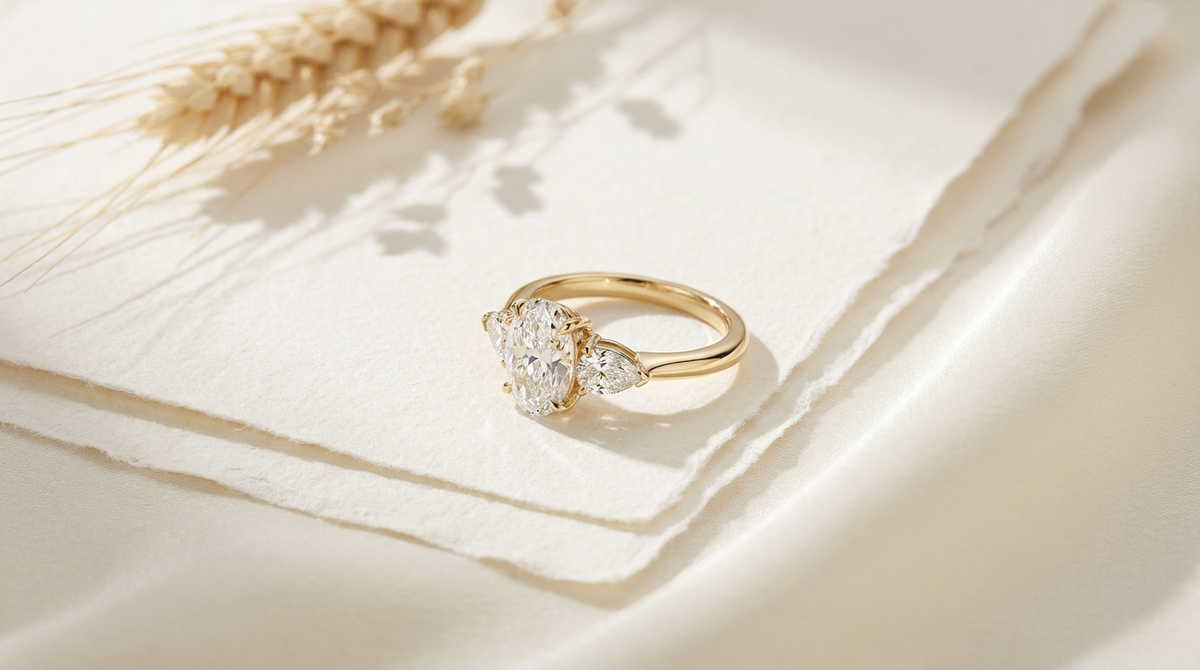
A trilogy engagement ring brings together three stones in a single composition, usually a centre stone with two side stones chosen to balance it in size, shape, and visual weight.

The trilogy is one of the great engagement ring archetypes. Three stones are arranged across the finger to create a ring with width, brilliance, and a strong sense of structure. For many clients, the appeal is partly symbolic. The three stones are often read as past, present, and future. Just as often, the attraction is aesthetic. A trilogy ring has breadth and character that a single-stone setting cannot replicate.

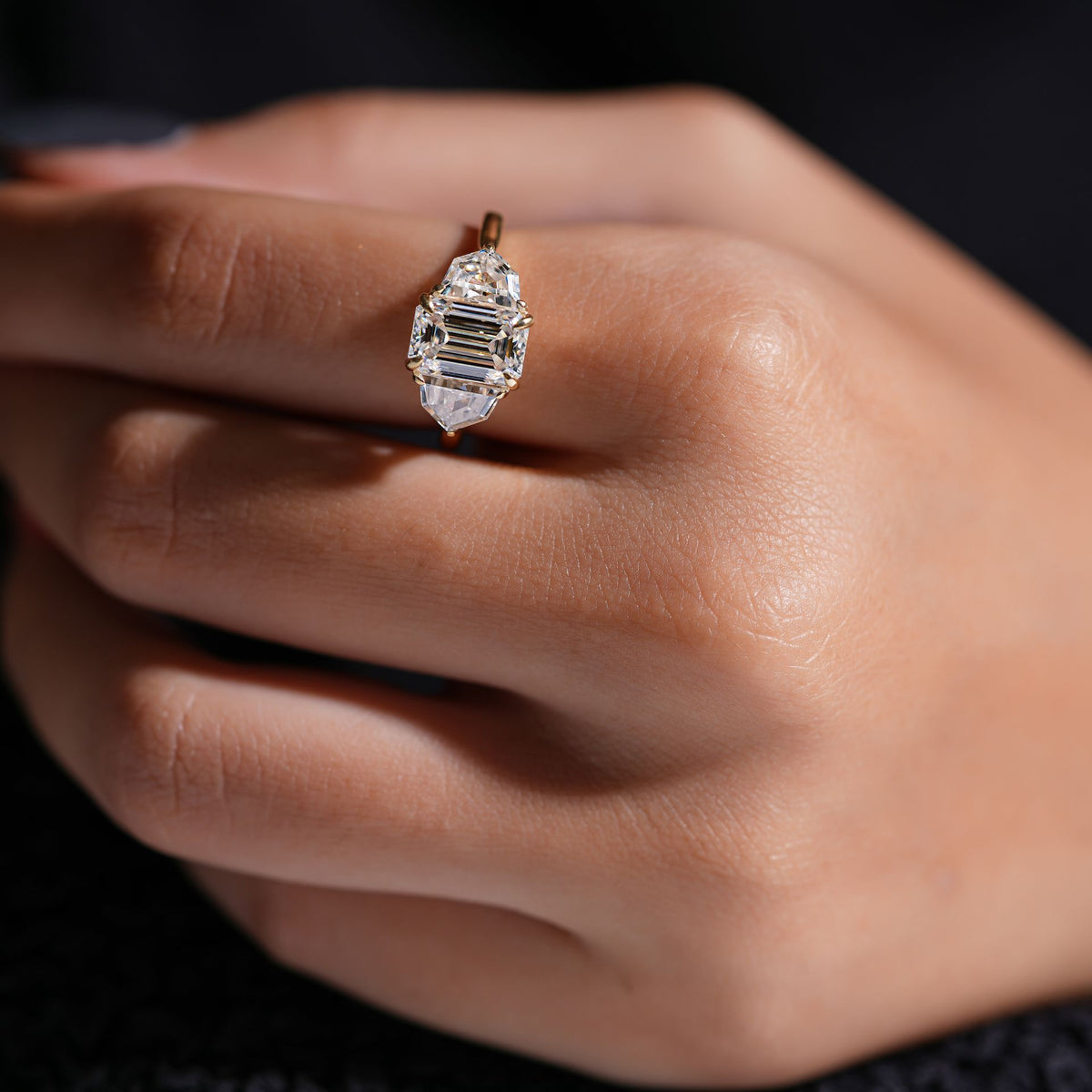
What makes the trilogy especially compelling is its flexibility. It can be classic and restrained, as in a graduated round brilliant design. It can feel clean and architectural with tapered baguette or trapezoid sides. It can also become more individual through fancy-shape pairings such as oval with trillions, pear with marquise, or emerald with bullets. The design language changes significantly depending on the composition.

A well-made trilogy ring is never just three stones placed side by side. The success of the design depends on proportion, spacing, setting height, and the relationship between the centre stone and its flanking stones. When those elements are resolved properly, the result feels composed rather than assembled.
IS IT RIGHT FOR YOU?

Who chooses a trilogy setting?

The trilogy suits clients who want more visual spread than a solitaire, but still want the centre stone to retain importance. It is a natural choice for anyone drawn to symmetry, meaning, and a design that feels substantial without relying on a halo.

It is also an excellent setting for clients who enjoy comparing different stone relationships. Some prefer the classic hierarchy of a larger centre with smaller side stones. Others want the broader, more even spread of three equal stones. Clients with step-cut centres often gravitate toward tapered side stones, while those looking for something more individual often prefer a fancy-shape composition.

If you want a ring with symbolism, width, and a more composed presence across the finger, the trilogy is one of the strongest settings to consider. It rewards careful design and offers more scope for personalisation than most classic engagement ring formats.

WORTH KNOWING

What to consider before choosing a trilogy

The most important decision in a trilogy ring is proportion. The side stones must support the centre stone rather than compete with it. If they are too large, the ring loses hierarchy. If they are too small, the design can feel hesitant. This is true whether the composition is graduated, equal, tapered, or built around fancy shapes.

Stone shape pairing matters just as much as size. Round brilliants are the most forgiving and versatile. Step-cut centres such as emerald and Asscher usually benefit from tapered baguettes or trapezoids. Fancy shapes can be striking, though they require much more discipline in layout and setting design if the ring is to feel elegant rather than busy.

You should also consider wearability. A trilogy usually sits wider across the finger than a solitaire. Some compositions allow a straighter wedding band fit than others. The more complex the combination of shapes, the more important it becomes to resolve height, spacing, and protection at the design stage. If you are unsure which composition suits your stone and lifestyle, we can talk through the balance before any commitment is made.

COMPATIBILITY

Centre stone and side stone compatibility

Select a trilogy composition above to see how it works with different centre stone shapes and side stone pairings. Conditional ratings are discussed at the design stage.

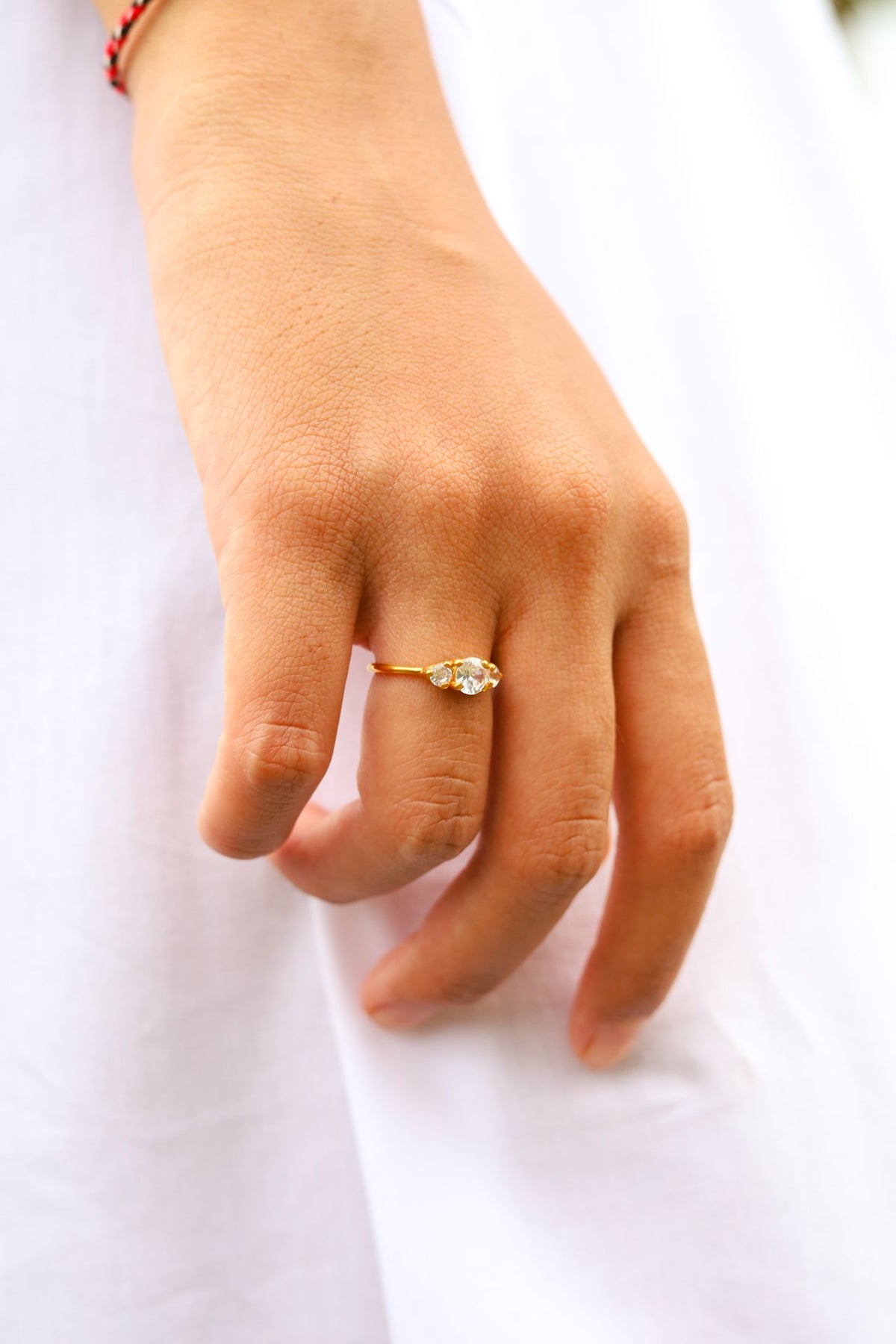
A large centre stone flanked by two smaller side stones, typically at 50–60% of the centre stone’s diameter. The graduation creates a clear hierarchy that draws the eye to the centre. The most commercially popular and universally understood trilogy composition.

Three stones of equal or near-equal size set side by side. A bolder, more symmetrical look that reads as a wider spread of light rather than a single focal stone. Works best when all three stones are the same shape or have a strong visual relationship.

The side stones are a geometric shape such as trapezoids, baguettes, or bullets that taper toward the band. Creates a clean, architectural line and is particularly effective with step-cut centre stones like emerald and Asscher.

All three stones are fancy cuts, for example a pear centre with marquise sides, or an oval centre with trillion sides. The most distinctive trilogy composition. Requires careful proportioning and design input to balance the shapes across the ring.

Centre stone shape compatibility

Shape
Graduated
Three equal
Tapered sides
Fancy shapes

Round Brilliant

Works with all four compositions, the most versatile centre stone

Yes
Yes
Yes
Yes

Oval

Particularly strong in graduated and fancy-shape compositions

Yes
Yes
Discuss
Yes

Cushion

Soft corners work naturally in graduated and equal compositions

Yes
Yes
Discuss
Yes

Emerald

Step-cut pairs exceptionally well with tapered baguette sides

Yes
Discuss
Yes
Discuss

Radiant

Bright-cut corners suit graduated and tapered compositions

Yes
Yes
Yes
Discuss

Pear

East-west orientation works well, tip protection must be agreed

Yes
Discuss
Discuss
Yes

Asscher

Square step-cut pairs beautifully with tapered trapezoid sides

Yes
Discuss
Yes
Discuss

Marquise

Both tips need protection, works well with trillion or bullet sides

Discuss
Discuss
Discuss
Yes

Old European Cut

Suits graduated composition with round or half-moon sides

Yes
Yes
Discuss
Discuss

Old Mine Cut

Antique cushion character pairs well with graduated round sides

Yes
Discuss
Discuss
Discuss
Compatible Conditional Not compatible N/A

Conditional ratings depend on the proportions of the centre stone relative to the side stones. The balance between the three stones is the critical design decision in any trilogy commission.

Side stone pairing compatibility

Side stone
Graduated
Three equal
Tapered sides
Fancy shapes

Trapezoids

Tapered step-cut, the most architectural side stone

Yes
Discuss
Yes
Discuss

Baguettes

Rectangular step-cut, clean, minimal, very architectural

Yes
Discuss
Yes
Discuss

Half-moons

Curved cut that softens the transition from band to centre

Yes
Yes
Discuss
Discuss

Pears

Directional, points usually face outward away from the centre

Discuss
Discuss
No
Yes

Bullets

Tapered rounded ends, slightly softer than baguettes

Yes
Discuss
Yes
Yes

Round brilliants

The most versatile side stone, works with almost any centre

Yes
Yes
Discuss
Yes

Trillions

Triangular, bold and distinctive, suits larger centre stones

Yes
Discuss
No
Yes

Side stone shape and size must be agreed at the design stage. The wrong pairing can unbalance the ring or make the centre stone feel smaller than it should.

Additional features

Hidden detail

Partial

A hidden detail beneath the centre stone is possible on graduated and three-equal compositions. On tapered-side compositions the architecture of the setting may not allow the same freedom. Discuss this at the design stage.

Pavé band

Available

Diamond-set band extending from the setting. Works on all four compositions, though the width and density of the pavé should be balanced against the visual weight of the three stones. A fine pavé band is usually the most elegant choice.

Cathedral shoulders

Available

Rising shoulders meeting the setting head. Adds presence and height to the graduated and tapered-side compositions in particular. Usually less suited to three-equal compositions where a lower, more continuous setting is often preferred.

Plain band

Available

A plain polished or satin band draws maximum attention to the three stones. The simplest and often the most elegant choice for clients who want the stones to read clearly without competition from the band.

Mixed shapes

Available

Centre and side stones do not need to match. Some of the most striking trilogy rings use a round centre with fancy-cut sides, or an emerald centre with trillion sides. Discuss proportioning at the design stage.

Coloured side stones

Available

Sapphires, rubies, or other coloured gemstones as the side stones. A single colour pairing, for example blue sapphire sides with a white diamond centre, creates a very strong and personalised result. All colour choices are agreed at the design stage.

Not sure which trilogy composition suits your stone or lifestyle? Start a free consultation, no obligation and no payment until you approve the final design.

Start your free consultation

How do they compare?

Trilogy compositions compared

Compare the four main trilogy compositions side by side to find the right balance of proportion, presence, and wearability for your brief.

Most classic · Centre-led

Graduated

A larger centre stone flanked by two smaller side stones. The most traditional trilogy composition, with clear hierarchy and broad appeal.

Wearability High

Usually the easiest trilogy composition to balance for daily wear.

Balanced spread · Symmetrical

Three equal

Three stones of equal or near-equal size arranged side by side. Creates a broader, more even field of light and a bolder face-up presence.

Wearability Medium

Wider across the finger than a graduated trilogy.

Architectural · Refined

Tapered sides

A centre stone framed by geometric side stones such as baguettes, trapezoids, or bullets. Clean, elegant, and especially strong with step-cut centres.

Wearability High

Often low in profile and very composed in wear.

Design-led · Distinctive

Fancy shapes

A trilogy built from fancy-cut stones, either matching or mixed. The most individual composition and the most dependent on careful proportioning.

Wearability Medium

Depends heavily on shape choice, point protection, and overall spread.

Most classic · Centre-led

Graduated

A larger centre stone flanked by two smaller side stones. The most traditional trilogy composition, with clear hierarchy and broad appeal.

Wearability High

Usually the easiest trilogy composition to balance for daily wear.

Balanced spread · Symmetrical

Three equal

Three stones of equal or near-equal size arranged side by side. Creates a broader, more even field of light and a bolder face-up presence.

Wearability Medium

Wider across the finger than a graduated trilogy.

Architectural · Refined

Tapered sides

A centre stone framed by geometric side stones such as baguettes, trapezoids, or bullets. Clean, elegant, and especially strong with step-cut centres.

Wearability High

Often low in profile and very composed in wear.

Design-led · Distinctive

Fancy shapes

A trilogy built from fancy-cut stones, either matching or mixed. The most individual composition and the most dependent on careful proportioning.

Wearability Medium

Depends heavily on shape choice, point protection, and overall spread.

Visual hierarchy

Strong centre focus

More evenly distributed across all three stones

Clear centre focus with structured side support

Varies by shape pairing and proportion

Finger coverage

Balanced spread with restrained width

Broadest face-up spread of the four

Elegant width without looking heavy

Varies from refined to statement depending on the shapes

Stone shape suitability

Works with almost every centre stone shape

Best when all three stones have a strong visual relationship

Best with emerald, Asscher, radiant, and other structured centres

Best for clients open to more individual combinations

Wedding band fit

Usually straightforward in most settings

Usually straightforward though width should be checked

Usually very good if the side stones taper cleanly

Depends on the outline and setting geometry

Design complexity

Most straightforward to proportion well

Requires careful spacing so the ring reads as intentional

More exacting because the side stones shape the whole line of the ring

Highest design input required

Style character

Classic, symbolic, timeless

Bold, balanced, confident

Refined, architectural, elegant

Distinctive, expressive, design-led

Best centre stone pairings

Round, oval, cushion, emerald

Round, cushion, old European cut

Emerald, Asscher, radiant

Pear, oval, marquise, mixed-shape centres

Commission difficulty

Most familiar and commercially understood

Moderate, especially if all stones are matched closely

Moderate to high, depending on side stone sourcing

Highest, with the greatest need for bespoke design input

Visual hierarchy

Strong centre focus

More evenly distributed across all three stones

Clear centre focus with structured side support

Varies by shape pairing and proportion

Finger coverage

Balanced spread with restrained width

Broadest face-up spread of the four

Elegant width without looking heavy

Varies from refined to statement depending on the shapes

Stone shape suitability

Works with almost every centre stone shape

Best when all three stones have a strong visual relationship

Best with emerald, Asscher, radiant, and other structured centres

Best for clients open to more individual combinations

Wedding band fit

Usually straightforward in most settings

Usually straightforward though width should be checked

Usually very good if the side stones taper cleanly

Depends on the outline and setting geometry

Design complexity

Most straightforward to proportion well

Requires careful spacing so the ring reads as intentional

More exacting because the side stones shape the whole line of the ring

Highest design input required

Style character

Classic, symbolic, timeless

Bold, balanced, confident

Refined, architectural, elegant

Distinctive, expressive, design-led

Best centre stone pairings

Round, oval, cushion, emerald

Round, cushion, old European cut

Emerald, Asscher, radiant

Pear, oval, marquise, mixed-shape centres

Commission difficulty

Most familiar and commercially understood

Moderate, especially if all stones are matched closely

Moderate to high, depending on side stone sourcing

Highest, with the greatest need for bespoke design input

The bottom line

Choose graduated if you want the most classic trilogy composition, the clearest centre focus, and the easiest route to a timeless design.

Choose three equal if you want a broader, more symmetrical spread of light and a trilogy with stronger visual presence across the finger.

Choose tapered sides if your centre stone is step-cut or you want a cleaner, more architectural interpretation of the trilogy.

Choose fancy shapes if individuality matters most and you want a trilogy that feels highly personal rather than conventionally classic.

Not sure which trilogy composition suits your stone, hand, or lifestyle? We can help you decide before any commitment is made.

Talk to us

DESIGN OPTIONS

Additional features

Every detail below can be incorporated or discussed at the design stage. Availability depends on the trilogy composition and stone pairing.

Hidden detail

Available

A small detail beneath the centre stone or inside the shank, such as a hidden gemstone or discreet engraving. A private element visible mainly to the wearer.

Pavé band

Available

Fine pavé along the shoulders or band to add light without disturbing the trilogy composition. Usually most effective when kept delicate.

Cathedral shoulders

Partial

Rising shoulders that lift into the setting head. Particularly effective on graduated and tapered-side trilogy designs. Less suited to some three-equal layouts.

Plain band

Available

A polished or satin band that keeps the attention on the three stones. Often the cleanest and most elegant trilogy choice.

Mixed side stones

Available

Side stones do not need to follow a conventional formula. Bullets, trillions, half-moons, or coloured gemstones can all be considered if the proportions are resolved properly.

Coloured side stones

Available

Sapphires, rubies, or other coloured gemstones used as side stones beside a white diamond centre. A strong option for a more individual commission.

Hidden detail Available

A small detail beneath the centre stone or inside the shank, such as a hidden gemstone or discreet engraving. A private element visible mainly to the wearer.

Pavé band Available

Fine pavé along the shoulders or band to add light without disturbing the trilogy composition. Usually most effective when kept delicate.

Cathedral shoulders Partial

Rising shoulders that lift into the setting head. Particularly effective on graduated and tapered-side trilogy designs. Less suited to some three-equal layouts.

Plain band Available

A polished or satin band that keeps the attention on the three stones. Often the cleanest and most elegant trilogy choice.

Mixed side stones Available

Side stones do not need to follow a conventional formula. Bullets, trillions, half-moons, or coloured gemstones can all be considered if the proportions are resolved properly.

Coloured side stones Available

Sapphires, rubies, or other coloured gemstones used as side stones beside a white diamond centre. A strong option for a more individual commission.

What to budget

A trilogy engagement ring from £1,800, designed around your brief

The cost of a trilogy ring is driven by the centre stone, the side stones, the metal, and the complexity of the composition. Here is what to expect at each level.

Essential

From £1,800

A classic graduated trilogy on a plain band. Usually a modest centre stone with proportionate side stones in 18ct gold or platinum.

Plain bandGraduated trilogy

Statement

£7,000 and above

A trilogy commission where the stones, the sourcing, or the craftsmanship becomes a significant investment. Larger centres, step-cut side stones, antique diamonds, and highly specific bespoke layouts sit comfortably in this range.

Larger centre stoneSpecialist side stonesFull bespoke

Everything you need to know

Frequently asked questions about trilogy engagement rings

A trilogy engagement ring features three stones arranged in a deliberate composition, usually a centre stone with two side stones. The design is admired for its symbolism, visual spread, and flexibility in stone pairing.

The most familiar interpretation is past, present, and future. That symbolism is one reason the trilogy remains such an enduring engagement ring design. Many clients also choose it simply for its balance and presence across the finger.

The main compositions are graduated, three equal, tapered sides, and fancy shapes. Graduated is the most classic. Three equal gives a broader, more symmetrical spread. Tapered sides feel cleaner and more architectural. Fancy shapes are the most individual and design-led.

Round, oval, cushion, emerald, and radiant centres all work well in a trilogy, though not always with the same side stones. Step-cut centres often pair beautifully with baguettes or trapezoids. Round and oval centres are generally the most flexible.

Usually, yes. A trilogy requires additional stones and more setting work than a solitaire. The final cost depends on the size and quality of the centre stone, the type of side stones, the metal, and how exacting the design is.

In many cases, yes, though it depends on the setting height and the outline of the side stones. Graduated and tapered-side trilogy rings are often straightforward. More unusual fancy-shape layouts may require more thought at the design stage.

Yes. Some of the most interesting trilogy rings combine different cuts, such as an emerald centre with trapezoid sides or an oval centre with trillion sides. The key is proportion and visual balance rather than novelty for its own sake.

Yes, provided the composition is resolved properly. A well-designed trilogy can be extremely wearable. The main considerations are width across the finger, protection for pointed stones, and how the setting sits alongside a wedding band.

Yes. Trilogy rings work beautifully in all precious metals. Platinum and white gold often emphasise unity across the three stones, while yellow gold can add warmth and a more traditional character.

Still have a question? Our team typically responds within one business day.

Ring settings

Engagement ring styles

Choose a setting that suits your lifestyle and design vision. Each style is engineered for security, comfort, and proportion.

16 setting styles

Select a setting style to explore it

Solitaire

Solitaire

A classic single stone that puts the diamond first

Side Stone

Side Stone

Shoulder stones that add brilliance and visual width

Trilogy

Trilogy

Three stones symbolising past, present, and future

Toi et Moi

Toi et Moi

Two stones side by side — modern and deeply personal

Cluster

Cluster

Multiple diamonds arranged for maximum sparkle and character

Bezel

Bezel

A smooth metal rim that protects and frames the stone

Prong

Prong

Prongs maximise light return with a variety of claw styles

Bar-Set

Bar-Set

Clean lines with diamonds held between upright metal bars

Channel-Set

Channel-Set

Diamonds set flush within a continuous channel in the band

Pave

Pave

A surface of micro-set diamonds delivering continuous sparkle

Bead-Set

Bead-Set

Small beads of metal raised to secure each individual stone

Flush

Flush

Stone sits level with the band surface for a minimal profile

Tension

Tension

The stone appears suspended between two ends of the band

East-West

East-West

Stone set horizontally for a contemporary elongated look

Knife-Edge

Knife-Edge

A crisp ridge runs along the band for a structured profile

Split Shank

Split Shank

The band divides to frame the centre stone with added presence

Bespoke trilogy engagement rings

Commission your trilogy engagement ring

Every piece designed around your brief, your stones, and your budget. No showroom. No pressure. Just a considered process from first conversation to finished piece.