

If you would like something beyond the popular oval and round, shapes such as kite, shield, hexagon, elongated cushion, old mine and half moon can give an engagement ring a distinctive look. Each has its own character, and most can be sourced as natural or lab-grown diamonds, so the choice comes down to the look you love and how the stone sits in its setting.
In short: unusual shapes can be beautiful and personal; check proportions, setting security and how the stone looks on your hand before deciding.
Geometric shapes
Kite, shield, hexagon and trapezoid diamonds have crisp, angular outlines. Many are step cut, with long flat facets that create a calm, mirror like look rather than lots of sparkle. They suit modern, architectural designs and often look striking set east to west, across the finger. Pointed corners need protection, so claws or a bezel at each tip are wise.
Soft, vintage shapes
Old mine and old European cuts recall antique jewellery, with large facets, a high crown and a soft, candlelit sparkle. An elongated cushion offers a gentle rectangular outline with rounded corners. These shapes suit vintage inspired settings, milgrain detail and yellow gold.
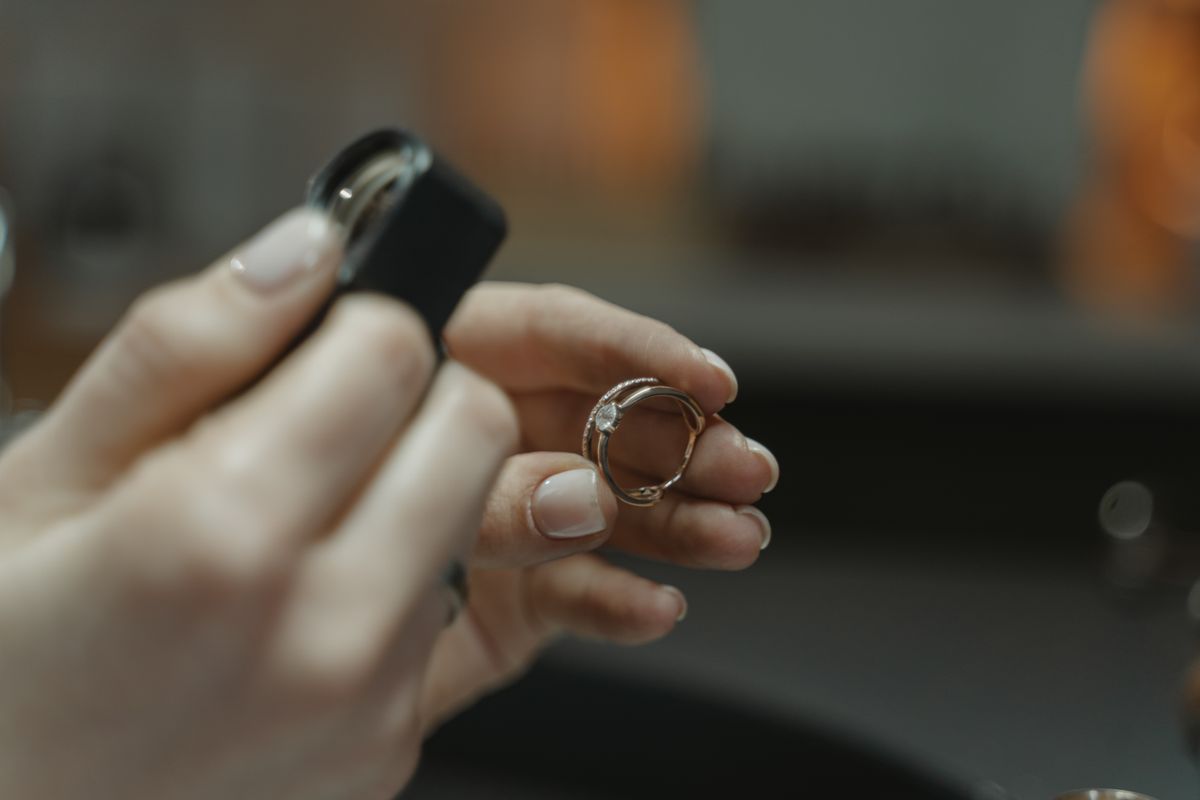
Photo: Tima Miroshnichenko via Pexels.
Shapes with movement
Pear, marquise and half moon diamonds have flowing outlines that draw the eye along the finger. A pear can be worn pointing towards the fingertip or the wrist. Half moons are often used as side stones, though a pair can frame a centre stone beautifully. Our guide to custom diamond shapes goes further.
What to check
Look at the outline, not just the carat weight. Unusual shapes vary widely in proportions, so two stones of the same weight can look very different in size. Ask for photographs and a video of each stone, ideally beside a ruler or a coin for scale. Check the depth, as a deep stone can look smaller from above.
Setting and wear
Angular shapes and pointed tips need careful setting. Claws placed at each corner or a full bezel protect the edges from knocks. Step cuts show inclusions more easily than brilliant cuts, so a higher clarity grade may be worth considering. A jeweller can advise on the setting that suits your daily routine.
How it looks on the hand
Hand shape and finger length affect how a shape reads. Elongated shapes can make fingers look longer, while wide geometric stones can look bold on a slim finger. Try similar shapes on, or ask for a CAD render on a hand, before you decide.
Natural or lab-grown
Unusual shapes can be cut from natural or lab-grown diamonds. Lab-grown stones can make larger or more experimental shapes more accessible, while natural stones appeal to those who value rarity. Ask to see both side by side if you are unsure.
Caring for the ring afterwards
Once the ring is on, a little care keeps it looking its best. Clean it gently at home with warm water, a drop of mild washing up liquid and a soft brush, then dry it with a lint free cloth. Take it off for heavy lifting, gardening, the gym and swimming. Have the claws checked by a jeweller about once a year, and add the ring to your insurance as soon as you have it. Keep any grading report and receipt together in a safe place.
Commissioning a ring
Our bespoke design page explains how an unusual stone can be sourced and set, crafted by specialist goldsmiths. Share photographs of shapes you like and ask for options in natural and lab-grown diamonds, so you can compare.
Frequently asked questions
What are unusual diamond shapes?
Shapes beyond the usual round and oval, such as kite, shield, hexagon, old mine and half moon.
Are unusual shapes harder to set?
Pointed or angular shapes need careful setting, usually with claws at each tip or a bezel.
Can unusual shapes be lab-grown?
Many unusual shapes can be sourced as lab-grown or natural diamonds.