

For couples who spend summers canoeing, camping and swimming at the cottage, a low profile ring with a protective setting and a durable metal is usually the most practical choice. Take it off for paddling and swimming, as cold water shrinks fingers and a ring lost in a lake is hard to recover.
In short: choose a low, secure setting, keep the ring off when paddling or swimming, and have a safe place to store it at camp.
Why lake life is hard on rings
Paddles, ropes, firewood and rocks all put pressure on a ring. Cold lake water makes fingers shrink, so a ring can slip off without being noticed. Sunscreen and insect repellent can dull a stone. A little planning keeps the ring safe.
Settings that suit
A bezel setting wraps the stone in metal and protects its edges. A low claw setting keeps the stone close to the finger. Flush settings, where the stone sits inside the band, are especially practical. Rounded shapes such as round, oval and cushion have no points to catch.
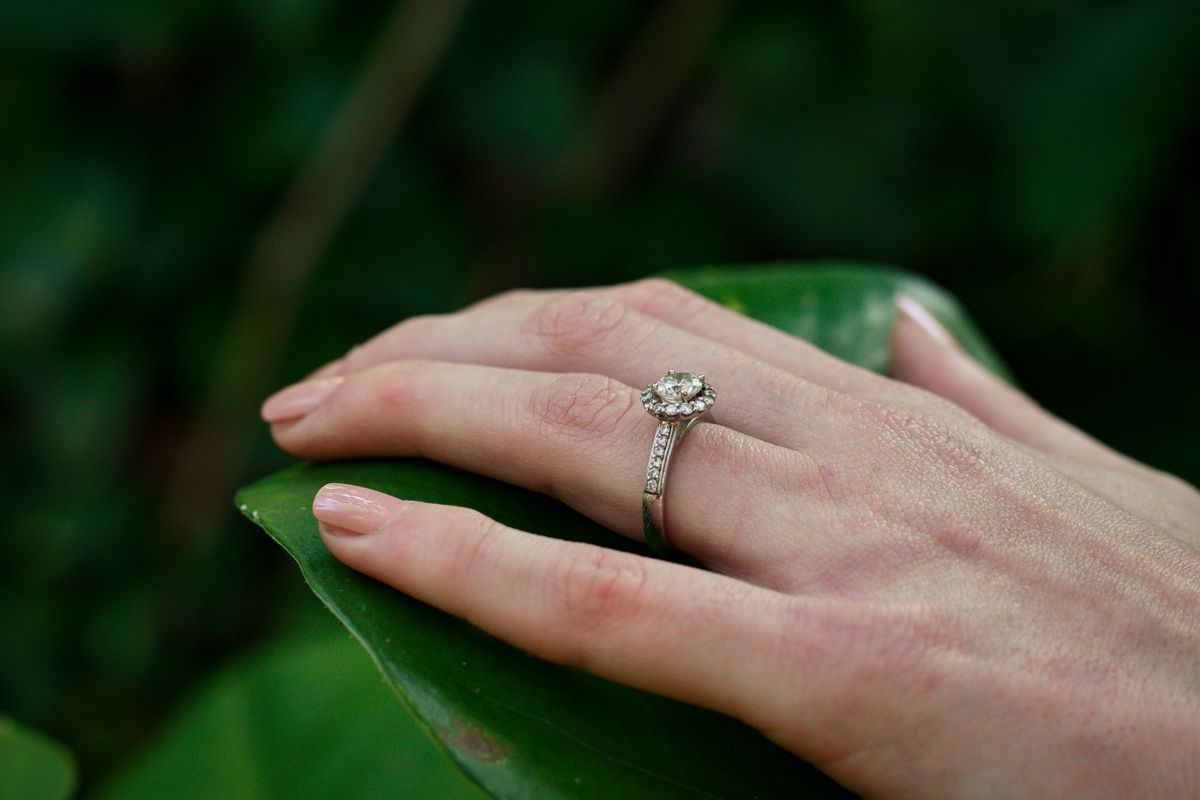
Photo: Pexels contributor via Pexels.
Metals
Platinum is dense and durable, while 18ct gold is also popular. A slightly wider band adds strength. Brushed finishes hide small scratches and can be repolished later.
When to take it off
Remove the ring for paddling, portaging, swimming, chopping wood and building fires. Many people wear a silicone band at the cottage and keep the engagement ring in a small zipped case. Choose one safe place for the case and use it every time.
Proposing at the lake
A sunrise paddle, a dock at sunset or a campfire under the stars can make a lovely proposal. If you propose on the water, keep the ring in a sealed pouch and open it only over the canoe floor, not the water. On a dock, stand back from the edge.
Cleaning after a weekend
Soak the ring in warm water with a drop of washing up liquid, then brush gently around the setting. Our guide to ring care in different climates explains more.
Designing for an outdoor life
Our bespoke design page explains how a ring can be designed around an outdoor life, crafted by specialist goldsmiths.
Everyday care
Clean the ring gently at home with warm water, a drop of mild washing up liquid and a soft brush, then dry it with a lint free cloth. Take it off for the gym, heavy lifting, gardening and swimming. Have the claws checked by a jeweller about once a year, and add the ring to your insurance as soon as you have it, checking that cover applies when you travel.
If you notice a loose stone, a bent claw or a ring catching on clothing, stop wearing it and take it to a jeweller promptly. Small repairs are simple when caught early, and a regular check helps the ring last for generations.
Insect repellent and sunscreen
Some insect repellents and sunscreens contain chemicals that can dull metal and leave a film on stones. Put the ring on after the lotion has dried, or take it off while applying. A soak and soft brush at the end of the weekend restores the shine.
A cottage country proposal checklist
Agree a hiding place for the ring before you arrive. Pack a small zipped pouch. Plan the moment for calm water and good light. Have a warm drink ready, as evenings by the lake can turn cool quickly, even in summer.
Frequently asked questions
What engagement ring suits canoeing and camping?
A low profile ring with a protective setting, such as a bezel, in a durable metal.
Should I wear my ring when swimming in a lake?
No. Cold water shrinks fingers, so the ring can slip off.
How do I keep my ring safe at camp?
Keep it in a small zipped case in one agreed place.